Understanding the Emergency: What to Do in a Riptide Situation
Riptides (also called rip currents) are powerful water movements that can quickly pull swimmers away from shore. Knowing what to do if someone is caught in a riptide or collapses after a water rescue is critical.
These situations can escalate quickly, especially when bystanders attempt rescues. First aid and CPR training teaches how to respond safely, support breathing, and reduce risks to both the victim and rescuer.
First Aid & Workplace Relevance in Winnipeg, Manitoba
Although this incident occurred in Nova Scotia, water-related emergencies can happen across Canada—including at lakes, rivers, and beaches around Winnipeg and throughout Manitoba.
First aid and CPR training is important for:
- Families and beachgoers
- Lifeguards and outdoor workers
- Camp staff and teachers
- Boaters and recreational swimmers
Across Winnipeg and Manitoba, having first aid certification and CPR training prepares individuals to respond to drowning-related emergencies and water rescues safely.
Real-Life Scenario: Rescue Turns Tragic at Broad Cove (Expanded)
 A tragic incident unfolded at Broad Cove beach when a group of swimmers became stranded by a riptide, prompting an urgent rescue effort.
According to the RCMP, emergency services—including local firefighters, Emergency Health Services paramedics, and the Joint Rescue Coordination Centre—were dispatched after reports of distressed swimmers.
Before responders arrived, several bystanders entered the water and successfully helped bring the swimmers back to shore.
However, after exiting the water, a 45-year-old woman from Sydney—one of the rescuers—collapsed on the beach. Bystanders immediately began CPR and continued efforts until paramedics arrived.
Despite these efforts, she was tragically declared deceased at the scene.
Another individual involved in the incident received treatment and was transported to a healthcare facility with non-life-threatening injuries.
This event highlights both the heroism of bystanders and the risks involved in water rescues, reinforcing the importance of training and safe response techniques.
Symptoms and Warning Signs in Water Emergencies
After a water rescue or near-drowning event, watch for:
- Unresponsiveness or collapse
- Difficulty breathing or gasping
- Persistent coughing
- Weakness or confusion
- Pale or bluish skin
- Extreme fatigue after exertion
These signs require immediate attention and monitoring.
Causes and Risk Factors
Riptide and water rescue emergencies can be influenced by:
- Strong ocean currents or changing water conditions
- Lack of awareness of rip current signs
- Attempting rescue without proper equipment
- Physical exhaustion during swimming or rescue efforts
- Cold water exposure
Understanding these risks is essential for prevention.
First Aid Response: What Trained Individuals Learn to Do
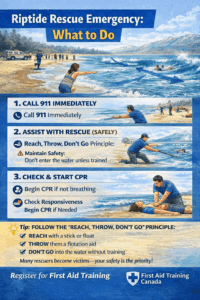
In Canadian first aid and CPR training, responders are taught to:
- Avoid entering dangerous water unless trained and equipped
- Call emergency services immediately
- Assist from shore when possible (reach or throw, don’t go)
- Check responsiveness and breathing once the person is out of water
- Begin CPR if the person is not breathing normally
- Help the individual rest and recover while monitoring their condition
These are standard first aid practices taught in certification programs across Canada.
Unique First Aid Insight: The “Reach, Throw, Don’t Go” Principle 💡
One of the most important and often overlooked water rescue principles is:
“Reach, Throw, Don’t Go.”
- Reach: Use a stick, towel, or object from shore
- Throw: Toss a flotation device or rope
- Don’t Go: Avoid entering the water unless trained
This principle helps prevent rescuers from becoming victims themselves—something tragically relevant in this incident.
Another key takeaway:
- Rescuer safety is always the first priority in any emergency
Prevention and Workplace / Public Safety Considerations
Across Winnipeg and Manitoba, especially near water:
- Learn to recognize dangerous water conditions
- Avoid swimming in unfamiliar or unsupervised areas
- Ensure supervision during group activities
- Promote CPR and first aid training in communities
- Encourage water safety education in schools and workplaces
Prepared individuals can reduce risks and respond more effectively.
Frequently Asked Questions (FAQ)
What should you do if someone is caught in a riptide?
Call for help immediately and avoid entering the water unless trained. First aid training teaches safer rescue methods such as reaching or throwing objects to assist from shore.
Why is water rescue dangerous for bystanders?
Strong currents, exhaustion, and panic can affect rescuers as well. Without proper training, entering the water can increase risk for everyone involved.
What should you do if someone collapses after a rescue?
Check for responsiveness and breathing. If the person is not breathing normally, CPR may be required. Monitoring and supporting the individual is important until help arrives.
Can CPR help after a water-related emergency?
Yes. CPR helps maintain circulation and oxygen flow if breathing or heart function is compromised. It is a key skill taught in Canadian first aid courses.
How can people prepare for water emergencies?
Preparation includes learning CPR, understanding water safety principles, and recognizing environmental risks before entering the water.
Educational Note
This content is for general awareness and reflects commonly taught first aid practices in Canada. It is not a substitute for certified, hands-on CPR and first aid training.
About The Author

Mark Kascha
Certified First Aid Instructor Trainer with 30+ years of real-world experience, including lifeguarding, workplace emergency response, and first aid program development across Canada. Has worked with WorkSafeBC, WSIB, and Manitoba Health.
👉 [View full credentials]🔗 View LinkedIn Profile
Last reviewed: March 2026