Understanding the Emergency: What to Do if Someone Is Hit by a Vehicle
When a pedestrian is struck by a vehicle, it can result in serious trauma, bleeding, or cardiac arrest. Knowing what to do if someone is hit by a vehicle and becomes unresponsive is critical in the moments before emergency services arrive.
First aid training teaches how to assess injuries, support breathing, and respond safely in high-risk environments like busy streets and public areas.
First Aid & Workplace Relevance in Winnipeg, Manitoba
Although this incident occurred in Vancouver, similar emergencies can happen in busy areas of Winnipeg such as downtown intersections, tourist spots, and workplace zones.
First aid and CPR training is important for:
- Drivers and commuters
- Tourism and hospitality workers
- Construction and traffic control workers
- Everyday pedestrians and bystanders
Across Winnipeg and Manitoba, having first aid certification and CPR training helps people respond effectively during road-related emergencies.
Real-Life Scenario: Vancouver Tourist District Collision (Expanded)
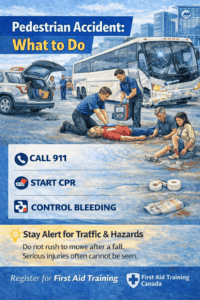 A serious incident unfolded in one of Vancouver’s busiest tourist areas along Canada Place Way, between the Convention Centre and Canada Place.
A charter bus carrying passengers was preparing to depart when it moved forward at low speed. At the same time, three pedestrians—family members visiting from Massachusetts—were in close proximity near a parked SUV that was being loaded with luggage.
Despite braking, the driver was unable to avoid a collision.
The bus struck the individuals and then impacted the parked silver Ford SUV. The force caused visible damage, including a shattered front window and the SUV’s trunk door becoming lodged into the bus.
Bystanders nearby reacted immediately, rushing in to help those who were injured.
Emergency services, including paramedics and firefighters, arrived quickly. First responders began CPR on a 49-year-old man at the scene before transporting him to a healthcare facility. Tragically, he did not survive.
A 15-year-old girl sustained minor injuries, while another older man was transported to hospital with serious injuries.
This incident highlights how quickly accidents can occur in crowded public areas—and how bystander response and trained emergency care are critical in the first moments.
Symptoms and Warning Signs After a Vehicle Impact
After a pedestrian collision, individuals may show:
- Unresponsiveness or unconsciousness
- Difficulty breathing or no breathing
- Visible injuries or bleeding
- Confusion or disorientation
- Pain in multiple areas of the body
- Signs of shock (pale skin, sweating, weakness)
These signs require immediate emergency response.
Causes and Risk Factors
Pedestrian accidents can occur due to:
- Limited visibility in busy areas
- Distractions for drivers or pedestrians
- Vehicles moving in tight or crowded spaces
- Obstructed views (e.g., parked vehicles, luggage)
- Miscommunication or unexpected movement
Understanding these risks helps improve awareness and prevention.
First Aid Response: What Trained Individuals Learn to Do
In Canadian first aid training, responders are taught to:
- Ensure scene safety (watch for traffic or hazards)
- Call emergency services immediately
- Check responsiveness and breathing
- Control visible bleeding using basic techniques
- Begin CPR if the person is not breathing normally
- Keep the injured person still and calm
- Continue monitoring until help arrives
These are standard first aid practices taught in certified programs across Canada.
Unique First Aid Insight: The “Traffic Awareness Bubble” 💡
A unique concept taught in urban emergency response is creating a “traffic awareness bubble”:
- Before helping, quickly scan for moving vehicles or hazards
- Position yourself in a safer area if possible
- Use others to help signal or alert traffic
Why this matters:
In busy areas like downtown Winnipeg or tourist zones, secondary accidents can occur if responders are not aware of their surroundings.
Another key takeaway:
- Your safety allows you to help others effectively
Prevention and Workplace / Public Safety Considerations
Across Winnipeg and Manitoba, safety can be improved by:
- Promoting pedestrian awareness in high-traffic areas
- Implementing workplace safety protocols near roadways
- Encouraging defensive driving practices
- Training staff in first aid and emergency response
- Improving visibility and signage in busy zones
Prepared communities reduce risks and improve emergency outcomes.
Frequently Asked Questions (FAQ)
What should you do if someone is hit by a vehicle?
Ensure the scene is safe, call emergency services, and check for breathing and responsiveness. First aid training teaches how to provide care and monitor the person until help arrives.
Should you move someone after a road accident?
Movement should generally be minimized unless there is immediate danger. Keeping the person still helps reduce the risk of further injury.
When is CPR needed after a collision?
CPR may be required if the person is not breathing normally. Early action can help support circulation until emergency services arrive.
How can bystanders help safely in busy areas?
By maintaining awareness of traffic, calling for help, and assisting within safe limits. First aid training emphasizes balancing care with personal safety.
Why is first aid training important for road incidents?
It prepares individuals to act quickly and confidently in emergencies, helping stabilize injured people before professional responders arrive.
Educational Note
This content is for general awareness and reflects commonly taught first aid practices in Canada. It is not a substitute for certified, hands-on first aid and CPR training.
About The Author

Mark Kascha
Certified First Aid Instructor Trainer with 30+ years of real-world experience, including lifeguarding, workplace emergency response, and first aid program development across Canada. Has worked with WorkSafeBC, WSIB, and Manitoba Health.
👉 [View full credentials]🔗 View LinkedIn Profile
Last reviewed: March 2026