Understanding the Emergency: What to Do When Someone Is Seriously Injured
Serious injuries during public activities, such as sports events, can happen suddenly and require immediate attention. Knowing what to do when someone is critically injured and unresponsive is essential to help stabilize the situation until emergency services arrive.
First aid training teaches how to respond quickly, prioritize safety, and support breathing and circulation—key actions that can make a life-saving difference.
First Aid & Workplace Relevance in Winnipeg, Manitoba
Although this incident occurred in Newfoundland and Labrador, similar emergencies can happen in Winnipeg parks, schools, and sports fields across Manitoba.
First aid and CPR training is especially important for:
- Coaches and sports volunteers
- Teachers and school staff
- Parents and caregivers
- Event organizers and community leaders
Across Winnipeg and Manitoba, having CPR and first aid certification ensures people are prepared to respond effectively during unexpected emergencies in public and recreational settings.
Real-Life Scenario: Quick-Thinking Bystanders Save Young Athlete (Expanded)
 In Conception Bay South, two community members were recognized for their life-saving actions during a youth soccer event.
Gerry Stead, a safety specialist with 3M Canada, and Alana Langdon, a community health nurse, were present at the Topsail artificial turf soccer pitch during a fall skills camp.
During the event, an 11-year-old player was suddenly injured during an unexpected and chaotic situation involving a bystander. The scene quickly became urgent, requiring immediate assistance.
Stead and Langdon stepped in without hesitation. Using their knowledge and training, they provided first aid and CPR support to the injured child while others contacted emergency services.
They remained focused and coordinated, continuing care until paramedics arrived. Their actions helped stabilize the situation during a critical window.
The young athlete later required multiple surgeries over the following months but made a full recovery and eventually returned to playing soccer—an outcome that highlights the importance of early intervention and trained responders.
Both rescuers were later honoured with Rescuer Awards in recognition of their decisive and life-saving efforts.
Symptoms and Warning Signs of a Critical Injury
In serious injury situations, watch for:
- Loss of responsiveness
- Difficulty breathing or abnormal breathing
- Bleeding or visible wounds
- Pale or clammy skin
- Confusion or disorientation
- Signs of shock (weakness, rapid breathing)
Recognizing these signs helps guide immediate action.
Causes and Risk Factors
Serious incidents in public spaces may involve:
- Physical trauma during sports or activities
- Unexpected violent or high-impact events
- Lack of immediate supervision or preparedness
- Delays in emergency response
While not always preventable, preparedness plays a key role in outcomes.
First Aid Response: What Trained Individuals Learn to Do
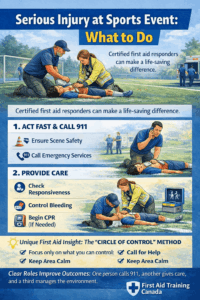
In Canadian first aid and CPR courses, responders are trained to:
- Ensure the scene is safe before approaching
- Call emergency services immediately
- Check responsiveness and breathing
- Provide CPR if needed
- Assist with controlling bleeding using basic techniques
- Help keep the person calm and still until help arrives
These are standard first aid practices taught in certified training programs across Canada.
Unique First Aid Insight: The “Circle of Control” Method 💡
In high-stress emergencies, trained responders often rely on a simple but powerful concept:
Focus only on what you can control.
- You can control calling for help
- You can control providing care
- You can control keeping the scene calm
This mental approach helps prevent panic and allows responders to act more effectively—even in chaotic situations like this one.
Another key takeaway:
- Clear roles improve outcomes — one person calls 911, another provides care, another manages the environment
Prevention and Workplace / Community Safety Considerations
Across Winnipeg and Manitoba, safety in sports and public settings can be improved by:
- Training coaches and staff in CPR and first aid
- Having emergency action plans for events
- Ensuring access to first aid kits and AEDs
- Promoting awareness of emergency response procedures
- Encouraging community members to take CPR training in Winnipeg
Prepared communities are safer communities.
Frequently Asked Questions (FAQ)
What should you do if someone is seriously injured during a sports activity?
Ensure the area is safe, call emergency services, and check the person’s responsiveness and breathing. First aid training teaches how to provide immediate support and monitor the person until help arrives.
Can bystanders really make a difference before paramedics arrive?
Yes. Early action—such as calling for help, starting CPR, or controlling bleeding—can significantly improve outcomes. Many emergencies rely on bystanders taking the first steps.
Why is CPR important in serious emergencies?
CPR helps maintain blood flow to vital organs when the heart is not functioning properly. It is a core life-saving skill taught in first aid training across Canada.
How can communities prepare for emergencies at public events?
Preparation includes having trained individuals on-site, accessible first aid equipment, and clear emergency plans. These steps help ensure a faster and more effective response.
What mindset helps in high-pressure emergency situations?
Staying calm and focusing on immediate actions—like calling for help and providing care—helps responders manage the situation more effectively.
Educational Note
This content is for general awareness and reflects commonly taught first aid practices in Canada. It is not a substitute for certified, hands-on CPR and first aid training.
About The Author

Mark Kascha
Certified First Aid Instructor Trainer with 30+ years of real-world experience, including lifeguarding, workplace emergency response, and first aid program development across Canada. Has worked with WorkSafeBC, WSIB, and Manitoba Health.
👉 [View full credentials]🔗 View LinkedIn Profile
Last reviewed: March 2026