Understanding the Emergency: What to Do if a Vehicle Crashes Into a Building
When a vehicle crashes into a structure such as a home, it can result in traumatic injuries, shock, and potential structural hazards. Knowing what to do after a vehicle impact is important to protect yourself and others until emergency services arrive.
These incidents often happen suddenly, leaving bystanders or occupants needing to respond quickly. First aid training teaches how to stay calm, assess injuries, and provide immediate support in situations like this.
First Aid & Workplace Relevance in Winnipeg, Manitoba
Although this incident occurred in Abbotsford, similar events can happen in Winnipeg and across Manitoba, especially in residential areas, construction zones, or near busy roads.
First aid training is valuable for:
- Homeowners and families
- Construction and maintenance workers
- Drivers and delivery personnel
- Teachers and school staff
Across workplaces in Winnipeg, having first aid certification in Manitoba helps ensure that employees can respond safely to unexpected incidents such as vehicle collisions or property damage.
Real-Life Scenario: Abbotsford Truck Into House (Expanded)
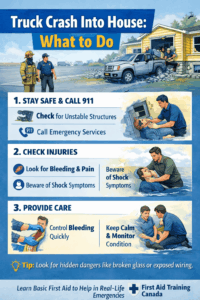 A concerning incident unfolded in Abbotsford when a silver pickup truck lost control and crashed into a home along Lefeuvre Road.
Emergency responders from the Abbotsford Police Department and Abbotsford Fire Rescue Services were dispatched to the scene in the 3100 block of Lefeuvre Road.
The truck plowed through a fence and a light before striking the house, causing damage to both the garage and part of the living room. Despite the severity of the crash, the residents inside the home were not injured.
The driver, however, sustained minor injuries that required first aid attention at the scene. While the injuries were not life-threatening, the situation highlights how quickly everyday environments can become emergency scenes.
Authorities indicated that charges were pending, emphasizing the seriousness of maintaining safe driving practices.
Symptoms and Warning Signs After a Collision
Even in minor crashes, injuries may not be immediately obvious. Watch for:
- Cuts, scrapes, or bleeding
- Bruising or swelling
- Headache or dizziness
- Chest discomfort from impact
- Confusion or delayed response
- Signs of shock (pale skin, sweating, weakness)
Recognizing these signs early is a key part of basic first aid training in Canada.
Causes and Risk Factors
Vehicle-into-building incidents can occur due to:
- Loss of vehicle control
- Speeding or sudden acceleration
- Mechanical issues
- Driver distraction or fatigue
- Slippery road conditions (common in Manitoba winters)
Understanding these factors can help improve awareness and prevention.
First Aid Response: What Trained Individuals Learn to Do
In certified first aid courses across Canada, responders are taught to:
- Ensure the area is safe (watch for unstable structures or debris)
- Call emergency services immediately
- Check for responsiveness and visible injuries
- Control bleeding using basic wound care techniques
- Help the injured person remain calm and still
- Monitor for changes in condition until help arrives
These actions reflect standard first aid practices taught in CPR and emergency response training programs in Canada.
Unique First Aid Tips for Crash Scenes 💡
Here are some lesser-known, practical tips that can make a difference:
- Listen before moving: Ask the injured person where they feel pain before helping them move—this can prevent worsening hidden injuries
- Watch the environment: After a crash into a home, hazards like broken glass, exposed wiring, or structural instability may exist
- Use “hands-off reassurance”: Sometimes the best help is staying close, speaking calmly, and preventing unnecessary movement
- Check others nearby: Even if one person is injured, others may be affected by shock or stress
- Look for “silent injuries”: Not all serious injuries bleed—internal discomfort or confusion can signal deeper issues
Prevention and Workplace Safety Considerations
In Winnipeg and across Manitoba, prevention strategies include:
- Safe driving policies for employees
- Defensive driving training
- Regular vehicle maintenance
- Awareness of residential and pedestrian-heavy areas
- Emergency preparedness training in workplaces
Employers and individuals benefit from emergency response training in Canada, helping reduce risks and improve outcomes when incidents occur.
Frequently Asked Questions (FAQ)
What should you do immediately after a vehicle crashes into a building?
Ensure your safety first, then call emergency services. Check for injuries and avoid entering unstable structures. First aid training teaches how to assess the situation and provide basic support until responders arrive.
How do you know if someone is injured after a minor crash?
Look for visible signs like cuts or bruises, as well as symptoms such as dizziness or confusion. Some injuries may not be obvious right away, so monitoring the person is important.
Should you move someone who was in a crash?
First aid training generally emphasizes minimizing movement unless necessary for safety. Keeping the person still can help prevent further injury while waiting for emergency services.
Why is first aid training important in everyday environments?
Emergencies can happen anywhere, including homes and workplaces. Training helps people respond quickly, stay calm, and provide effective assistance during unexpected situations.
Can minor injuries still require first aid attention?
Yes. Even small cuts or impacts should be addressed to prevent complications and ensure the person remains comfortable and safe while waiting for further care if needed.
Educational Note
This content is for general awareness and reflects commonly taught first aid practices in Canada. It is not a substitute for certified, hands-on first aid and CPR training.
About The Author

Mark Kascha
Certified First Aid Instructor Trainer with 30+ years of real-world experience, including lifeguarding, workplace emergency response, and first aid program development across Canada. Has worked with WorkSafeBC, WSIB, and Manitoba Health.
👉 [View full credentials]🔗 View LinkedIn Profile
Last reviewed: March 2026