Understanding the Emergency: What to Do if a Vehicle Is Trapped in Water
When a vehicle becomes submerged or partially submerged in water, it creates a life-threatening emergency involving airway obstruction, risk of drowning, and potential traumatic injuries. Knowing how to respond when someone is trapped in a vehicle in water can make a critical difference.
Situations like this require fast thinking, teamwork, and basic first aid awareness—skills commonly taught in certified CPR and first aid training programs across Canada.
First Aid & Workplace Relevance in Winnipeg, Manitoba
While this incident occurred in British Columbia, similar emergencies can happen anywhere in Canada—including Winnipeg and across Manitoba, especially near rivers, drainage ditches, or icy road conditions.
First aid and CPR training is especially important for:
- Drivers and commuters
- Outdoor workers and anglers
- Construction and transportation workers
- Teachers, parents, and community members
In workplaces and public environments across Winnipeg, having emergency response training helps individuals act quickly and safely during unpredictable incidents like vehicle submersions.
Real-Life Scenario: Fraser Valley Vehicle Rescue (Expanded)
 In the Fraser Valley near Chilliwack, a dramatic rescue unfolded when two teenagers became trapped inside an overturned vehicle submerged in a water-filled ditch.
Surrey realtor and angler Sokha Eang was on his way to fish along the Vedder River when he came across the crash. Another bystander, Adam Nelson, had already arrived after dropping his son off at school and was standing on the overturned vehicle.
Bystanders reported that people were still inside.
Working together, the two men acted quickly. Inside the vehicle were two teenagers: Kyle Ruffell, a 17-year-old student from Abbotsford, and his friend Umer Khokhar.
Ruffell was unconscious with his head partially submerged in water and had suffered serious injuries, including broken ribs and lung trauma. Moments before being pulled out, he regained consciousness and began coughing up water—an important sign that his airway was clearing.
Because he resumed breathing on his own, CPR was not required at that moment. After rescuing Ruffell, the men discovered Khokhar in the back seat, partially submerged but conscious. Fortunately, he had no major injuries aside from cold exposure.
This rescue highlights how quick action, awareness, and basic first aid knowledge can save lives—even before emergency services arrive.
Symptoms and Warning Signs in Water-Related Vehicle Incidents
Recognizing signs of distress is critical:
- Unconsciousness or reduced responsiveness
- Difficulty breathing or gasping
- Coughing or expelling water
- Pale, bluish, or cold skin
- Confusion or disorientation
- Signs of injury (e.g., chest pain, difficulty moving)
These symptoms indicate urgent need for emergency response and monitoring.
Causes and Risk Factors
Vehicle submersion incidents can happen due to:
- Slippery or icy roads (common in Manitoba winters)
- Loss of vehicle control near ditches or waterways
- Poor visibility or weather conditions
- Driver distraction or fatigue
- Rural or unguarded roadways
Understanding these risks helps improve prevention and preparedness.
First Aid Response: What Trained Individuals Learn to Do
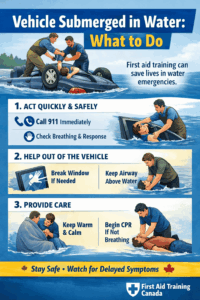
In first aid and CPR training across Canada, responders are taught to:
- Ensure scene safety first before approaching water or unstable vehicles
- Call emergency services immediately
- Assist individuals out of danger if it is safe to do so
- Check responsiveness and breathing
- Monitor airway and watch for signs of recovery (such as coughing)
- Be prepared to begin CPR if the person is not breathing
- Help keep the individual warm and still until help arrives
These steps are part of standard first aid practices taught in Canadian certification programs.
Unique First Aid Tips for Water-Related Emergencies 💡
Here are some practical and lesser-known tips taught in training:
- Use available tools: Objects like fishing waders, ropes, or even belts can help maintain footing or assist in reaching someone safely
- Talk to the victim: If conscious, encourage them to stay calm and focus on breathing—this can reduce panic and improve outcomes
- Watch for delayed breathing issues: Even if someone coughs up water, continued monitoring is important
- Avoid rushing into unsafe water: Many rescuers get injured by acting too quickly without assessing risks
- Prioritize airway positioning: Keeping the head above water is often the most critical immediate action
Prevention and Workplace Safety Considerations
Across Winnipeg and Manitoba workplaces, prevention plays a key role:
- Driver safety training for employees
- Awareness of high-risk road conditions
- Emergency planning for outdoor and field workers
- Encouraging staff to take CPR and first aid certification in Manitoba
- Equipping vehicles or sites with emergency kits
Preparedness helps reduce risk and improves outcomes in real emergencies.
Frequently Asked Questions (FAQ)
What should you do if someone is trapped in a submerged vehicle?
Ensure your own safety first, then call emergency services. If it is safe, help keep the person’s airway above water and assist them out of the vehicle. First aid training teaches how to assess breathing and provide support until help arrives.
Should CPR be started immediately after someone is pulled from water?
CPR is typically performed if the person is not breathing normally. If they begin coughing or breathing on their own, responders are trained to monitor them closely and be ready to act if their condition changes.
What are signs someone may have inhaled water?
Coughing, difficulty breathing, and unusual fatigue are common signs. First aid training emphasizes ongoing observation, as symptoms can change after the initial rescue.
Why is teamwork important in emergencies like this?
As seen in this incident, bystanders working together can improve safety and efficiency. One person can call for help while another assists the victim, increasing the chances of a successful outcome.
Can first aid training really make a difference in these situations?
Yes. Training provides people with the confidence and skills to respond quickly, assess risks, and support someone until emergency services arrive—actions that can significantly improve outcomes.
Educational Note
This content is for general awareness and reflects commonly taught first aid practices in Canada. It is not a substitute for certified, hands-on first aid and CPR training.
About The Author

Mark Kascha
Certified First Aid Instructor Trainer with 30+ years of real-world experience, including lifeguarding, workplace emergency response, and first aid program development across Canada. Has worked with WorkSafeBC, WSIB, and Manitoba Health.
👉 [View full credentials]🔗 View LinkedIn Profile
Last reviewed: March 2026