Knowing what to do if a baby becomes unresponsive or how to respond when an infant stops breathing is critical. These situations can develop quickly, and early CPR—especially guided by emergency dispatchers—can help save a life.
In Winnipeg and across Manitoba, families, caregivers, and childcare providers all benefit from CPR training Winnipeg and first aid certification Manitoba, particularly for infant care emergencies.
First Aid & Workplace Relevance in Canada
Across Canada, infant CPR awareness is essential for:
- Parents and guardians
- Daycare workers and babysitters
- Teachers and early childhood educators
- Healthcare and community workers
In Winnipeg neighbourhoods like St. Vital and Transcona, where many young families live, knowing how to respond to infant breathing emergencies and cardiac arrest is especially important.
Scenario Story: Infant Revived After Dispatcher-Guided CPR
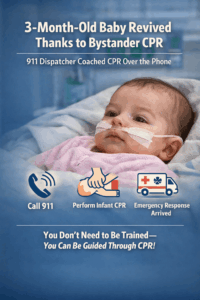 A life-saving response in Ottawa shows how critical bystander action can be.
A 3-month-old baby became unresponsive while her parents were driving along St. Laurent Boulevard. Realizing the urgency, they stopped their vehicle near an overpass by Innes Road and called for help.
One individual ran approximately 400 metres to a nearby fire station to alert responders directly, while others contacted emergency services.
During the call, a 911 dispatcher calmly guided bystanders through infant CPR instructions. With this support, they began assisting the baby before professional responders arrived.
Firefighters quickly took over care upon arrival, and the infant was transported to the Children’s Hospital of Eastern Ontario in stable condition.
This incident highlights how dispatcher-assisted CPR—combined with quick action from bystanders—can bridge the gap before emergency crews arrive.
A Unique First Aid Insight: “You Don’t Have to Know CPR to Start It”
One of the most surprising and reassuring facts in first aid is:
➡️ You can be guided through CPR step-by-step by a 911 dispatcher—even if you’ve never taken a course.
Dispatchers are trained to:
- Recognize cardiac or breathing emergencies over the phone
- Provide clear, simple instructions
- Coach rhythm and technique in real time
- Keep callers calm and focused
This means:
➡️ Doing something—even imperfectly—is far better than doing nothing.
This concept is a key part of the Chain of Survival taught in CPR courses across Canada.
Symptoms / Warning Signs in Infants
Watch for:
- Unresponsiveness
- No normal breathing
- Weak or irregular breathing
- Pale or bluish skin tone
- Limp or unresponsive body
These signs indicate a life-threatening emergency.
Causes / Risk Factors
Infant emergencies may involve:
- Breathing difficulties
- Airway obstruction
- Underlying medical conditions
- Sudden unexpected events
Because infants are more vulnerable, rapid response is essential.
First Aid & CPR Response for Infants
Based on standard first aid training practices in Canada, general response includes:
- Calling emergency services immediately
- Following dispatcher instructions if unsure
- Checking responsiveness and breathing
- Beginning CPR if the infant is unresponsive and not breathing normally
- Continuing care until emergency responders arrive
These skills are commonly taught in certified infant CPR and first aid training across Canada.
Prevention & Workplace Considerations
To improve safety in Manitoba:
- Encourage infant CPR training for parents and caregivers
- Ensure childcare providers are certified
- Promote awareness of infant emergency signs
- Maintain safe sleep and supervision practices
- Keep emergency numbers easily accessible
Preparedness can make a critical difference.
FAQ
What should you do if a baby stops breathing?
Call emergency services immediately and begin CPR if needed. Follow dispatcher instructions if you are unsure.
Can you perform CPR without training?
Yes, dispatchers can guide you through the steps over the phone until help arrives.
Why is infant CPR different from adult CPR?
Infants require gentler techniques due to their size and development.
Who should take infant CPR training in Winnipeg?
Parents, caregivers, and childcare workers can all benefit.
What is the most important step in an infant emergency?
Calling 911 quickly and starting CPR as soon as possible.
Educational Note
This content is for general awareness and reflects commonly taught practices in first aid and CPR training across Canada. Early action and guided support can improve outcomes in emergencies.
About The Author

Mark Kascha
Certified First Aid Instructor Trainer with 30+ years of real-world experience, including lifeguarding, workplace emergency response, and first aid program development across Canada. Has worked with WorkSafeBC, WSIB, and Manitoba Health.
👉 [View full credentials]🔗 View LinkedIn Profile
Last reviewed: March 2026