Knowing what to do if someone suddenly collapses during an event or how to respond when a person shows signs of a stroke is critical. In these moments, quick recognition and immediate first aid action can significantly improve outcomes.
In Winnipeg and across Manitoba, public gatherings, sporting events, and community functions are common. This makes CPR training Winnipeg and first aid certification Manitoba important for both event staff and everyday bystanders.
First Aid & Workplace Relevance in Canada
Across Canada, stroke awareness and emergency response training are essential for:
- Event staff and volunteers
- Teachers and community leaders
- Workplace first aid attendants
- General public attending large gatherings
In Winnipeg venues—whether at sports arenas or community centres—knowing how to respond to stroke symptoms, unconsciousness, and breathing emergencies can help save lives.
Scenario Story: Stroke at Sumo Event Sparks Life-Saving Response
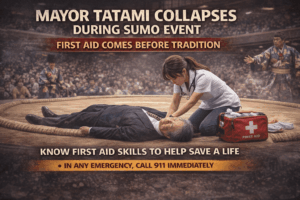 A powerful real-life incident involving Maizuru Mayor Ryozo Tatami in Kyoto, Japan, highlights the importance of immediate first aid—regardless of circumstance.
While delivering a speech in a sumo ring, the 67-year-old mayor suddenly collapsed. The situation quickly became urgent as it became clear he was experiencing a medical emergency.
Two women in the audience, including a nurse, rushed into the ring to help. Despite traditional restrictions that prohibit women from entering the dohyo, they began providing first aid without hesitation.
As they assisted the mayor, officials repeatedly called for them to leave the ring, creating tension between tradition and emergency care. Additional bystanders attempted to help as well.
The mayor later recovered and publicly acknowledged that life-saving assistance should always take priority over tradition. The incident led to widespread discussion and policy reconsideration.
This story reinforces a key message:
in emergencies, the priority is always the person in need—not the setting.
A Unique First Aid Insight: “Time Lost Is Brain Lost”
A surprising and critical concept in stroke first aid is:
➡️ Every minute during a stroke matters—brain cells can be affected quickly without oxygen.
This is why first aid training in Canada emphasizes recognizing stroke using simple tools like:
- Facial drooping
- Arm weakness
- Speech difficulty
Even more surprising:
➡️ A person having a stroke may still be conscious and talking at first, which can delay recognition.
Early action helps ensure faster access to advanced care.
Symptoms / Warning Signs of Stroke
Watch for:
- Sudden weakness on one side of the body
- Difficulty speaking or understanding speech
- Facial drooping
- Sudden confusion
- Loss of balance or coordination
- Severe headache (in some cases)
Recognizing these signs early is critical.
Causes / Risk Factors
Stroke risk factors may include:
- Age-related cardiovascular conditions
- High blood pressure
- Lifestyle factors
- Underlying health conditions
However, strokes can occur unexpectedly in public settings.
First Aid Response for Stroke Emergencies
Based on standard first aid training practices in Canada, general response includes:
- Calling emergency services immediately
- Keeping the person calm and supported
- Monitoring breathing and responsiveness
- Not giving food or drink
- Preparing to assist if condition worsens
- If the person becomes unresponsive and is not breathing normally, CPR may be required
These steps are commonly taught in certified first aid and emergency response training across Canada.
Prevention & Workplace Considerations
To improve stroke response in Manitoba:
- Promote awareness of stroke symptoms
- Train staff and volunteers in first aid and CPR
- Encourage quick action during medical emergencies
- Ensure clear emergency response procedures at events
- Support inclusive response policies—any trained person can help
Preparedness saves time—and time saves lives.
FAQ
What should you do if someone shows signs of a stroke?
Call emergency services immediately and monitor the person while keeping them calm and safe.
Can someone be conscious during a stroke?
Yes, many people remain awake but may have difficulty speaking or moving.
Why is quick action important in stroke cases?
Delays can affect the brain. Faster response improves outcomes.
Who should take first aid training in Winnipeg?
Anyone attending or working at public events can benefit from training.
What is the first priority in a stroke emergency?
Recognizing symptoms and calling emergency services right away.
Educational Note
This content is for general awareness and reflects commonly taught practices in first aid and CPR training across Canada. Timely recognition and response can improve outcomes in medical emergencies.
About The Author

Mark Kascha
Certified First Aid Instructor Trainer with 30+ years of real-world experience, including lifeguarding, workplace emergency response, and first aid program development across Canada. Has worked with WorkSafeBC, WSIB, and Manitoba Health.
👉 [View full credentials]🔗 View LinkedIn Profile
Last reviewed: March 2026