Knowing what to do if someone suddenly stops breathing or how to respond when a person becomes unresponsive in a vehicle can make a life-saving difference. Even basic knowledge—learned from courses or everyday sources—can help bridge the gap before emergency responders arrive.
In Winnipeg and across Manitoba, these types of emergencies can happen in parking lots, workplaces, and public spaces. This is why CPR training Winnipeg and first aid certification Manitoba are strongly encouraged for everyone.
First Aid & Workplace Relevance in Canada
Across Canada, CPR knowledge is valuable for:
- Workers in shops, garages, and public-facing roles
- Drivers and commuters
- Students and young adults
- Anyone in community settings
In Winnipeg areas like Downtown and St. James, quick action by bystanders can support survival during cardiac or breathing emergencies.
Scenario Story: CPR Inspired by a TV Scene Saves a Life
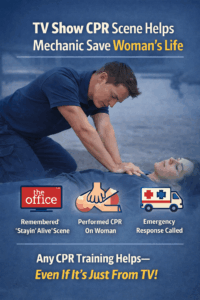 A real-life incident in Arizona shows how even unexpected knowledge can help in an emergency.
A 21-year-old mechanic, Cross Scott, noticed a woman locked inside her vehicle. After breaking in to check on her, he found that she was not breathing.
Although he had no formal emergency training, he remembered a scene from the TV show The Office, where CPR is performed to the rhythm of the song “Stayin’ Alive.” Using that memory as guidance, he began chest compressions.
Two nearby bystanders also stopped to help and called 911, ensuring emergency services were on the way.
Within about a minute, the woman began breathing again. She was transported to a healthcare facility and later released.
This situation highlights how quick thinking, teamwork, and even basic CPR awareness can help sustain life until professionals arrive.
A Unique First Aid Insight: “Even Imperfect CPR Can Help”
A surprising and important concept in first aid is:
➡️ You don’t need perfect technique to make a difference—any CPR attempt is better than none.
In fact:
- Songs like “Stayin’ Alive” match the recommended compression rhythm
- Dispatchers can guide CPR over the phone
- Even partial knowledge (from TV, school, or online) can help start action
However:
➡️ In-person CPR training provides hands-on practice, confidence, and accuracy that cannot be replaced.
Still, this story shows:
➡️ Any knowledge—even informal—can help you take that critical first step.
Symptoms / Warning Signs
Watch for:
- Unresponsiveness
- No normal breathing
- Gasping or irregular breathing
- Collapse or loss of consciousness
These signs indicate a possible cardiac or breathing emergency.
Causes / Risk Factors
Possible causes include:
- Cardiac arrest
- Breathing obstruction
- Medical emergencies
- Unknown underlying conditions
These events can happen unexpectedly, even in everyday settings.
First Aid & CPR Response
Based on standard first aid training practices in Canada, general response includes:
- Ensuring the scene is safe
- Calling emergency services immediately
- Checking responsiveness and breathing
- Starting CPR if the person is unresponsive and not breathing normally
- Continuing until help arrives or the person shows signs of recovery
These skills are commonly taught in certified CPR courses across Canada.
Prevention & Workplace Considerations
To improve readiness in Manitoba:
- Encourage CPR training in workplaces and communities
- Promote awareness campaigns about cardiac emergencies
- Ensure access to AEDs in public areas
- Support refresher and recertification training
- Encourage confidence in taking action
Preparedness saves valuable time.
FAQ
Can you perform CPR without formal training?
Yes, even basic knowledge or dispatcher guidance can help you start CPR.
Why is rhythm important in CPR?
Consistent rhythm helps maintain blood circulation during compressions.
Is learning CPR from TV enough?
It can help you act in an emergency, but hands-on training is strongly recommended.
Who should take CPR training in Winnipeg?
Everyone—from workers to students—can benefit from learning CPR.
What is the first step if someone is not breathing?
Call emergency services immediately and begin CPR if needed.
Educational Note
This content is for general awareness and reflects commonly taught practices in CPR and first aid training across Canada. Hands-on training improves confidence and effectiveness in real emergencies.
About The Author

Mark Kascha
Certified First Aid Instructor Trainer with 30+ years of real-world experience, including lifeguarding, workplace emergency response, and first aid program development across Canada. Has worked with WorkSafeBC, WSIB, and Manitoba Health.
👉 [View full credentials]🔗 View LinkedIn Profile
Last reviewed: March 2026