Knowing what to do if someone suddenly collapses from cardiac arrest or how to respond when a person stops breathing can make a life-saving difference. Even a short course—just a few hours—can give you the confidence to act quickly in an emergency.
In Winnipeg and across Manitoba, cardiac emergencies can happen anywhere—from workplaces to gyms to public events. This is why CPR training Winnipeg and first aid certification Manitoba are essential skills for everyday people.
First Aid & Workplace Relevance in Canada
Across Canada, CPR and AED knowledge is important for:
- Workplace safety teams
- Fitness centres and recreational facilities
- Schools and childcare providers
- Public service workers and community members
In Winnipeg, AEDs are increasingly available in public spaces like community centres, arenas, and offices—making emergency response training Canada more practical than ever.
Scenario Insight: Paramedic Experience Highlights Importance of Early CPR
 Paramedic Kelly Dashney, who has worked with medical teams at high-profile racing events like NASCAR and Formula 1, emphasizes a critical reality:
When cardiac arrest occurs, time is extremely limited.
The body has only a short window—about several minutes—before oxygen levels in the brain begin to drop. Without chest compressions, the risk of serious outcomes increases quickly.
Dashney highlights that even a small amount of training—sometimes as little as 30 minutes of awareness—can help someone recognize the situation and begin helping.
This reinforces a key point:
You don’t need extensive medical training to make a meaningful difference.
A Unique First Aid Insight: “3 Hours Can Change a Lifetime”
One of the most surprising facts about CPR training is:
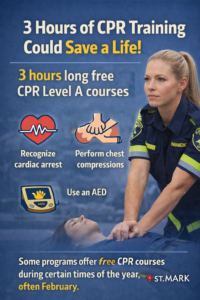
➡️ A basic CPR Level A course can take as little as 3 hours to complete.
And yet, in that short time, you learn how to:
- Recognize cardiac arrest
- Perform effective chest compressions
- Use an AED safely
- Respond confidently in emergencies
Even more interesting:
➡️ Some training providers, including programs like St. Mark James Training in Canada, have offered free CPR courses during certain times of the year (often February) to increase public awareness.
This means:
➡️ A single afternoon of learning could one day help save a life.
Symptoms / Warning Signs of Cardiac Arrest
Watch for:
- Sudden collapse
- Unresponsiveness
- No normal breathing
- Gasping or irregular breathing
These signs require immediate action.
Causes / Risk Factors
Cardiac arrest may occur due to:
- Underlying heart conditions
- Physical exertion
- Electrical disruption of heart rhythm
- Unknown or sudden medical causes
It can happen to individuals of various ages and activity levels.
First Aid & CPR Response
Based on standard first aid training practices in Canada, general response includes:
- Calling emergency services immediately
- Checking responsiveness and breathing
- Starting CPR if the person is unresponsive and not breathing normally
- Using an AED if available
- Continuing care until emergency responders arrive
These steps are commonly taught in certified CPR and AED training across Canada.
Prevention & Workplace Considerations
To improve readiness in Manitoba:
- Encourage CPR certification for employees
- Install and maintain AEDs in public areas
- Promote awareness campaigns about cardiac arrest
- Offer recertification and refresher courses
- Support accessible training opportunities
Preparedness saves time—and time saves lives.
FAQ
How long does it take to learn CPR?
Basic CPR Level A courses can take as little as a few hours to complete.
Is short CPR training really effective?
Yes, even brief training can help you recognize emergencies and take action.
What is an AED and why is it important?
An AED is a device that helps restore heart rhythm and provides step-by-step instructions.
Who should take CPR training in Winnipeg?
Anyone—from workers to students—can benefit from learning CPR.
Can CPR really make a difference before paramedics arrive?
Yes, early CPR helps maintain circulation and supports survival until help arrives.
Educational Note
This content is for general awareness and reflects commonly taught practices in CPR and first aid training across Canada. Even short training sessions can build confidence and improve emergency response.
About The Author

Mark Kascha
Certified First Aid Instructor Trainer with 30+ years of real-world experience, including lifeguarding, workplace emergency response, and first aid program development across Canada. Has worked with WorkSafeBC, WSIB, and Manitoba Health.
👉 [View full credentials]🔗 View LinkedIn Profile
Last reviewed: March 2026