 Knowing what to do if a house fills with smoke or how to respond when someone is trapped in a fire is critical. Fires develop rapidly, and scene safety, evacuation, and basic first aid awareness are essential in the first moments before emergency crews arrive.
In Winnipeg and across Manitoba, house fires remain a serious concern—especially during colder seasons when heating systems are heavily used. This makes CPR training Winnipeg and first aid certification Manitoba highly relevant for families, workers, and community members.
First Aid & Workplace Relevance in Canada
Across Canada, fire safety and emergency response training are important for:
- Homeowners and families
- Landlords and property managers
- Workers in residential and industrial settings
- Teachers, caregivers, and community staff
In neighbourhoods like Downtown Winnipeg, St. Vital, and Transcona, understanding fire evacuation, smoke inhalation risks, and CPR response can help save lives.
A key principle taught in Canadian first aid training is:
➡️ Always assess scene safety before attempting a rescue.
Scenario Story: Family Escapes Overnight House Fire
A devastating overnight fire at a long-time family home on 116 Avenue and 140 Street left an elderly couple fearing for their son’s life.
The fire quickly filled the wood-frame house with thick smoke, reducing visibility to near zero. Vince Shoemaker described the experience as overwhelming—he could not see and had to rely on instinct as he guided his 83-year-old wife toward the door, eventually dragging her to safety.
Two nearby neighbors, including Neil Prendeville, saw the flames and rushed to help. They met the couple at the entrance, pulling Mr. Shoemaker out and carefully carrying his wife away from the burning home.
However, one of the couple’s adult sons was still inside. The fire had intensified to the point where neighbors could not safely re-enter.
When firefighters arrived, they located the son on the second floor and brought him out. CPR was performed at the scene before he was transported to a healthcare facility in serious condition.
For the family, the incident was especially painful, as they had experienced a similar loss in a fire decades earlier. Despite the tragedy, they expressed gratitude to neighbors and emergency responders for their efforts.
This story highlights both the courage of bystanders—and the limits of what can be done safely without proper equipment.
A Unique First Aid Insight: “Toxic Smoke, Not Flames, Is the Biggest Threat”
A surprising and important fact in fire safety training is:
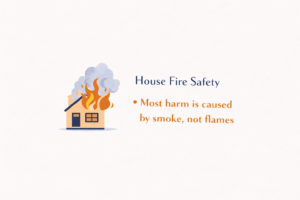
➡️ Most fire-related injuries and deaths are caused by smoke—not flames.
Smoke contains:
- Toxic gases that reduce oxygen in the body
- Particles that irritate and block airways
- Heat that can damage the respiratory system
This is why first aid training emphasizes:
- Leaving immediately rather than trying to fight the fire
- Avoiding re-entry once outside
- Staying low where air may be clearer
Even a short exposure can affect breathing and consciousness.
Symptoms / Warning Signs of Smoke Inhalation
After a fire, watch for:
- Persistent coughing or breathing difficulty
- Hoarseness or throat irritation
- Soot around the mouth or nose
- Headache, dizziness, or confusion
- Unusual fatigue or weakness
These signs may indicate airway irritation or reduced oxygen levels.
Causes / Risk Factors
Common contributors to house fires include:
- Electrical issues or faulty wiring
- Heating equipment or fireplaces
- Cooking incidents
- Older wood-frame homes
- Lack of working smoke alarms
Understanding these risks can support prevention.
First Aid & CPR Response in Fire Emergencies
Based on standard first aid training practices in Canada, general response includes:
- Ensuring the scene is safe before attempting to help
- Calling emergency services immediately
- Assisting others out only if it is safe to do so
- Avoiding re-entry into a burning structure
- Once safe, checking breathing and responsiveness
- If unresponsive and not breathing normally, CPR may be required
These steps are commonly taught in certified CPR and emergency response training across Canada.
Prevention & Workplace Considerations
To improve fire safety in Manitoba:
- Install and maintain smoke alarms
- Create and practice home and workplace escape plans
- Keep exits clear and accessible
- Train staff and families in fire response procedures
- Avoid blocking emergency exits
Preparedness helps reduce panic and improves outcomes.
FAQ
What should you do if your house fills with smoke?
Stay low to the ground, move quickly to the nearest exit, and leave immediately. Do not delay or try to gather belongings.
Why is scene safety important during a fire?
Entering a dangerous environment can put rescuers at risk. First aid training emphasizes helping only when it is safe to do so.
Can smoke be more dangerous than flames?
Yes, smoke can quickly affect breathing and consciousness, often before flames reach a person.
Who should take fire safety first aid training in Winnipeg?
Everyone can benefit, especially families, workers, and property managers across Manitoba.
What is the first priority in a fire emergency?
Getting to safety and calling emergency services is always the top priority.
Educational Note
This content is for general awareness and reflects commonly taught practices in first aid and CPR training across Canada. Hands-on training helps individuals respond more confidently in real-life emergencies.
About The Author

Mark Kascha
Certified First Aid Instructor Trainer with 30+ years of real-world experience, including lifeguarding, workplace emergency response, and first aid program development across Canada. Has worked with WorkSafeBC, WSIB, and Manitoba Health.
👉 [View full credentials]🔗 View LinkedIn Profile
Last reviewed: March 2026