Knowing what to do if someone is caught in a riptide or how to respond when rescuers become exhausted during a water emergency is critical. While helping others is instinctive, rescuer safety is one of the most important principles in first aid training in Canada.
In Winnipeg and across Manitoba, water safety applies not only to oceans but also rivers, lakes, and flood zones. Whether at a beach or near the Red River, CPR training Winnipeg and first aid certification Manitoba emphasize staying safe while helping others.
First Aid & Workplace Relevance in Canada
Across Canada, rescuer safety is a core part of emergency response training for:
- Lifeguards, outdoor workers, and camp staff
- Teachers, coaches, and trip supervisors
- Construction and marine workers
- Families and recreational swimmers
In areas like St. Vital and riverfront trails in Winnipeg, understanding water hazards, fatigue, and safe rescue techniques is essential.
Canadian first aid programs consistently teach:
➡️ You cannot help effectively if you become a victim yourself.
Scenario Story: Tragic Outcome After Water Rescue Effort
A heartbreaking incident at Broad Cove beach shows the risks rescuers can face during emergencies.
Emergency services—including paramedics, firefighters, and the Joint Rescue Coordination Centre—were called after reports of swimmers caught in distress, likely due to strong water conditions such as a riptide.
Before responders arrived, several bystanders entered the water to help. Together, they were able to bring the distressed swimmers back to shore.
However, shortly after exiting the water, a 45-year-old woman from Sydney—one of the rescuers—collapsed on the beach. Bystanders immediately began CPR and continued until paramedics arrived.
Despite these efforts, she was pronounced deceased at the scene.
Another individual from the incident was treated and transported with non-life-threatening injuries.
This tragic event highlights a powerful reality:
rescuing others in water emergencies can place extreme physical stress on the rescuer.
A Unique First Aid Insight: “Rescue Collapse” from Exhaustion
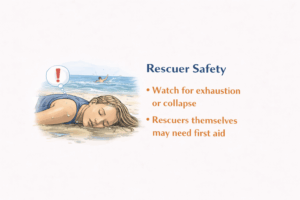 A surprising and lesser-known concept in first aid and rescue training is “rescue collapse.”
This can occur when a rescuer:
- Uses intense physical effort (swimming, pulling, lifting)
- Is exposed to cold water or strong currents
- Experiences sudden exhaustion or oxygen depletion
After reaching safety, the body can suddenly shut down due to fatigue and stress, leading to collapse—even after the danger appears to be over.
This is why Canadian training programs emphasize:
- Pacing yourself during a rescue
- Using flotation or support whenever possible
- Monitoring rescuers after the incident—not just victims
Symptoms / Warning Signs in Rescuers
After a physically demanding rescue, watch for:
- Sudden weakness or collapse
- Rapid or irregular breathing
- Confusion or disorientation
- Pale or clammy skin
- Extreme fatigue
These signs may indicate the body is overwhelmed from exertion or stress.
Causes / Risk Factors
Factors that increase risk during water rescues include:
- Strong currents or riptides
- Cold water exposure
- Lack of flotation devices
- Physical overexertion
- Attempting rescue without training
Even strong swimmers can be affected under these conditions.
First Aid Response After a Water Rescue
Based on standard first aid training practices in Canada, general response includes:
- Calling emergency services immediately
- Ensuring both victim and rescuer are out of danger
- Checking breathing and responsiveness of everyone involved
- If someone is unresponsive and not breathing normally, CPR may be required
- Monitoring for signs of exhaustion or shock
- Keeping individuals warm and calm until help arrives
These principles are commonly taught in certified CPR and emergency response training across Canada.
Prevention & Workplace Considerations
To improve safety in Manitoba and across Canada:
- Avoid entering water without proper training or support
- Use flotation devices or reach/throw methods when possible
- Work in teams during rescue situations
- Include rescuer safety in workplace emergency plans
- Educate staff and communities about water hazards
Preparedness includes knowing when and how to help safely.
FAQ
Why is rescuer safety so important in emergencies?
If a rescuer becomes injured or exhausted, the situation can worsen. First aid training emphasizes staying safe so you can continue to help effectively.
What is rescue collapse?
Rescue collapse is when a rescuer becomes overwhelmed after intense effort, sometimes collapsing after reaching safety due to fatigue or stress.
Should you always enter the water to help someone?
Not always. Safer methods like reaching or throwing an object are often recommended unless you are trained and equipped for water rescue.
How can CPR help after a water emergency?
CPR helps maintain circulation and oxygen flow if someone is unresponsive and not breathing normally after being rescued.
Who should take first aid training in Winnipeg?
Anyone can benefit, especially those near water, outdoor workers, and community members across Manitoba.
Educational Note
This content is for general awareness and reflects commonly taught practices in first aid and CPR training across Canada. Hands-on training helps individuals respond more effectively in real-life emergencies.
About The Author

Mark Kascha
Certified First Aid Instructor Trainer with 30+ years of real-world experience, including lifeguarding, workplace emergency response, and first aid program development across Canada. Has worked with WorkSafeBC, WSIB, and Manitoba Health.
👉 [View full credentials]🔗 View LinkedIn Profile
Last reviewed: March 2026