
911 Operator Followed Protocols in CPR Call Involving Winnipeg Mail Carrier, City Says

A Winnipeg mail carrier who discovered an unconscious woman in an apartment lobby says he felt pressured to perform CPR despite concerns about his personal safety. However, the City of Winnipeg maintains that the 911 operator involved followed established emergency protocols.

The incident occurred in May 2017 when Canada Post mail carrier Corey Gallagher found an unconscious woman lying in the lobby of a south-end apartment building. Gallagher immediately called 911 and was instructed by the dispatcher to begin CPR.

Gallagher later said he hesitated after noticing white powder on the woman’s shirt, fearing it could be fentanyl and that the woman may have overdosed. Despite sharing his concerns about potential exposure, he says he was still encouraged to proceed with CPR.

Following a review of the call, the Winnipeg Fire Paramedic Service determined that the dispatcher acted appropriately and followed standard emergency procedures. City officials also noted that dispatchers routinely ask about scene safety and available protective equipment but must often make decisions with limited information.

For full details and official statements related to this incident, you can read the original CBC News report here:
👉 911 operator who told Winnipeg mail carrier to give CPR followed rules, city says

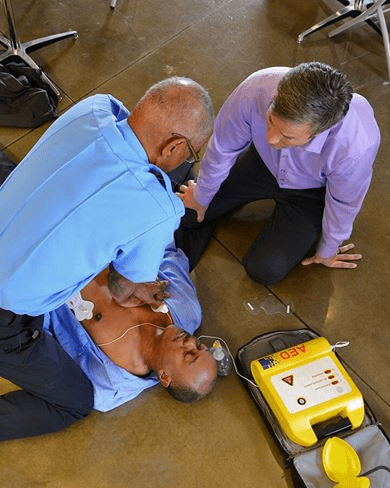
Emergency responders provide life-saving treatment using an AED and CPR on a man during an emergency.
Emergency responders attempt to save a patient’s life using AED and CPR during an apartment building emergency response.

Real-World Challenges in Medical Emergencies

This incident highlights the difficult decisions bystanders may face during emergencies—balancing the need to help with concerns for personal safety. Experts note that when rescue breathing is a concern, hands-only CPR (chest compressions without mouth-to-mouth) is often recommended until professional help arrives.

Proper training can make these situations clearer and less overwhelming. Learning CPR helps individuals understand when compressions alone are appropriate, how to reduce risk, and how to respond confidently under pressure.

Why CPR Training Matters

Being trained in CPR and AED use prepares people for unexpected emergencies like cardiac arrest or overdose-related incidents. Training also covers scene assessment, personal safety, and practical techniques that can save lives.

If you want to be better prepared for emergencies like this, consider enrolling in a CPR and AED training course in Winnipeg through Winnipeg First Aid

About The Author

Mark Kascha

Certified First Aid Instructor Trainer with 30+ years of real-world experience, including lifeguarding, workplace emergency response, and first aid program development across Canada. Has worked with WorkSafeBC, WSIB, and Manitoba Health.

👉 [View full credentials]🔗 View LinkedIn Profile

Last reviewed: March 2026

Serving Winnipeg and south Manitoba with the cheapest priced, highest quality first aid training, CPR and food safety courses since 2012 with a commitment to providing the best classes to Canadians.

Shopping Cart
Scroll to Top
Call Now Button
Maple Leaf Choose locally-owned, Canadian-operated businesses with no connections or partnerships to American corporate entities. Maple Leaf
This is default text for notification bar