Knowing what to do if someone falls into fast-moving water or how to respond when a drowning emergency occurs is critical—especially in outdoor environments like rivers, lakes, and waterfalls. Water-related incidents can escalate quickly, and having basic first aid and rescue awareness can make a difference in those first moments.
In Winnipeg and across Manitoba, many people spend time near rivers such as the Red and Assiniboine. Whether for recreation or work, understanding water safety and emergency response is an important part of first aid training in Canada.
First Aid & Workplace Relevance in Canada
 Across Canada, water safety awareness is important for:
- Outdoor workers and park staff
- Camp counselors, teachers, and trip supervisors
- Families and tourists exploring natural areas
- Anyone near rivers, lakes, or flood-prone zones
In Winnipeg neighbourhoods like St. Vital and areas near riverbanks, knowing how to respond to drowning, cold water exposure, and rescue safety is highly relevant.
Training programs such as CPR training Winnipeg and first aid certification Manitoba often include water-related emergency scenarios, emphasizing safe response rather than risky rescue attempts.
Scenario Story: Tragic Fall Near Elk Falls
A tragic accident on Vancouver Island highlights how quickly a routine moment can turn into an emergency.
A woman in her 60s, visiting from the Netherlands with her husband, was exploring the scenic area near Elk Falls when she slipped into the river. Reports suggest she had attempted to retrieve an apple when she lost her footing and was pulled into the fast-moving water.
Around 2:20 PM, authorities received a report from a bystander who witnessed the incident. Communication challenges made the situation more difficult, as her husband—who had limited English—could only describe that she had called for help before disappearing into the current.
Emergency crews responded rapidly. Police, fire services, search and rescue teams, and ambulance personnel coordinated efforts along the river. BC Hydro assisted by reducing water flow from the nearby John Hart Dam to support search operations. A helicopter and drone were also deployed to scan the area.
Despite these extensive efforts, the woman was later found in the fast-moving waters above the falls and could not be saved.
This heartbreaking event underscores how natural water environments can become dangerous in seconds—even during calm, everyday activities.
A Unique First Aid Insight: “Reach, Don’t Go” Saves Lives
A lesser-known but life-saving principle taught in Canadian water safety training is:
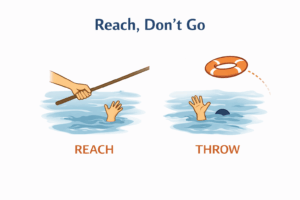
“Reach, Don’t Go”
In drowning situations, untrained rescuers entering the water often become victims themselves due to strong currents, cold shock, or panic.
Instead:
- Reach with a stick, rope, or clothing
- Throw something that floats
- Call for help immediately
This approach prioritizes your safety while still offering assistance, and it is widely taught in emergency response training across Canada.
Symptoms / Warning Signs of Drowning
Someone in distress in the water may:
- Appear to be struggling silently (often unable to shout)
- Have their head low in the water with mouth at water level
- Gasp or hyperventilate
- Attempt to roll onto their back
- Show panicked or uncoordinated movements
Recognizing these signs early is critical for a timely response.
Causes / Risk Factors
Water-related incidents can occur due to:
- Slippery rocks or unstable footing
- Fast-moving currents near rivers or falls
- Cold water shock
- Reaching for objects near water edges
- Lack of barriers or warning awareness
Even experienced individuals can be caught off guard in these environments.
First Aid Response for Drowning Emergencies
Based on standard first aid training practices in Canada, general response steps include:
- Calling emergency services immediately
- Avoiding entering the water unless trained to do so
- Attempting a safe reach or throw rescue if possible
- Once the person is out of the water, checking breathing and responsiveness
- If unresponsive and not breathing normally, CPR may be required
These techniques are commonly taught in certified CPR and first aid courses across Canada.
Prevention & Workplace Considerations
To improve water safety in Manitoba and across Canada:
- Stay a safe distance from fast-moving water
- Follow posted warning signs in parks and natural areas
- Supervise children and inexperienced swimmers closely
- Include water safety in workplace hazard assessments where applicable
- Ensure proper training for outdoor and field workers
Preparedness and awareness are key to reducing risk.
FAQ
What should you do if someone falls into a river?
Call emergency services immediately and avoid jumping in unless trained. Try to reach or throw something to help them stay afloat while keeping yourself safe.
Why is it dangerous to enter the water to help someone?
Strong currents, cold temperatures, and panic can quickly overwhelm even strong swimmers. Many rescuers become victims when entering unsafe water conditions.
How does CPR help in drowning situations?
CPR can help restore circulation and oxygen delivery if a person is unresponsive and not breathing normally after being removed from the water.
Who should learn water-related first aid in Winnipeg?
Anyone near rivers, lakes, or outdoor environments can benefit. Training is especially useful for families, workers, and outdoor enthusiasts in Manitoba.
What is the first priority in a drowning emergency?
Ensuring your own safety and calling for help are the top priorities before attempting any rescue.
Educational Note
This article is for general awareness and reflects commonly taught practices in first aid and CPR training across Canada. Hands-on training helps individuals respond more confidently in real-life emergencies.
About The Author

Mark Kascha
Certified First Aid Instructor Trainer with 30+ years of real-world experience, including lifeguarding, workplace emergency response, and first aid program development across Canada. Has worked with WorkSafeBC, WSIB, and Manitoba Health.
👉 [View full credentials]🔗 View LinkedIn Profile
Last reviewed: March 2026