Knowing what to do if someone goes into cardiac arrest after a car accident or how to respond when a collision causes serious injuries can be life-saving. In high-impact crashes, injuries can quickly become critical, and early CPR and emergency response are key components of first aid training in Canada.
In Winnipeg and across Manitoba, motor vehicle collisions remain one of the most common causes of serious injury. This is why CPR training Winnipeg and first aid certification Manitoba are strongly encouraged for drivers, workers, and the general public.
First Aid & Workplace Relevance in Canada
Across Canada, emergency response training is especially important for:
- Drivers and commuters
- Construction and transportation workers
- Delivery personnel and fleet operators
- Teachers, coaches, and community members
In areas like Downtown Winnipeg, St. Vital, and Transcona, road traffic is constant. Knowing how to respond to cardiac arrest, trauma, and unconsciousness can help bridge the gap until paramedics arrive.
Training programs commonly include CPR, AED use, and scene safety, which are essential in roadway emergencies.
Scenario Story: Fatal Head-On Collision in Lake Country
 A tragic collision in Lake Country highlights how quickly emergencies can escalate on the road.
Emergency crews responded to a serious head-on crash along Highway 97 near Oceola Road. Witnesses reported that a grey Chevrolet Impala crossed the centerline and collided with a northbound Chrysler 300.
First responders—including fire crews and paramedics—arrived quickly and found the 87-year-old driver of the Impala in critical condition. He had gone into cardiac arrest at the scene.
CPR was immediately initiated by emergency personnel, and the man was transported urgently to a healthcare facility. Despite these efforts, he later passed away.
The second driver, a 52-year-old man from Alberta, survived with serious but non-life-threatening injuries and was also transported for medical care.
Investigators from the RCMP and BC Coroners Service continue to examine the cause of the collision.
This incident underscores a key reality: even with rapid emergency response and CPR, outcomes can still be uncertain—but early action gives the best possible chance.
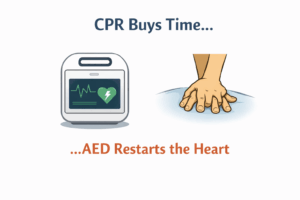
A Unique First Aid Insight: “CPR Buys Time — It Doesn’t Restart the Heart”
A surprising and important concept taught in Canadian CPR courses is that CPR does not actually restart the heart.
Instead, CPR helps circulate oxygen-rich blood to the brain and vital organs, effectively buying time until advanced care—such as defibrillation (AED use) or paramedic intervention—can occur.
This means:
- CPR keeps the body viable during cardiac arrest
- An AED is often needed to restore a normal heart rhythm
- Early CPR + early AED use significantly improves survival chances
This is why AED training Winnipeg is often taught alongside CPR—it completes the chain of survival.
Symptoms / Warning Signs After a Collision
Following a serious car accident, watch for:
- Unresponsiveness or unconsciousness
- Absence of normal breathing
- Weak or absent pulse
- Severe injuries or visible trauma
- Confusion, dizziness, or disorientation
These may indicate life-threatening conditions such as cardiac arrest or shock.
Causes / Risk Factors
Factors that can contribute to severe collision outcomes include:
- Crossing into oncoming traffic
- Fatigue or reduced alertness
- Medical emergencies while driving
- High-speed travel on highways
- Weather or road conditions
Understanding these risks reinforces the importance of both prevention and preparedness.
First Aid & CPR Response After a Car Accident
Based on standard first aid training practices in Canada, general response steps include:
- Ensuring the scene is safe before approaching
- Calling emergency services immediately
- Checking responsiveness and breathing
- If the person is unresponsive and not breathing normally, CPR may be started
- Continuing care until trained responders arrive
These skills are commonly taught in certified CPR and emergency response training programs across Canada.
Prevention & Workplace Considerations
To improve safety on roads and in workplaces across Manitoba:
- Follow safe driving practices and speed limits
- Avoid distractions while driving
- Ensure vehicles are properly maintained
- Provide driver safety and emergency response training in workplaces
- Equip workplaces and public areas with AEDs where possible
Preparedness can make a meaningful difference in emergency outcomes.
FAQ
What should you do if someone is unresponsive after a car accident?
Check for breathing and responsiveness, call emergency services, and stay with the person. If they are not breathing normally, CPR may be required until help arrives.
How does CPR help during cardiac arrest after a crash?
CPR helps maintain blood flow to the brain and vital organs. It supports the body temporarily until advanced care, such as defibrillation, can be provided.
Why is an AED important along with CPR?
An AED can help restore a normal heart rhythm during cardiac arrest. CPR alone supports circulation, but an AED is often needed to correct the heart’s electrical activity.
Who should take CPR training in Winnipeg?
Anyone can benefit, especially drivers, workers, and caregivers. Training is valuable in both workplace and everyday environments across Winnipeg and Manitoba.
Can CPR always save someone in cardiac arrest?
Outcomes vary depending on the situation, but early CPR and rapid emergency response improve the chances of survival.
Educational Note
This article is for general awareness and reflects commonly taught practices in first aid and CPR training across Canada. Hands-on training helps individuals respond more effectively in real emergencies.
About The Author

Mark Kascha
Certified First Aid Instructor Trainer with 30+ years of real-world experience, including lifeguarding, workplace emergency response, and first aid program development across Canada. Has worked with WorkSafeBC, WSIB, and Manitoba Health.
👉 [View full credentials]🔗 View LinkedIn Profile
Last reviewed: March 2026