A powerful reminder of why first aid education matters comes from a 17-year-old student who used his newly learned skills to save his father’s life—just one day after training.
The Incident
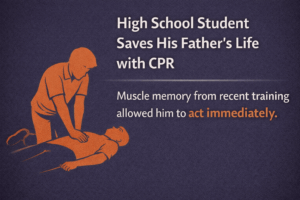 Turki Ayash, a Grade 11 student whose family arrived in Canada as Syrian refugees, had recently completed CPR training through his school’s physical education program.
- He took the course in November
- The very next day, his 49-year-old father collapsed
- Without hesitation, Ayash began CPR immediately
His quick action helped keep his father alive until emergency services arrived.
He later received recognition from Essex-Windsor EMS, including a certificate and service coin.
A Unique First Aid Insight: “Muscle Memory Saves Lives”
Here’s something surprising—and incredibly important:
🧠 Most people don’t “think” during CPR—they rely on muscle memory
Because Ayash had just practiced CPR:
- His body remembered the rhythm
- He didn’t freeze or hesitate
- He acted instantly
👉 This is why recent training matters so much. Skills fade quickly without practice, and in real emergencies, your brain often goes into shock or panic mode.
Another Powerful Insight: CPR Buys Time—Not Just Survival
Many people think CPR is about “reviving” someone—but here’s a deeper truth:
⏱️ CPR is about buying time for the brain
- Brain cells begin to die after 4–6 minutes without oxygen
- CPR helps circulate oxygenated blood
- Even imperfect CPR is better than no CPR
In this case, Ayash’s actions likely preserved brain function, not just life.
What Made the Difference?
1. Immediate Action
He didn’t wait or second-guess—he started CPR right away.
2. Recent Training
The timing of his course made the response more automatic.
3. Confidence to Act
Training reduces fear of “doing it wrong.”
What To Do If Someone Collapses
Step 1: Check Responsiveness
- Tap and shout
Step 2: Call for Help
- Call emergency services immediately
Step 3: Check Breathing
- If not breathing normally → start CPR
Step 4: Begin Chest Compressions
- Push hard and fast in the center of the chest
Step 5: Use an AED (If Available)
- Follow voice prompts
A Surprising Reality: Imperfect CPR Still Works
A lot of people hesitate because they’re afraid of doing CPR “wrong.”
Truth:
- Too slow? Still helps
- Not deep enough? Still better than nothing
- Only hands (no breaths)? Still effective for many adults
👉 The biggest mistake is doing nothing at all
Why CPR in Schools Matters
This story highlights something important:
🏫 Teaching CPR in schools saves lives—literally
- Students bring skills home to their families
- Emergencies often happen at home—not in public
- Youth can act just as effectively as adults
Final Takeaway
This wasn’t luck—it was training meeting opportunity.
A single class:
- Turned a student into a lifesaver
- Protected a family
- Proved that anyone can make a difference
Learn CPR Today
You never know when you’ll need it—
and like this story shows, it might be sooner than you think.
Disclaimer
This article is for informational and educational purposes only and does not replace certified first aid or medical training. In an emergency, always call your local emergency number immediately. First aid techniques, including CPR, should be performed by individuals who have received proper training whenever possible. Outcomes may vary depending on the situation, and no guarantee of survival is implied.
About The Author
Mark Kascha
Certified First Aid Instructor Trainer with 30+ years of real-world experience, including lifeguarding, workplace emergency response, and first aid program development across Canada. Has worked with WorkSafeBC, WSIB, and Manitoba Health.
👉 [View full credentials]🔗 View LinkedIn Profile
Last reviewed: March 2026