Understanding Pedestrian Collisions and Emergency Response
Pedestrian collisions can result in severe and complex injuries. Knowing what to do if someone is hit by a vehicle or how to respond when a person is found unresponsive on the road is critical.
A unique and important concept is the “Platinum Ten Minutes”—the first critical period where early first aid can help stabilize life-threatening injuries before advanced care arrives.
First Aid & Workplace Relevance in Winnipeg, Manitoba
In Winnipeg, Manitoba, pedestrian and roadway incidents can occur in busy areas such as Downtown Winnipeg, St. Vital, and Transcona.
CPR training in Winnipeg and first aid certification in Manitoba are important for:
- Drivers and commuters
- Construction and road workers
- Security personnel
- Teachers and community members
These skills are widely taught in emergency response training across Canada, especially for trauma and roadside emergencies.
Scenario: Fatal Hit-and-Run in Abbotsford
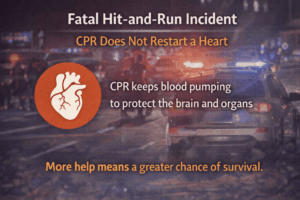 A tragic hit-and-run incident in Abbotsford, British Columbia involved 17-year-old Desmond Bassi, a local athlete.
- He had been walking along Clearbrook Road and Blueridge Drive after leaving a gathering
- He became separated from his group
- Two drivers later found him lying injured on the roadway
They:
- Pulled over and called 911 immediately
- Emergency responders, including police, arrived
- Officers began CPR at the scene
Despite efforts:
- Bassi was transported to hospital
- He was declared dead about an hour later
The driver later turned himself in, and the investigation continues.
This incident highlights the importance of early bystander action and trauma awareness, which are key components of first aid training in Manitoba.
A Unique First Aid Insight: The “Platinum Ten Minutes”
In trauma emergencies like vehicle collisions:
- The first 10 minutes are critical
- Early actions can help preserve life before paramedics arrive
Why This Matters
- Severe bleeding and airway issues can worsen quickly
- Early CPR may help if breathing stops
- Stabilizing the person improves chances of survival
This concept is emphasized in Canadian first aid and emergency response training.
Another Unique Factor: “Look Before You Move”
In roadway incidents, one of the most important principles is:
Do not move the person unless necessary
Why?
- There may be spinal injuries
- Movement can worsen internal damage
- Keeping the person still helps prevent further harm
This is a key principle taught in CPR and first aid courses in Winnipeg.
Common Injuries in Pedestrian Crashes
Head and Brain Injuries
- Concussion or loss of consciousness
Spinal Injuries
- Neck or back trauma
Internal Bleeding
- Not always visible
Fractures and Soft Tissue Injuries
- Limbs, ribs, or pelvis
Shock
- Reduced circulation to vital organs
Signs of Serious Injury
Watch for:
- Unresponsiveness
- Abnormal or no breathing
- Bleeding
- Confusion or disorientation
- Pale, cool, or clammy skin
Immediate action is critical.
First Aid Response: What to Do
Based on standard first aid training practices in Canada:
Step 1: Ensure Scene Safety
- Watch for traffic and hazards
Step 2: Call Emergency Services Immediately
Step 3: Check Airway and Breathing
- If not breathing → begin CPR
Step 4: Control Bleeding (If Present)
- Apply firm, direct pressure
Step 5: Minimize Movement
- Support the head and neck
- Keep the person still
Step 6: Monitor and Support
- Stay with the person until help arrives
A Surprising Detail: CPR Doesn’t Restart the Heart
A common misconception is that CPR “restarts” the heart.
In Reality:
- CPR keeps blood circulating
- It helps deliver oxygen to the brain
- Defibrillation (AED) is often needed to restore rhythm
This is a key teaching point in CPR courses across Canada.
Prevention and Safety Considerations
To improve safety in Winnipeg and across Manitoba:
- Stay alert when driving or walking
- Use well-lit and visible routes
- Wear reflective clothing at night
- Encourage CPR and first aid training
Prepared individuals can make a difference in emergencies.
Frequently Asked Questions
What is the “Platinum Ten Minutes”?
It refers to the critical early period where first aid can help stabilize severe injuries.
Should you move someone after a crash?
Only if necessary for safety, as movement can worsen injuries.
Does CPR restart the heart?
No, it helps circulate blood until advanced care is available.
What is the first priority in a pedestrian accident?
Ensure safety, call for help, and check breathing.
Who should take first aid training in Winnipeg?
Anyone who wants to be prepared for emergencies in daily life.
Educational Note
This article is for general awareness and reflects commonly taught first aid practices in Canada. Early response and careful handling are key in trauma situations.
Understanding Pedestrian Collisions and Emergency Response
Pedestrian collisions can result in severe and complex injuries. Knowing what to do if someone is hit by a vehicle or how to respond when a person is found unresponsive on the road is critical.
A unique and important concept is the “Platinum Ten Minutes”—the first critical period where early first aid can help stabilize life-threatening injuries before advanced care arrives.
First Aid & Workplace Relevance in Winnipeg, Manitoba
In Winnipeg, Manitoba, pedestrian and roadway incidents can occur in busy areas such as Downtown Winnipeg, St. Vital, and Transcona.
CPR training in Winnipeg and first aid certification in Manitoba are important for:
- Drivers and commuters
- Construction and road workers
- Security personnel
- Teachers and community members
These skills are widely taught in emergency response training across Canada, especially for trauma and roadside emergencies.
Scenario: Fatal Hit-and-Run in Abbotsford
A tragic hit-and-run incident in Abbotsford, British Columbia involved 17-year-old Desmond Bassi, a local athlete.
- He had been walking along Clearbrook Road and Blueridge Drive after leaving a gathering
- He became separated from his group
- Two drivers later found him lying injured on the roadway
They:
- Pulled over and called 911 immediately
- Emergency responders, including police, arrived
- Officers began CPR at the scene
Despite efforts:
- Bassi was transported to hospital
- He was declared dead about an hour later
The driver later turned himself in, and the investigation continues.
This incident highlights the importance of early bystander action and trauma awareness, which are key components of first aid training in Manitoba.
A Unique First Aid Insight: The “Platinum Ten Minutes”
In trauma emergencies like vehicle collisions:
- The first 10 minutes are critical
- Early actions can help preserve life before paramedics arrive
Why This Matters
- Severe bleeding and airway issues can worsen quickly
- Early CPR may help if breathing stops
- Stabilizing the person improves chances of survival
This concept is emphasized in Canadian first aid and emergency response training.
Another Unique Factor: “Look Before You Move”
In roadway incidents, one of the most important principles is:
Do not move the person unless necessary
Why?
- There may be spinal injuries
- Movement can worsen internal damage
- Keeping the person still helps prevent further harm
This is a key principle taught in CPR and first aid courses in Winnipeg.
Common Injuries in Pedestrian Crashes
Head and Brain Injuries
- Concussion or loss of consciousness
Spinal Injuries
- Neck or back trauma
Internal Bleeding
- Not always visible
Fractures and Soft Tissue Injuries
- Limbs, ribs, or pelvis
Shock
- Reduced circulation to vital organs
Signs of Serious Injury
Watch for:
- Unresponsiveness
- Abnormal or no breathing
- Bleeding
- Confusion or disorientation
- Pale, cool, or clammy skin
Immediate action is critical.
First Aid Response: What to Do
Based on standard first aid training practices in Canada:
Step 1: Ensure Scene Safety
- Watch for traffic and hazards
Step 2: Call Emergency Services Immediately
Step 3: Check Airway and Breathing
- If not breathing → begin CPR
Step 4: Control Bleeding (If Present)
- Apply firm, direct pressure
Step 5: Minimize Movement
- Support the head and neck
- Keep the person still
Step 6: Monitor and Support
- Stay with the person until help arrives
A Surprising Detail: CPR Doesn’t Restart the Heart
A common misconception is that CPR “restarts” the heart.
In Reality:
- CPR keeps blood circulating
- It helps deliver oxygen to the brain
- Defibrillation (AED) is often needed to restore rhythm
This is a key teaching point in CPR courses across Canada.
Prevention and Safety Considerations
To improve safety in Winnipeg and across Manitoba:
- Stay alert when driving or walking
- Use well-lit and visible routes
- Wear reflective clothing at night
- Encourage CPR and first aid training
Prepared individuals can make a difference in emergencies.
Frequently Asked Questions
What is the “Platinum Ten Minutes”?
It refers to the critical early period where first aid can help stabilize severe injuries.
Should you move someone after a crash?
Only if necessary for safety, as movement can worsen injuries.
Does CPR restart the heart?
No, it helps circulate blood until advanced care is available.
What is the first priority in a pedestrian accident?
Ensure safety, call for help, and check breathing.
Who should take first aid training in Winnipeg?
Anyone who wants to be prepared for emergencies in daily life.
Educational Note
This article is for general awareness and reflects commonly taught first aid practices in Canada. Early response and careful handling are key in trauma situations.
About The Author

Mark Kascha
Certified First Aid Instructor Trainer with 30+ years of real-world experience, including lifeguarding, workplace emergency response, and first aid program development across Canada. Has worked with WorkSafeBC, WSIB, and Manitoba Health.
👉 [View full credentials]🔗 View LinkedIn Profile
Last reviewed: March 2026