Understanding Boating Incidents and Emergency Response
Boating accidents can quickly become life-threatening, especially when someone falls into open water. Knowing what to do if someone falls overboard or how to respond safely during a drowning emergency is critical.
A unique and often overlooked concept is “rescue without risk”—helping someone in the water without putting yourself in danger.
First Aid & Workplace Relevance in Winnipeg, Manitoba
In Winnipeg, Manitoba, boating and water activities are common on rivers and lakes, including areas near St. Vital, Transcona, and surrounding cottage regions.
CPR training in Winnipeg and first aid certification in Manitoba are essential for:
- Boaters and outdoor enthusiasts
- Fishing and marine workers
- Families and recreational groups
- Workplace safety teams
These skills are widely taught in emergency response training across Canada, including water rescue awareness.
Scenario: Boating Incident in Conche, Newfoundland
 A tragic boating incident occurred near Lighthouse Point in Conche.
- A 65-year-old man was moving a boat between wharves
- He reportedly experienced engine trouble
- The boat drifted into larger waves
- A swell knocked him overboard
His brother, who was on shore:
- Attempted to organize a rescue
- Later recovered the man from the water
- CPR was immediately started, but he was unresponsive
Investigators noted that:
- It was unclear whether a lifejacket was worn at the time
This incident highlights how quickly conditions can change on the water—something also relevant across Manitoba waterways.
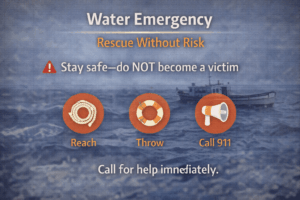
A Unique First Aid Insight: “Rescue Without Risk”
One of the most important principles in water emergencies is:
Do NOT become a second victim
Many rescuers get into trouble when they:
- Enter the water without training
- Underestimate waves or currents
- Attempt direct contact with a panicked person
Safer Alternatives
- Reach with an object (rope, pole, flotation)
- Throw something that floats
- Call for help immediately
This approach is emphasized in Canadian water safety and first aid training.
Another Unique Factor: Cold Water Shock
Even strong swimmers can struggle in cold water.
What Happens
- Sudden gasp reflex
- Rapid breathing
- Loss of muscle control
Why This Matters
- A person may drown quickly even if close to shore
- Wearing a lifejacket helps keep the airway above water
This is a critical concept taught in boating safety training across Canada.
Signs of Drowning or Water Distress
Watch for:
- Head low in the water
- Gasping or silent struggle
- Weak or uncoordinated movements
- Unresponsiveness after rescue
Immediate action is critical.
First Aid Response: What to Do
Based on standard first aid training practices in Canada:
Step 1: Ensure Your Own Safety
- Do not enter unsafe water
Step 2: Call Emergency Services Immediately
Step 3: Remove the Person from Water (If Safe)
Step 4: Check Airway and Breathing
- If not breathing → begin CPR
Step 5: Focus on Breathing Support
- Drowning is primarily a lack of oxygen emergency
Step 6: Keep the Person Warm
- Protect from wind and cold
A Surprising Detail: Airway Is the Priority in Drowning
Unlike many other emergencies:
- The main issue is lack of oxygen
- Supporting breathing is critical
- Early CPR can help restore oxygen flow
This is why drowning response is emphasized in CPR courses in Winnipeg.
Prevention and Boating Safety
To improve safety in Winnipeg and across Manitoba:
- Always wear a lifejacket
- Check weather and water conditions
- Maintain your boat and engine
- Avoid boating alone when possible
- Take first aid and CPR training in Winnipeg
Preparedness can save lives.
Frequently Asked Questions
What does “rescue without risk” mean?
It means helping someone safely without putting yourself in danger.
Why are lifejackets so important?
They keep the airway above water, even if a person is unconscious.
What is cold water shock?
A sudden reaction to cold water that affects breathing and movement.
What is the priority after rescuing someone from water?
Check breathing and begin CPR if needed.
Who should take boating safety and first aid training?
Anyone who spends time near water or participates in boating activities.
Educational Note
This article is for general awareness and reflects commonly taught first aid practices in Canada. Water emergencies require quick thinking, safety awareness, and early action.
About The Author

Mark Kascha
Certified First Aid Instructor Trainer with 30+ years of real-world experience, including lifeguarding, workplace emergency response, and first aid program development across Canada. Has worked with WorkSafeBC, WSIB, and Manitoba Health.
👉 [View full credentials]🔗 View LinkedIn Profile
Last reviewed: March 2026
Serving Winnipeg and south Manitoba with the cheapest priced, highest quality first aid training, CPR and food safety courses since 2012 with a commitment to providing the best classes to Canadians.