Understanding Drowning Incidents
Drowning occurs when a person is unable to breathe due to being submerged in water. It can happen quickly and often without obvious signs of distress. Immediate rescue and first aid response, including CPR, are critical in improving the chances of survival.
Across Canada, including Winnipeg and Manitoba communities, water-related activities—such as lakes, rivers, and recreational areas—are common. This makes water safety awareness and CPR knowledge especially important for both the public and workplaces involved in outdoor or recreational settings.
First Aid & Workplace Relevance in Canada
Water-related risks are present in many environments, including construction sites near water, parks, tourism settings, and recreational workplaces. In Winnipeg and surrounding areas, employers may include water safety protocols and first aid training as part of their safety programs.
Being prepared to respond to drowning emergencies can help reduce response time before emergency services arrive.
A Realistic Scenario: Coastal Water Emergency
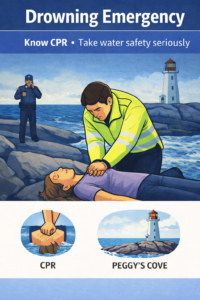 At a well-known coastal location in Nova Scotia, emergency services responded to reports of a person struggling in the water. Local individuals nearby assisted in bringing the person to shore, where first responders began CPR.
Despite these efforts, the individual did not survive. Following similar incidents in the area, local authorities reviewed safety measures and introduced plans to improve signage and install barriers to help reduce risk.
This scenario highlights the unpredictable nature of water environments and the importance of both prevention and emergency response readiness.
Recognizing Signs of Drowning
Drowning is often silent and may include:
-
Difficulty staying above water
-
Weak or ineffective movements
-
Head low in the water, mouth at water level
-
Gasping or attempting to breathe
-
Unresponsiveness after rescue
Quick recognition allows for faster rescue and first aid.
Causes and Risk Factors
Drowning incidents may be linked to:
-
Slippery or unstable surfaces near water
-
Cold water shock
-
Strong waves or currents
-
Lack of barriers or warning signs
-
Overestimating swimming ability
In Canada, coastal areas, lakes, and rivers can present changing and unpredictable conditions.
First Aid Response: Drowning and CPR
If someone is removed from the water and is not breathing normally:
-
Call 911 immediately
-
Check responsiveness and breathing
-
Begin CPR if needed
-
Continue until emergency services arrive or the person shows signs of recovery
Rescue should only be attempted if it is safe to do so, as water environments can pose risks to rescuers.
Prevention and Workplace Considerations
Improving water safety in Canadian settings may include:
-
Following posted safety signs and warnings
-
Keeping a safe distance from unstable edges or rocks
-
Using appropriate safety equipment when required
-
Supervising water activities
-
Providing first aid and CPR training for staff in water-related environments
In areas like Winnipeg and throughout Manitoba, lakes and rivers are popular, making awareness and preparation essential.
Frequently Asked Questions
Why is drowning sometimes described as silent?
People who are drowning may not be able to call for help, making the situation less noticeable.
What should you do first in a drowning emergency?
Call emergency services and ensure the person is safely removed from the water before providing aid.
Is CPR always required after a drowning incident?
CPR may be needed if the person is not breathing normally after being rescued.
Are natural water areas more dangerous than pools?
Natural environments can have unpredictable conditions such as currents, uneven surfaces, and temperature changes.
How can workplaces reduce water-related risks?
Through safety training, clear procedures, and awareness of environmental hazards.
Educational Note
This article is for general awareness and education. First aid and CPR training can help individuals respond more effectively to water-related emergencies.
About The Author

Mark Kascha
Certified First Aid Instructor Trainer with 30+ years of real-world experience, including lifeguarding, workplace emergency response, and first aid program development across Canada. Has worked with WorkSafeBC, WSIB, and Manitoba Health.
👉 [View full credentials]🔗 View LinkedIn Profile
Last reviewed: March 2026
Serving Winnipeg and south Manitoba with the cheapest priced, highest quality first aid training, CPR and food safety courses since 2012 with a commitment to providing the best classes to Canadians.