Understanding Pedestrian Accidents
 Pedestrian accidents occur when a person on foot is struck by a vehicle. These incidents can happen quickly, even in marked crosswalks, and may result in a range of injuries from minor cuts to more serious trauma. Immediate first aid and emergency response play an important role in supporting the injured person until paramedics arrive.
In Canada, including Winnipeg and across Manitoba, pedestrian safety is a key public concern—especially during fall and winter when visibility is reduced due to shorter daylight hours and weather conditions.
First Aid & Workplace Relevance in Canada
Pedestrian incidents can occur near workplaces, job sites, and public areas. Employees who work outdoors, in construction, delivery, or traffic control roles may face increased exposure to vehicle hazards.
Workplaces in Winnipeg and surrounding areas often include safety measures such as high-visibility gear and first aid training to help reduce risk and improve response during incidents.
A Realistic Scenario: Downtown Safety Campaign
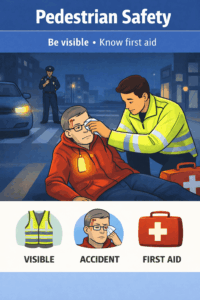
During a pedestrian safety campaign in a downtown area, officers were distributing reflective gear to improve visibility. Shortly after receiving a reflector, a pedestrian entered a marked crosswalk and was struck by a vehicle waiting at an intersection.
Officers nearby responded immediately. They provided first aid at the scene and contacted emergency services. The individual sustained a cut above the eye and damage to personal items such as glasses, but the injuries were managed on-site by paramedics.
This scenario highlights how quickly situations can change and how preparedness—both in safety awareness and first aid—can support better outcomes.
Common Injuries in Pedestrian Accidents
Injuries may vary depending on the impact but can include:
-
Cuts and abrasions
-
Bruising
-
Head injuries
-
Fractures
-
Soft tissue injuries
Even when injuries appear minor, proper assessment and care are important.
Causes and Risk Factors
Pedestrian accidents may be linked to:
-
Low visibility (darkness, rain, snow)
-
Driver inattention
-
Failure to yield at crosswalks
-
Limited eye contact between drivers and pedestrians
-
Distractions (mobile devices, headphones)
In urban areas across Canada, these factors can increase risk during busy traffic periods.
First Aid Response at the Scene
If a pedestrian is struck by a vehicle:
-
Ensure the scene is safe before approaching
-
Call 911 or have someone call immediately
-
Check responsiveness and breathing
-
Control any visible bleeding with gentle pressure
-
Keep the person still and comfortable while waiting for help
These general steps are part of standard first aid training in Canada and help support the injured person until professionals arrive.
Prevention and Workplace Considerations
Improving pedestrian safety in Winnipeg and across Manitoba may include:
-
Wearing reflective or high-visibility clothing
-
Using designated crosswalks
-
Making eye contact with drivers before crossing
-
Reducing distractions while walking
-
Workplace policies for outdoor safety and visibility gear
Public awareness campaigns and workplace safety programs both contribute to reducing risk.
Frequently Asked Questions
Why is visibility important for pedestrians?
Visibility helps drivers see pedestrians sooner, especially in low-light or poor weather conditions.
What should you do if someone is hit by a car?
Ensure safety, call emergency services, and provide basic first aid while waiting for help.
Are minor injuries still a concern after an accident?
Yes, even minor-looking injuries should be monitored, as some issues may not be immediately visible.
Do reflective materials really help prevent accidents?
Yes, reflective gear increases visibility and can improve driver awareness in darker conditions.
Is first aid training useful for everyday situations?
First aid training provides practical skills that can be applied in a wide range of emergencies, including road incidents.
Educational Note
This article is for general awareness and education. First aid and safety training can help individuals respond more effectively to everyday incidents and emergencies.
About The Author

Mark Kascha
Certified First Aid Instructor Trainer with 30+ years of real-world experience, including lifeguarding, workplace emergency response, and first aid program development across Canada. Has worked with WorkSafeBC, WSIB, and Manitoba Health.
👉 [View full credentials]🔗 View LinkedIn Profile
Last reviewed: March 2026
Serving Winnipeg and south Manitoba with the cheapest priced, highest quality first aid training, CPR and food safety courses since 2012 with a commitment to providing the best classes to Canadians.