Understanding Choking Emergencies
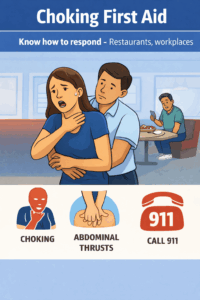 Choking occurs when an object, often food, blocks the airway and prevents normal breathing. It can happen suddenly and may become serious within minutes if the obstruction is not cleared. Quick recognition and basic first aid response are important in helping restore airflow.
In Canada, including Winnipeg and across Manitoba, choking incidents can occur in everyday settings such as restaurants, cafeterias, and workplace lunchrooms. This makes basic first aid awareness a valuable skill for both staff and the public.
First Aid & Workplace Relevance in Canada
Restaurants, food service environments, and workplace break areas are common locations where choking emergencies may occur. In Winnipeg and surrounding communities, many employers encourage staff—especially those working in food service or public-facing roles—to have first aid training.
Knowing how to respond to choking can help reduce response time while waiting for emergency services.
A Realistic Scenario: Quick Thinking in a Restaurant
During a dinner outing at a restaurant, a woman began to choke after taking a bite of toast. She was unable to breathe or speak, and the situation quickly became noticeable to those around her.
A nearby server, who had recently completed first aid training, responded immediately. After confirming that she could not cough or clear the obstruction on her own, he attempted back blows. When that did not work, he performed abdominal thrusts. The obstruction was successfully expelled, allowing her to breathe again.
This situation highlights how having recent first aid knowledge—and the confidence to act—can make a meaningful difference in everyday environments.
Recognizing Signs of Choking
A person who is choking may show:
-
Inability to speak or breathe
-
Weak or ineffective coughing
-
Hands clutched to the throat
-
Panic or distress
-
Possible loss of consciousness if not resolved
Recognizing these signs early allows for faster intervention.
Causes of Choking
Choking is often caused by:
-
Eating too quickly
-
Talking or laughing while eating
-
Large or poorly chewed food pieces
-
Certain foods like bread or meat
-
Distractions while eating
In workplace settings, rushed breaks or multitasking during meals may increase risk.
First Aid Response for Choking
If an adult is choking and cannot cough, speak, or breathe:
-
Ask if they are choking and if they can cough
-
Encourage coughing if possible
-
If the airway is blocked:
-
Deliver firm back blows between the shoulder blades
-
If unsuccessful, perform abdominal thrusts
-
-
Continue alternating until the object is expelled or help arrives
-
Call 911 if the obstruction does not clear quickly
These steps are commonly taught in Canadian first aid courses and are designed for public use.
Prevention and Workplace Considerations
Reducing choking risks in workplaces and public settings may include:
-
Encouraging mindful eating habits
-
Allowing adequate time for meals
-
Providing first aid training for staff
-
Promoting awareness of choking response steps
Prepared staff and informed individuals can contribute to safer dining and workplace environments across Winnipeg and Manitoba.
Frequently Asked Questions
What should you do first if someone is choking?
Check if they can cough or speak. If they can, encourage coughing. If not, begin first aid steps.
Are abdominal thrusts safe to perform?
They are a recognized first aid technique for clearing airway obstructions when performed correctly.
Should you call 911 during a choking emergency?
Emergency services should be contacted if the obstruction is not quickly resolved or if the person becomes unresponsive.
Can choking happen with soft foods like bread?
Yes, foods like bread can become sticky and block the airway if not chewed properly.
Is first aid training required for restaurant workers in Canada?
Requirements vary, but many workplaces encourage or require basic first aid training.
Educational Note
This article is for general awareness and education. Learning first aid techniques can help individuals respond more effectively to common emergencies such as choking.
About The Author

Mark Kascha
Certified First Aid Instructor Trainer with 30+ years of real-world experience, including lifeguarding, workplace emergency response, and first aid program development across Canada. Has worked with WorkSafeBC, WSIB, and Manitoba Health.
👉 [View full credentials]🔗 View LinkedIn Profile
Last reviewed: March 2026
Serving Winnipeg and south Manitoba with the cheapest priced, highest quality first aid training, CPR and food safety courses since 2012 with a commitment to providing the best classes to Canadians.