Understanding Automated External Defibrillators (AEDs)
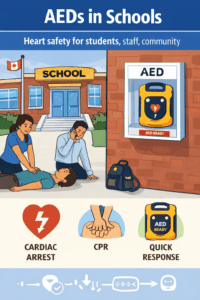 An automated external defibrillator (AED) is a portable device used to help restore a normal heart rhythm during sudden cardiac arrest. It works by delivering a controlled electrical shock to the heart when needed. AEDs are designed for public use and provide clear voice instructions, making them accessible even for individuals without formal medical training.
Across Canada, including Winnipeg and Manitoba communities, AEDs are increasingly recognized as an important part of emergency preparedness in schools, workplaces, and public spaces.
First Aid & Workplace Relevance in Canada
Sudden cardiac arrest can occur without warning—even in children and otherwise healthy individuals. In schools, recreation centres, and workplaces throughout Winnipeg, having an AED available alongside trained responders can improve emergency response readiness.
Many Canadian workplaces and public institutions are incorporating AEDs into their safety plans, along with CPR training, to help bridge the gap before paramedics arrive.
A Realistic Scenario: School Emergency Response
In Ottawa, a young student collapsed during recess at school. Staff quickly recognized that something was wrong, began CPR, and called for emergency assistance. However, the school did not have an AED available at the time.
Following this tragedy, the child’s family advocated for increased access to AEDs in public elementary schools. Their efforts contributed to broader awareness about the importance of having life-saving equipment readily available in school environments.
While it is not always possible to determine outcomes in every situation, this story highlights how preparedness—through equipment and training—can play a role in emergency response.
Recognizing Cardiac Arrest in Children and Adults
Cardiac arrest may present differently but commonly includes:
-
Sudden collapse
-
Unresponsiveness
-
Absence of normal breathing
-
Gasping or irregular breathing
In school or workplace settings, recognizing these signs quickly allows for faster activation of emergency procedures.
Causes and Risk Factors
Sudden cardiac arrest in children is rare but can be associated with:
-
Undiagnosed heart conditions
-
Electrical abnormalities in the heart
-
Trauma or impact to the chest
-
Respiratory issues leading to lack of oxygen
In adults, it is more often linked to heart disease or previous cardiac conditions.
First Aid Response: CPR and AED Use
When cardiac arrest is suspected:
-
Call 911 immediately or assign someone to call
-
Begin CPR with chest compressions
-
Ask someone to locate an AED if available
-
Turn on the AED and follow the voice prompts
-
Continue CPR as instructed until help arrives
AEDs are designed to guide users step-by-step and will only deliver a shock if it is appropriate.
Prevention and Workplace / School Considerations
Prepared environments can support faster and more effective responses. In Canadian schools and workplaces, this may include:
-
Installing AEDs in accessible locations
-
Creating clear emergency response plans
-
Practicing drills to improve readiness
In Winnipeg and across Manitoba, these measures are increasingly part of broader workplace and public safety programs.
Frequently Asked Questions
What is an AED and how does it work?
An AED is a portable device that analyzes heart rhythm and delivers a shock if needed to help restore a normal heartbeat.
Can someone use an AED without training?
Yes, AEDs are designed with voice and visual prompts to guide users through each step.
Are AEDs safe to use on children?
Many AEDs have settings or pads designed for children, and they guide the user on proper use.
Why are AEDs important in schools?
They provide an additional layer of emergency response, especially in situations where every minute matters.
Do workplaces in Canada need AEDs?
Requirements vary, but many organizations include AEDs as part of their health and safety planning.
Educational Note
This article is intended for general awareness. Learning CPR and how to use an AED can help individuals respond more effectively during emergencies in workplaces, schools, and community settings.
About The Author

Mark Kascha
Certified First Aid Instructor Trainer with 30+ years of real-world experience, including lifeguarding, workplace emergency response, and first aid program development across Canada. Has worked with WorkSafeBC, WSIB, and Manitoba Health.
👉 [View full credentials]🔗 View LinkedIn Profile
Last reviewed: March 2026
Serving Winnipeg and south Manitoba with the cheapest priced, highest quality first aid training, CPR and food safety courses since 2012 with a commitment to providing the best classes to Canadians.