Understanding Dispatcher-Assisted CPR
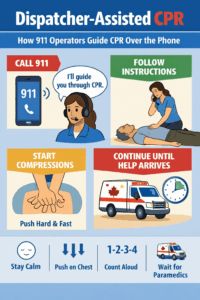 Dispatcher-assisted CPR (cardiopulmonary resuscitation) is when a 911 call-taker provides step-by-step instructions over the phone to help someone respond to a cardiac emergency. This guidance can be critical in the first few minutes before paramedics arrive, especially if the caller has never taken a first aid or CPR course.
In Canada, including communities like Winnipeg and across Manitoba, emergency dispatchers are trained to quickly recognize cardiac arrest situations and coach callers through chest compressions. This early support can help maintain blood flow to vital organs until professional help arrives.
First Aid & Workplace Relevance in Canada
Cardiac emergencies can happen anywhere—at home, in public spaces, or in workplaces across Winnipeg and surrounding Manitoba communities. Many Canadian workplaces encourage or require CPR and first aid training so employees can respond confidently in emergencies.
Knowing how to recognize cardiac arrest and begin CPR—even with guidance from a dispatcher—can make a meaningful difference while waiting for emergency services.
A Realistic Scenario: Help Over the Phone
A woman in Port Alberni, British Columbia, called 911 when her husband collapsed while showering. She had no prior CPR training and was unsure what to do.
The dispatcher calmly guided her through CPR over the phone. Following clear instructions, she performed chest compressions for approximately 10 minutes until paramedics arrived. Later, she shared her story publicly to thank the dispatcher for the support that helped her take action in a stressful moment.
For many dispatchers, including those working in Canadian call centres, the outcome of these calls is often unknown. Hearing that someone survived can be a rare and meaningful reminder of the impact of their work.
Recognizing Cardiac Arrest Symptoms
Cardiac arrest can occur suddenly and may present with:
-
Sudden collapse
-
Unresponsiveness
-
No normal breathing or only gasping
-
No detectable pulse (not always checked by bystanders)
Recognizing these signs quickly is essential for starting CPR as soon as possible.
Causes and Risk Factors
Cardiac arrest is often linked to underlying heart conditions but can also result from:
-
Heart attack (myocardial infarction)
-
Electrical disturbances in the heart
-
Drowning or lack of oxygen
-
Severe trauma
-
Drug overdose
In workplace settings, risk may increase in physically demanding environments or where underlying health conditions are present.
First Aid Response and CPR Basics
If someone collapses and is not breathing normally:
-
Call 911 immediately or ask someone nearby to call
-
Follow the dispatcher’s instructions carefully
-
Begin chest compressions:
-
Push hard and fast in the centre of the chest
-
Allow the chest to fully rise between compressions
-
-
Continue until help arrives or the person shows signs of recovery
In many Canadian first aid programs, hands-only CPR (compression-only) is emphasized for untrained responders.
Prevention and Workplace Considerations
While not all cardiac events can be prevented, workplaces in Winnipeg and across Canada can improve preparedness by:
-
Providing CPR and AED training for staff
-
Installing accessible Automated External Defibrillators (AEDs)
-
Creating emergency response plans
-
Encouraging awareness of heart health and early warning signs
Prepared environments can help reduce response time during emergencies.
Frequently Asked Questions
What is dispatcher-assisted CPR?
It is when a 911 operator provides real-time instructions to help a caller perform CPR during an emergency.
Can someone perform CPR without training?
Yes, dispatchers can guide untrained individuals through the basic steps until paramedics arrive.
Why is early CPR important?
Early chest compressions help circulate blood and oxygen, supporting vital organs during cardiac arrest.
Is hands-only CPR effective?
For many adult cardiac emergencies, compression-only CPR can be effective when performed promptly.
Do workplaces in Canada require CPR training?
Requirements vary, but many workplaces include CPR and first aid training as part of safety programs.
Educational Note
This article is for general awareness and educational purposes. First aid and CPR training can help individuals respond more confidently and effectively in emergency situations.
About The Author

Mark Kascha
Certified First Aid Instructor Trainer with 30+ years of real-world experience, including lifeguarding, workplace emergency response, and first aid program development across Canada. Has worked with WorkSafeBC, WSIB, and Manitoba Health.
👉 [View full credentials]🔗 View LinkedIn Profile
Last reviewed: March 2026