
Understanding Serious Road Incidents
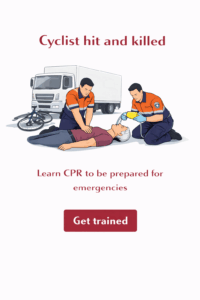 Road accidents involving cyclists can lead to serious injuries due to the lack of physical protection compared to vehicles. In some cases, individuals may become unresponsive and require immediate first aid, including CPR.
In Canada, including Winnipeg and across Manitoba, cycling is a common mode of transportation and recreation. This makes road safety awareness and emergency response knowledge important for both cyclists and drivers.
First Aid & Workplace Relevance in Canada
Many workplaces in Winnipeg and surrounding communities involve travel, deliveries, or outdoor work near roadways. Employees may encounter traffic-related incidents and benefit from first aid and CPR training to respond effectively.
Preparedness in these environments can help support faster response times during emergencies.
A Realistic Scenario: Emergency Response at an Intersection
At a busy intersection, a cyclist was involved in a collision with a vehicle. Emergency responders arrived and quickly assessed the situation.
First aid measures, including CPR, were initiated at the scene while additional emergency services were coordinated. Traffic in the area was temporarily redirected to allow responders to work safely.
This type of scenario highlights the importance of rapid response and coordinated emergency care in road incidents.
Recognizing Signs of Cardiac Arrest After Trauma
A person involved in a serious accident may show:
-
Unresponsiveness
-
No normal breathing or only gasping
-
Lack of movement
-
Visible injuries
Immediate action is required if these signs are present.
Causes and Risk Factors in Cycling Accidents
Cycling incidents may be linked to:
-
Intersections and turning vehicles
-
Limited visibility
-
Road sharing challenges
-
Distractions
-
Weather or road conditions
In urban areas across Canada, these factors can increase risk for cyclists.
First Aid Response: CPR After an Accident
If a person is unresponsive and not breathing normally:
-
Ensure the scene is safe before approaching
-
Call 911 immediately
-
Check breathing and responsiveness
-
Begin CPR if needed
-
Continue until emergency services arrive
Avoid moving the person unnecessarily unless required for safety.
Prevention and Safety Considerations
Improving cycling safety in Winnipeg and across Manitoba may include:
-
Wearing helmets and visible clothing
-
Using bike lanes and designated crossings
-
Staying alert at intersections
-
Following traffic signals
-
Promoting workplace and community safety awareness
These measures help reduce the risk of serious incidents.
Frequently Asked Questions
What should you do if a cyclist is injured in an accident?
Ensure the area is safe, call emergency services, and provide first aid if trained.
Is CPR always required after a road accident?
CPR may be needed if the person is not breathing normally.
Why are intersections high-risk areas for cyclists?
They involve multiple directions of traffic and turning vehicles.
Can drivers help in an emergency?
Yes, by calling for help and assisting if they have first aid training.
How can cycling risks be reduced?
Through visibility, awareness, and following road safety practices.
Educational Note
This article is for general awareness and education. First aid and CPR training can help individuals respond more effectively in road-related emergencies.
About The Author

Mark Kascha
Certified First Aid Instructor Trainer with 30+ years of real-world experience, including lifeguarding, workplace emergency response, and first aid program development across Canada. Has worked with WorkSafeBC, WSIB, and Manitoba Health.
👉 [View full credentials]🔗 View LinkedIn Profile
Last reviewed: March 2026