Cardiac Arrest Survivor Event Praises Life-Saving Action on the Ice at the Qplex
A powerful reminder of how fast action and public access to lifesaving equipment can save lives was shared during a cardiac arrest survivor recognition event held at the Quispamsis Qplex. The event honoured bystanders and first responders whose quick thinking and use of an automated external defibrillator (AED) helped save the life of veteran paramedic Mark Carr.
A Plaque That Marks a Life-Saving Moment
Inside the Qplex, a small metal cabinet containing a public AED now bears a plaque that reads:
“This AED helped save a life on October 14, 2017.”
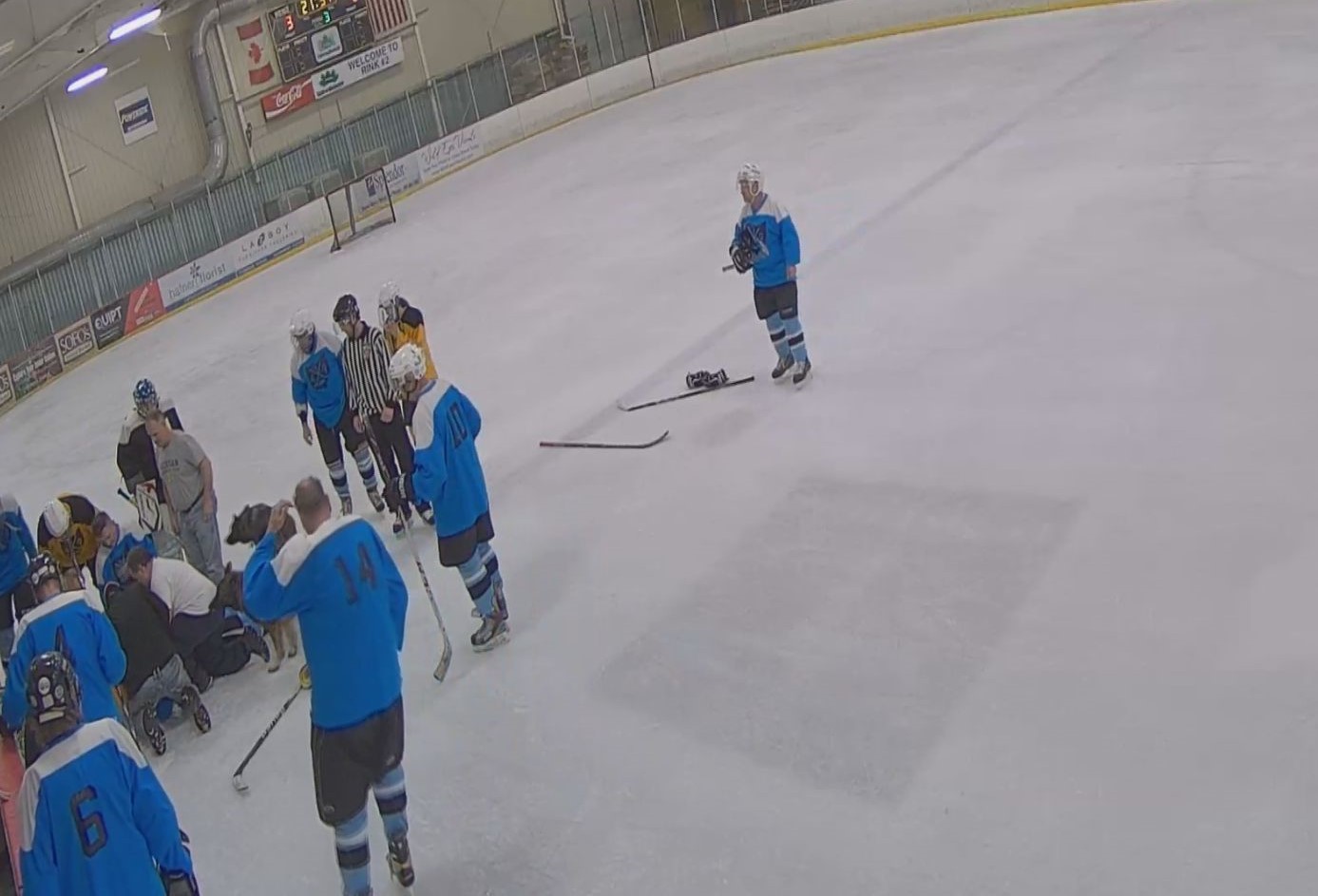
That night, Carr — a paramedic with more than 20 years of experience — was playing in a church recreation league hockey game when he suddenly collapsed on the ice and went into cardiac arrest.
A Sudden Emergency on the Ice
Earlier that day, Carr had been picking apples on the Kingston Peninsula and arrived late to the game, missing his warm-up. Feeling tired with only mild chest discomfort, he didn’t think much of it.
About eight minutes into the second period, Carr began to feel an unusual sensation before losing consciousness.
“I remember seeing a white flash,” Carr later recalled. “The next thing I knew, I was waking up flat on my back with people all around me.”
When he heard someone say, “You’ve got one shock off,” Carr immediately understood what had happened.
AED Awareness Saves a Life
Among those who rushed to help was Sam Duff, a volunteer firefighter from Saint John. Arriving early, Duff had noticed the AED mounted near the dressing rooms — something he instinctively looks for in public spaces.
Bystanders quickly removed Carr’s hockey equipment and began chest compressions. Moments later, the AED was brought to his side and used, delivering a shock that restored a survivable heart rhythm before emergency crews arrived.
“It was a quick thing,” Duff said. “Someone didn’t know where it was — but I did.”
Recognizing the Chain of Survival
Four months later, Carr returned to the Qplex alongside teammates, bystanders, and first responders who helped save his life. The survivor recognition event highlighted how every link in the chain of survival — early CPR, rapid AED use, and teamwork — played a critical role.
Carr was also presented with a framed ECG rhythm strip from the AED that delivered the shock which saved his life.
“I’ll see it every day,” Carr said. “It reminds me why I’m alive and home with my family.”
Why CPR and AED Training Matters
Most cardiac arrests happen outside of hospitals, and survival depends heavily on how quickly CPR and defibrillation begin. For every minute defibrillation is delayed, the chance of Survival drops significantly.
Stories like this show why everyday people should know how to respond in emergencies. Learning CPR and how to use an AED gives bystanders the confidence to act when seconds matter. Those interested in developing these lifesaving skills.
Original Source
This story is based on reporting by CBC News. You can read the full original article here: 👉 Cardiac arrest survivor event praises life-saving action on the ice at qplex
Learn More
For additional information about CPR and defibrillation, visit these trusted resources:
About The Author
Mark Kascha
Certified First Aid Instructor Trainer with 30+ years of real-world experience, including lifeguarding, workplace emergency response, and first aid program development across Canada. Has worked with WorkSafeBC, WSIB, and Manitoba Health.
👉 [View full credentials]🔗 View LinkedIn Profile
Last reviewed: March 2026
Serving Winnipeg and south Manitoba with the cheapest priced, highest quality first aid training, CPR and food safety courses since 2012 with a commitment to providing the best classes to Canadians.
