Understanding Cardiac Arrest and Emergency Response
Sudden cardiac arrest occurs when the heart unexpectedly stops beating, preventing blood from circulating to vital organs. Knowing what to do if someone collapses and stops breathing and how to respond using CPR and an AED can significantly improve survival. In Canada, these life-saving skills are a core part of first aid and CPR training.
First Aid & Workplace Relevance in Winnipeg, Manitoba
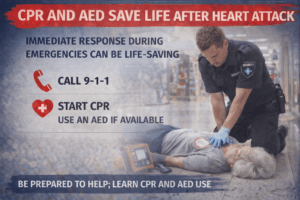 Emergencies like cardiac arrest can happen anywhere—including shopping centres, workplaces, and public spaces across Winnipeg, Manitoba, such as Downtown Winnipeg, St. Vital Centre, and Transcona retail areas.
CPR training in Winnipeg and AED awareness are essential for:
-
Retail and mall staff
-
Security personnel
-
Office workers and employers
-
Teachers and community members
These skills are widely taught in first aid certification programs in Manitoba and are critical for public safety.
Scenario: CPR and AED Save a Life at Semiahmoo Shopping Centre
A life-threatening emergency unfolded at Semiahmoo Shopping Centre in South Surrey, British Columbia, when Pamela Morgan suddenly collapsed.
On the day of the incident, mall security guard Cameron Hubley was alerted to a woman who had fallen and was unresponsive. When he arrived, he quickly recognized the seriousness of the situation—Morgan was not moving, had no pulse, and was not breathing. She had suffered a cardiac arrest and had also struck her head when she fell.
Hubley immediately took action. He instructed nearby staff to bring emergency medical kits and asked a bystander to retrieve a nearby automated external defibrillator (AED). As Morgan’s condition worsened and her skin tone changed, he began chest compressions without delay.
When the AED arrived, Hubley coordinated the response, directing a bystander to continue CPR while he prepared the device. The AED analyzed Morgan’s condition and advised a shock, which he delivered.
Shortly after, paramedics arrived and took over care. Morgan was transported to a healthcare facility with a restored pulse, where she received further life-saving treatment and surgery.
Hubley’s quick thinking and immediate response were credited with saving her life, demonstrating the powerful impact of CPR and AED use during emergencies.
Symptoms and Warning Signs of Cardiac Arrest
Cardiac arrest can occur suddenly, with signs such as:
-
Sudden collapse
-
Unresponsiveness
-
No breathing or abnormal breathing
-
No detectable pulse
-
Skin turning pale or bluish
Immediate recognition is critical for survival.
Causes and Risk Factors
Cardiac arrest may be associated with:
-
Heart disease or prior heart conditions
-
Sudden electrical issues in the heart
-
Physical stress or exertion
-
Unknown underlying health conditions
It can occur without warning, even in public settings.
First Aid Response: CPR and AED Use
In Canada, first aid training emphasizes rapid action:
-
Call 911 immediately
-
Check for breathing and responsiveness
-
Begin CPR right away if the person is not breathing
If an AED is available:
-
Turn it on and follow the prompts
-
Continue CPR as instructed
-
Deliver a shock if advised
These steps are commonly taught in certified CPR and AED training in Canada and are essential for improving survival outcomes.
Prevention and Workplace Safety Considerations
Preparedness can make a critical difference:
-
Ensure AEDs are accessible in public spaces
-
Train staff in emergency response training in Canada
-
Promote CPR certification in workplaces
-
Develop emergency response plans for public facilities
In Winnipeg and across Manitoba, access to training and equipment helps create safer communities.
Frequently Asked Questions
What should you do if someone suddenly collapses in public?
Call 911 immediately, check for breathing, and begin CPR if they are not breathing. Quick action is critical while waiting for emergency responders.
How does an AED help during cardiac arrest?
An AED analyzes the heart’s rhythm and can deliver a shock if needed. It is designed for public use and provides step-by-step instructions.
Can CPR alone save someone?
CPR helps maintain blood flow and oxygen to vital organs until advanced care arrives. It significantly increases survival chances when started early.
Who should learn CPR and AED use in Winnipeg?
Everyone can benefit, especially workers in public spaces, teachers, and caregivers. Many workplaces in Manitoba encourage certification.
Are AEDs safe for untrained users?
Yes, AEDs are designed to be user-friendly and guide the responder through the process. Training increases confidence, but the device provides clear instructions.
Educational Note
This article is for general awareness and reflects commonly taught CPR and AED practices in Canada. Training helps individuals respond more effectively and confidently during emergencies.
About The Author

Mark Kascha
Certified First Aid Instructor Trainer with 30+ years of real-world experience, including lifeguarding, workplace emergency response, and first aid program development across Canada. Has worked with WorkSafeBC, WSIB, and Manitoba Health.
👉 [View full credentials]🔗 View LinkedIn Profile
Last reviewed: March 2026