Understanding Road Accidents and Emergency Response
Motor vehicle collisions can lead to serious injuries, including trauma and cardiac arrest. Knowing what to do after a car accident and how to respond if someone becomes unresponsive is critical. In Canada, first aid training emphasizes scene safety, rapid assessment, and immediate CPR when needed.
First Aid & Workplace Relevance in Winnipeg, Manitoba
 Road accidents can happen anywhere, including across Winnipeg, Manitoba, on busy routes and highways in areas like Downtown Winnipeg, St. Vital, and Transcona. Many workplaces involve driving, transportation, or field work where emergency preparedness is essential.
CPR training in Winnipeg and first aid certification are important for:
-
Drivers and transportation workers
-
Construction and road crews
-
Delivery personnel
-
General public and commuters
These life-saving skills are commonly taught in first aid certification programs in Manitoba.
Scenario: Head-On Collision in Lake Country, British Columbia
Emergency crews responded to a serious motor vehicle collision in Lake Country, British Columbia, along Highway 97 south of Oceola Road.
According to reports, a grey Chevrolet Impala crossed the centre line and collided head-on with a northbound black Chrysler 300 from Alberta. The impact resulted in significant damage and serious injuries.
Witnesses at the scene described the sudden nature of the collision, prompting immediate calls to emergency services. Fire crews, RCMP, and BC Ambulance Service arrived quickly to assess and assist those involved.
The 87-year-old driver of the Chevrolet Impala, a resident of the Upper Fraser Valley, went into cardiac arrest following the crash. Emergency responders began CPR at the scene and continued life-saving efforts during transport.
Despite these efforts, the man was later pronounced deceased while en route to a healthcare facility, according to Cpl. Jesse O’Donaghey of the Kelowna Regional RCMP.
The driver of the Chrysler 300, a 52-year-old man from central Alberta, was also transported to hospital with serious but non-life-threatening injuries.
Authorities, including the RCMP and the BC Coroners Service, continue to investigate the cause of the collision.
This incident highlights how quickly road emergencies can escalate and the importance of immediate response.
Symptoms and Warning Signs After a Collision
After a serious accident, individuals may show:
-
Unresponsiveness or loss of consciousness
-
Difficulty breathing or no breathing
-
Severe pain or visible injuries
-
Bleeding or signs of trauma
-
Signs of shock (pale skin, confusion, rapid pulse)
Recognizing these signs early can guide appropriate response.
Causes and Risk Factors
Head-on collisions may occur due to:
-
Crossing the centre line
-
Driver distraction or fatigue
-
Road conditions or visibility issues
-
Sudden medical events while driving
These incidents can happen unexpectedly, even on familiar routes.
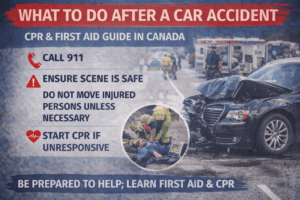
First Aid Response: CPR and Scene Safety
In Canada, first aid training stresses scene safety first:
-
Call 911 immediately
-
Ensure the scene is safe (watch for traffic and hazards)
-
Do not move injured individuals unless necessary
If someone is unresponsive and not breathing:
-
Begin CPR if trained
-
Continue until emergency services take over
These steps are based on standard first aid training practices in Canada and are commonly taught in CPR certification courses.
Prevention and Workplace Safety Considerations
Road safety awareness is key across Canada:
-
Follow traffic laws and speed limits
-
Avoid distractions while driving
-
Ensure vehicles are properly maintained
-
Promote workplace driver safety programs
In Winnipeg and throughout Manitoba, safe driving practices and emergency training help reduce risks.
Frequently Asked Questions
What should you do immediately after a car accident?
Call emergency services, ensure your own safety, and assess others for injuries. Avoid moving injured individuals unless necessary and wait for trained responders.
When should CPR be used after a collision?
CPR should be started if a person is unresponsive and not breathing. Early action can help maintain circulation until paramedics arrive.
Is it safe to help at an accident scene?
Only assist if it is safe. Watch for traffic, fire, or other hazards before approaching injured individuals.
Who should take first aid training in Manitoba?
Drivers, workers, and the general public can benefit. Many workplaces in Winnipeg encourage certification to improve emergency readiness.
How can road accidents be prevented?
Safe driving habits, awareness of surroundings, and proper vehicle maintenance can reduce the risk of serious collisions.
Educational Note
This article is for general awareness and reflects commonly taught CPR and first aid practices in Canada. Training helps individuals respond more confidently during emergencies.
About The Author

Mark Kascha
Certified First Aid Instructor Trainer with 30+ years of real-world experience, including lifeguarding, workplace emergency response, and first aid program development across Canada. Has worked with WorkSafeBC, WSIB, and Manitoba Health.
👉 [View full credentials]🔗 View LinkedIn Profile
Last reviewed: March 2026