Understanding Sudden Medical Emergencies
Medical emergencies can happen unexpectedly, even during stressful situations like a home incident. Knowing what to do if someone becomes unresponsive and how to respond when a person stops breathing is critical. In Canada, CPR training focuses on immediate action to help maintain circulation until emergency services arrive.
First Aid & Workplace Relevance in Winnipeg, Manitoba
 Emergencies can occur anywhere, including homes, workplaces, and public settings across Winnipeg, Manitoba, including neighbourhoods such as Downtown Winnipeg, St. Vital, and Transcona.
CPR training in Winnipeg and first aid certification are important for:
-
Homeowners and families
-
Security personnel
-
Workers in public-facing roles
-
Community members
These skills are widely taught in first aid certification programs in Manitoba and support safer communities.
Scenario: Medical Emergency Following Home Incident in Abbotsford
A serious situation unfolded in Abbotsford, British Columbia, following a reported home invasion on McKenzie Road.
Police were called to a residence in the 2300 block of McKenzie Road. Upon arrival, officers found a resident holding a 19-year-old male suspect on the floor. The individual had been restrained following the incident.
As officers assessed the situation, they noticed that the man was in medical distress and required immediate attention. Recognizing the urgency, officers began CPR on the scene.
Emergency responders from Abbotsford Fire Rescue Service and BC Ambulance Service arrived shortly after and continued care. The man was transported to a healthcare facility, where he remained in critical condition.
Authorities stated that it is still unclear whether there is any connection between the suspect and the residents of the home. The investigation remains ongoing.
This incident highlights how quickly situations can shift from a security concern to a medical emergency requiring life-saving intervention.
Symptoms and Warning Signs of Medical Distress
In emergencies, individuals may show:
-
Unresponsiveness or unconsciousness
-
No breathing or abnormal breathing
-
Weak or absent pulse
-
Sudden collapse
-
Pale or bluish skin
Recognizing these signs quickly is essential for effective response.
Causes and Risk Factors
Medical distress in high-stress situations may be linked to:
-
Physical exertion or struggle
-
Underlying health conditions
-
Sudden cardiac events
-
Stress-related responses
These events can occur without warning.
First Aid Response: CPR and Immediate Action
In Canada, first aid training emphasizes:
-
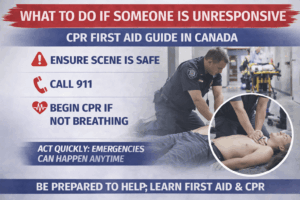
Ensure the scene is safe
-
Call 911 immediately
-
Check for breathing and responsiveness
If the person is not breathing:
-
Begin CPR immediately
-
Continue until emergency responders arrive
These steps are commonly taught in certified CPR courses in Canada and are critical in life-threatening situations.
Prevention and Workplace Safety Considerations
Preparedness improves emergency outcomes:
-
Encourage emergency response training in Canada
-
Train staff and individuals in CPR and first aid
-
Promote awareness of how to respond during unexpected situations
-
Ensure emergency procedures are clearly understood
In Winnipeg and across Manitoba, training helps individuals respond confidently in emergencies.
Frequently Asked Questions
What should you do if someone becomes unresponsive at home?
Call 911 immediately, ensure the scene is safe, and check for breathing. If the person is not breathing, begin CPR if trained and continue until help arrives.
Can CPR help in sudden emergencies?
Yes, CPR helps maintain blood flow and oxygen to vital organs when the heart or breathing stops. It is a key life-saving skill taught in Canada.
Is it safe to help during a stressful situation?
Only provide assistance if the environment is safe. Your safety is always the first priority.
Who should take CPR training in Winnipeg?
Anyone can benefit, including families, workers, and community members. Many workplaces in Manitoba encourage certification.
Why is immediate CPR important?
Immediate CPR increases the chances of survival by maintaining circulation until professional medical care is available.
Educational Note
This article is for general awareness and reflects commonly taught CPR and first aid practices in Canada. Training helps individuals respond safely and effectively during emergencies.
About The Author

Mark Kascha
Certified First Aid Instructor Trainer with 30+ years of real-world experience, including lifeguarding, workplace emergency response, and first aid program development across Canada. Has worked with WorkSafeBC, WSIB, and Manitoba Health.
👉 [View full credentials]🔗 View LinkedIn Profile
Last reviewed: March 2026