Understanding Shooting Emergencies and Immediate Response
Shooting incidents are critical emergencies that can result in severe injuries, including life-threatening trauma and cardiac arrest. Knowing what to do if someone has been shot and how to respond when a person becomes unresponsive is essential. In Canada, first aid training emphasizes scene safety, bleeding control, and CPR when required.
First Aid & Workplace Relevance in Winnipeg, Manitoba
 Although this incident occurred in Vancouver, emergency preparedness is important across Winnipeg, Manitoba, including public spaces like Downtown Winnipeg, St. Vital, and Transcona.
CPR training in Winnipeg and first aid certification are valuable for:
-
Workers in hotels and public venues
-
Security personnel
-
Hospitality staff
-
General public and bystanders
These life-saving skills are commonly taught in first aid certification programs in Manitoba and are essential in high-risk or crowded environments.
Scenario: Shooting at Savoy Hotel in Vancouver
A fatal shooting incident occurred at the Savoy Hotel in Vancouver’s Downtown Eastside.
Police were called to the hotel following reports of a disturbance. Upon arrival, officers encountered a challenging environment, as bear spray had been used inside the building, making it difficult to breathe and assess the situation.
Inside, officers located a man suffering from gunshot wounds. Due to the conditions, they moved him outside the building to provide emergency care. Once in a safer environment, officers began CPR in an effort to support the victim.
Emergency medical services arrived shortly after and transported the man to a healthcare facility. Despite these efforts, he was pronounced deceased a short time later.
The victim was identified as 62-year-old Vancouver resident Joseph Butinski. Authorities indicated that the shooting did not appear to be random, and no arrests had been made at the time of reporting.
This incident highlights how first responders must often manage both environmental hazards and medical emergencies at the same time.
Symptoms and Warning Signs of Critical Injury
In shooting-related emergencies, signs may include:
-
Unresponsiveness or unconsciousness
-
Difficulty breathing or no breathing
-
Severe bleeding
-
Signs of shock (pale skin, rapid pulse, confusion)
-
Weak or absent pulse
Recognizing these signs quickly is essential for appropriate response.
Causes and Risk Factors
Such incidents may involve:
-
Targeted violence
-
Conflicts in public or residential spaces
-
Exposure to additional hazards (e.g., chemical irritants like spray)
These situations can escalate quickly and require careful response.
First Aid Response: CPR and Scene Safety
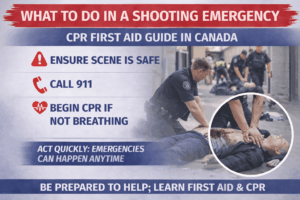
In Canada, first aid training emphasizes scene safety first:
-
Ensure the area is safe before approaching
-
Call 911 immediately
-
Move the individual only if necessary to ensure safety
If the person is unresponsive and not breathing:
-
Begin CPR immediately
-
Continue until emergency responders take over
These steps are based on standard first aid training practices in Canada and are commonly taught in certified CPR courses.
Prevention and Workplace Safety Considerations
Preparedness can improve outcomes in public settings:
-
Provide emergency response training in Canada for staff
-
Ensure clear emergency procedures in hotels and workplaces
-
Promote awareness of hazards in enclosed environments
-
Encourage CPR and AED training
In Winnipeg and across Manitoba, training supports safer public and workplace environments.
Frequently Asked Questions
What should you do if someone is injured in a shooting?
Ensure your safety first, call 911, and only assist if it is safe. If the person is not breathing, begin CPR if trained and continue until help arrives.
Can CPR help in trauma situations?
CPR may help maintain circulation if the person has stopped breathing or has no pulse. It is a key life-saving skill taught in Canada.
Is it safe to help in a hazardous environment?
Only assist if the area is safe. Hazards like smoke, chemicals, or ongoing threats can put rescuers at risk.
Who should take CPR training in Winnipeg?
Anyone can benefit, especially workers in public environments. Many workplaces in Manitoba encourage certification.
Why is scene safety important in emergencies?
Ensuring safety prevents further harm to both the victim and the responder, allowing care to be provided more effectively.
Educational Note
This content is for general awareness and reflects commonly taught CPR and first aid practices in Canada. Training helps individuals respond confidently and safely during emergencies.
About The Author

Mark Kascha
Certified First Aid Instructor Trainer with 30+ years of real-world experience, including lifeguarding, workplace emergency response, and first aid program development across Canada. Has worked with WorkSafeBC, WSIB, and Manitoba Health.
👉 [View full credentials]🔗 View LinkedIn Profile
Last reviewed: March 2026