Understanding Opioid Overdose and Emergency Response
An opioid overdose, including fentanyl exposure, can slow or stop breathing and quickly become life-threatening. Knowing what to do if someone is not breathing due to an overdose and how to respond in an opioid emergency is critical. In Canada, first aid training emphasizes recognizing overdose signs, calling for help, and providing CPR when needed.
First Aid & Workplace Relevance in Winnipeg, Manitoba
 Across Winnipeg, Manitoba, opioid-related emergencies can occur in homes, workplaces, and public settings, including areas such as Downtown Winnipeg, St. Vital, and Transcona.
CPR training in Winnipeg and first aid certification are important for:
-
Workplace staff and supervisors
-
Security personnel
-
Community workers and caregivers
-
General public and bystanders
These skills are widely taught in first aid certification programs in Manitoba and are essential for responding to overdose emergencies.
Scenario: Overdose Incident in Custody Setting
A tragic incident occurred involving a woman who experienced a fentanyl overdose while in custody.
According to a report by the Independent Investigations Office, the woman had been arrested on outstanding warrants and remained in custody following a bail hearing. Earlier in the day, she had been assessed and was reported to be alert and moving within her cell.
At a later check, staff found her lying face down and unresponsive. A weak pulse was initially detected, and she did not respond to attempts to wake her. Recognizing the seriousness of the situation, staff began emergency response measures.
Jail personnel provided oxygen, initiated CPR, and administered multiple doses of naloxone. Emergency services were called, and the woman was transported to a healthcare facility. Despite these efforts, she was later pronounced deceased.
Further investigation revealed that the woman had been in possession of a substance later identified as fentanyl. Authorities confirmed that there was no evidence linking police actions to her medical condition.
This incident highlights the rapid and unpredictable nature of opioid overdoses.
Symptoms and Warning Signs of Opioid Overdose
Common signs may include:
-
Slow, irregular, or no breathing
-
Unresponsiveness or inability to wake
-
Pinpoint pupils
-
Bluish lips or fingernails
-
Weak or absent pulse
Recognizing these symptoms early is essential for timely intervention.
Causes and Risk Factors
Opioid overdoses may be associated with:
-
Use of potent substances such as fentanyl
-
Unknown drug potency or contamination
-
Reduced tolerance
-
Mixing substances
These factors increase the risk of life-threatening outcomes.
First Aid Response: CPR and Emergency Action
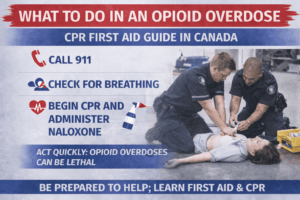
In Canada, first aid training emphasizes immediate response:
-
Call 911 right away
-
Check for breathing and responsiveness
-
If the person is not breathing, begin CPR
If available and trained to use:
-
Administer naloxone
-
Continue CPR and monitor the person
These steps are based on standard first aid training practices in Canada and are commonly taught in certified CPR courses.
Prevention and Workplace Safety Considerations
Preparedness plays an important role in reducing harm:
-
Promote emergency response training in Canada
-
Ensure access to naloxone kits where appropriate
-
Encourage awareness of overdose risks
-
Train staff in recognizing and responding to emergencies
In Winnipeg and across Manitoba, education and preparedness help improve community safety.
Frequently Asked Questions
What should you do if someone is not breathing due to an overdose?
Call 911 immediately and begin CPR if the person is not breathing. Quick action is critical while waiting for emergency responders.
Can CPR help during an opioid overdose?
Yes, CPR can help maintain oxygen flow when breathing has stopped, increasing the chances of survival until advanced care arrives.
What are the early signs of an opioid overdose?
Signs include slow or stopped breathing, unresponsiveness, and bluish skin. These indicate a life-threatening emergency.
Who should take CPR training in Winnipeg?
Anyone can benefit, especially workers, caregivers, and community members. Many workplaces in Manitoba encourage certification.
How can overdose risks be reduced?
Awareness, access to support resources, and proper training can help reduce risks and improve emergency response.
Educational Note
This content is for general awareness and reflects commonly taught first aid and CPR practices in Canada. Training helps individuals respond more confidently and safely in emergencies.
About The Author

Mark Kascha
Certified First Aid Instructor Trainer with 30+ years of real-world experience, including lifeguarding, workplace emergency response, and first aid program development across Canada. Has worked with WorkSafeBC, WSIB, and Manitoba Health.
👉 [View full credentials]🔗 View LinkedIn Profile
Last reviewed: March 2026