
Understanding Vehicle-in-Water Emergencies
Vehicle submersion incidents can escalate quickly, especially when occupants are trapped or partially underwater. Knowing what to do if a vehicle is submerged and how to respond when someone is unconscious in water can help save lives. In Canada, first aid training emphasizes scene safety, rapid rescue (if safe), and monitoring breathing.
First Aid & Workplace Relevance in Winnipeg, Manitoba
 Across Winnipeg, Manitoba, similar risks exist near rivers, drainage ditches, and flooded roadways—especially in areas like St. Vital, Transcona, and near the Red River or Assiniboine River.
CPR training in Winnipeg and first aid certification are important for:
-
Drivers and commuters
-
Outdoor workers and anglers
-
Emergency responders and volunteers
-
General public and bystanders
These life-saving skills are widely taught in first aid certification programs in Manitoba and prepare individuals for water-related emergencies.
Scenario: Teens Rescued from Submerged Vehicle in Chilliwack
A dramatic rescue unfolded in the Fraser Valley when two teenagers were trapped inside an overturned vehicle in a water-filled ditch near Chilliwack.
Surrey realtor and angler Sokha Eang was on his way to fish along the Vedder River when he came across the scene. A vehicle had flipped upside down and was partially submerged in water.
Another bystander, Adam Nelson of Mission, had already arrived after dropping his son off at school. He was standing on the underside of the overturned vehicle, trying to assess the situation. Bystanders informed both men that there were still people trapped inside.
Working together, the two men acted quickly. Eang, wearing fishing waders, entered the water to assist. Inside the vehicle, they found 17-year-old Abbotsford student Kyle Ruffell, who was unconscious with his head partially submerged.
As they prepared to remove him, Ruffell began to regain consciousness. He started coughing and expelling water, indicating that he was breathing again. Because he resumed breathing on his own, CPR was not required at that moment.
After safely removing Ruffell, they discovered a second occupant, Umer Khokhar, in the back seat. He was unbuckled and standing in water up to his neck but remained conscious and was not seriously injured, though he was cold from exposure.
Emergency services later attended the scene. Ruffell was found to have sustained serious injuries, including broken ribs and lung trauma.
This incident highlights the importance of quick thinking, teamwork, and awareness during emergencies.
Symptoms and Warning Signs in Submersion Incidents
In water-related vehicle incidents, individuals may show:
-
Unresponsiveness or unconsciousness
-
Difficulty breathing or coughing water
-
Signs of hypothermia (cold, shivering)
-
Visible injuries or pain
-
Confusion or disorientation
Recognizing these signs can guide appropriate action.
Causes and Risk Factors
Vehicle submersion incidents may occur due to:
-
Loss of control on wet or rural roads
-
Poor visibility or road conditions
-
Ditches or waterways near roadways
-
Sudden driver error or environmental factors
These risks are present in both urban and rural settings.
First Aid Response: Rescue and Monitoring
In Canada, first aid training emphasizes:
-
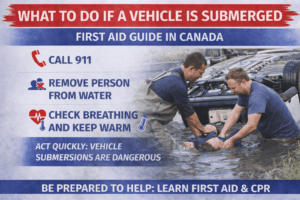
Call 911 immediately
-
Ensure the scene is safe before attempting rescue
-
Remove the person from water if it is safe to do so
After rescue:
-
Check breathing and responsiveness
-
If the person is not breathing, begin CPR
-
If breathing resumes, monitor closely and keep them warm
These steps are based on standard first aid training practices in Canada and are commonly taught in certified courses.
Prevention and Workplace Safety Considerations
Reducing risk is key:
-
Drive cautiously near water and rural roads
-
Be aware of surroundings, especially in poor conditions
-
Promote emergency response training in Canada
-
Encourage CPR and first aid training
In Winnipeg and across Manitoba, preparedness can improve response and outcomes.
Frequently Asked Questions
What should you do if a car is submerged in water?
Call emergency services immediately and only attempt rescue if it is safe. Remove occupants if possible and assess their breathing.
When should CPR be used in water rescues?
CPR should be started if the person is not breathing after being removed from the water. If they begin breathing on their own, monitor them closely.
Is it safe to enter water to rescue someone?
Only enter if it is safe and you are capable. Unsafe rescues can put additional people at risk.
Who should take first aid training in Winnipeg?
Anyone can benefit, especially drivers, outdoor workers, and community members. Many workplaces in Manitoba encourage certification.
How can vehicle water incidents be prevented?
Safe driving, awareness of road conditions, and caution near waterways can help reduce risk.
Educational Note
This content is for general awareness and reflects commonly taught first aid practices in Canada. Training helps individuals respond confidently and safely during emergencies.
About The Author

Mark Kascha
Certified First Aid Instructor Trainer with 30+ years of real-world experience, including lifeguarding, workplace emergency response, and first aid program development across Canada. Has worked with WorkSafeBC, WSIB, and Manitoba Health.
👉 [View full credentials]🔗 View LinkedIn Profile
Last reviewed: March 2026