
Understanding Snow Immersion and Suffocation Risks
Snow immersion incidents, sometimes called “tree well” or deep powder accidents, can occur when a person becomes trapped under snow and is unable to breathe. Knowing what to do if someone is buried in snow and how to respond when breathing stops is critical. In Canada, first aid training emphasizes quick rescue, airway management, and CPR when necessary.
First Aid & Workplace Relevance in Winnipeg, Manitoba
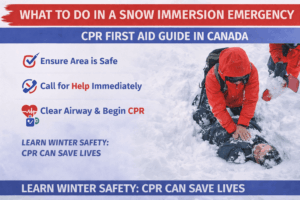 While this incident occurred in British Columbia, similar winter risks exist across Winnipeg, Manitoba, especially during heavy snowfall and outdoor activities in areas like St. Vital, Transcona, and surrounding rural regions.
CPR training in Winnipeg and first aid certification are important for:
-
Outdoor workers and winter sports participants
-
Skiers, snowboarders, and snowmobilers
-
Parents and recreational groups
-
Emergency responders and volunteers
These skills are widely taught in first aid certification programs in Manitoba and are essential during winter emergencies.
Scenario: Snowboarder Incident at Blackcomb Resort
A tragic incident occurred at Blackcomb Resort near Whistler, British Columbia, early in the ski season.
A 27-year-old snowboarder was riding in a tree run known as Arthur’s Choice, located in the Crystal Ridge area. While navigating the off-piste terrain, he encountered deep powder snow and became trapped.
It is believed that he fell into the snow and became submerged, possibly face-first, in what was described as extremely light and deep powder. These conditions can make it difficult for individuals to free themselves or maintain an airway.
A member of the public located the snowboarder and began CPR immediately. Ski patrol arrived shortly after and continued resuscitation efforts while waiting for additional responders equipped with a defibrillator.
Despite the rapid response and continued CPR, the snowboarder was later pronounced deceased.
Search and rescue officials noted that early-season conditions can be especially hazardous, with hidden obstacles such as open creeks and unstable snowpack. The snowboarder was believed to have been alone at the time, which may have delayed rescue.
This incident highlights the importance of awareness and preparedness in winter environments.
Symptoms and Warning Signs of Snow Immersion
In snow-related emergencies, signs may include:
-
Unresponsiveness or unconsciousness
-
Difficulty breathing or no breathing
-
Snow obstructing the airway
-
Weak or absent pulse
-
Signs of hypoxia (bluish lips or confusion)
Immediate recognition is essential for survival.
Causes and Risk Factors
Snow immersion incidents may be linked to:
-
Deep powder snow conditions
-
Falling into tree wells or uneven terrain
-
Riding off designated trails
-
Traveling alone without a partner
Early-season snow conditions can increase hidden hazards.
First Aid Response: Rescue and CPR
In Canada, first aid training emphasizes:
-
Ensure your own safety before attempting rescue
-
Call for help or emergency services immediately
-
Carefully remove snow from around the person’s airway
If the person is unresponsive and not breathing:
-
Begin CPR immediately
-
Continue until emergency responders arrive
These steps are based on standard first aid training practices in Canada and are commonly taught in certified CPR courses.
Prevention and Workplace Safety Considerations
Winter safety awareness is essential:
-
Avoid going off marked trails alone
-
Use a buddy system when skiing or snowboarding
-
Be aware of snow conditions and avalanche risks
-
Participate in emergency response training in Canada
In Winnipeg and across Manitoba, winter preparedness helps reduce risk during outdoor activities.
Frequently Asked Questions
What should you do if someone is buried in snow?
Ensure safety, call for help, and clear the airway as quickly as possible. If the person is not breathing, begin CPR immediately.
Can CPR help in snow immersion incidents?
Yes, CPR can help restore circulation and oxygen flow if breathing has stopped, improving survival chances.
Why is deep snow dangerous?
Deep powder can trap individuals and restrict breathing, especially if they fall headfirst or become disoriented.
Who should take CPR training in Winnipeg?
Anyone can benefit, especially outdoor enthusiasts and workers exposed to winter conditions. Many workplaces in Manitoba encourage certification.
How can snow immersion accidents be prevented?
Stay on marked trails, use a buddy system, and remain aware of changing snow and weather conditions.
Educational Note
This content is for general awareness and reflects commonly taught CPR and first aid practices in Canada. Training helps individuals respond confidently and safely during emergencies.
About The Author

Mark Kascha
Certified First Aid Instructor Trainer with 30+ years of real-world experience, including lifeguarding, workplace emergency response, and first aid program development across Canada. Has worked with WorkSafeBC, WSIB, and Manitoba Health.
👉 [View full credentials]🔗 View LinkedIn Profile
Last reviewed: March 2026