Understanding ATV Accidents and Emergency Response
All-terrain vehicle (ATV) accidents can lead to serious injuries, especially in rural or uneven terrain. Knowing what to do after an ATV crash and how to respond if someone becomes unresponsive is critical. In Canada, first aid training emphasizes scene safety, injury awareness, and CPR when needed.
First Aid & Workplace Relevance in Winnipeg, Manitoba
ATVs are commonly used across Winnipeg, Manitoba, and surrounding rural areas for recreation and work. Areas outside the city, as well as communities like Transcona and St. Vital outskirts, may involve off-road vehicle use.
CPR training in Winnipeg and first aid certification are important for:
-
Rural residents and farmers
-
Outdoor workers and equipment operators
-
Families and recreational riders
-
Community members in remote areas
These skills are widely taught in first aid certification programs in Manitoba and are essential in environments where emergency response times may vary.
Scenario: ATV Accident in Abbotsford on Thanksgiving Day
 A tragic ATV accident occurred in Abbotsford, British Columbia, on Thanksgiving Day.
Emergency crews were called to the 29500-block of Taylor Road, a rural residential area, after reports of an ATV crash. According to Abbotsford Police, the vehicle had gone off course and plunged approximately 30 meters down a ravine.
Two individuals were involved in the incident. A man in his mid-60s sustained critical injuries, while a 5-year-old passenger, believed to be his grandson, suffered minor injuries.
When emergency responders arrived, they found the man in cardiac arrest. Paramedics and first responders immediately began CPR in an effort to revive him.
Despite their efforts, the man could not be resuscitated and was pronounced deceased at the scene. The BC Coroners Service continues to investigate the circumstances surrounding the incident.
This event highlights the risks associated with off-road vehicles and the importance of emergency preparedness in rural settings.
Symptoms and Warning Signs After an ATV Accident
Following an ATV crash, individuals may show:
-
Unresponsiveness or unconsciousness
-
No breathing or abnormal breathing
-
Severe injuries or pain
-
Bleeding or visible trauma
-
Signs of shock (pale skin, confusion, rapid pulse)
Recognizing these signs is critical for timely response.
Causes and Risk Factors
ATV accidents may be linked to:
-
Uneven or steep terrain
-
Loss of control or speed
-
Lack of protective equipment
-
Carrying passengers on unstable terrain
Rural environments can increase the risk due to natural hazards.
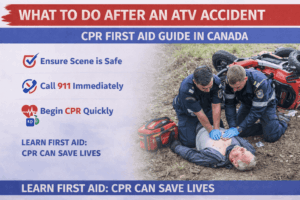
First Aid Response: CPR and Scene Safety
In Canada, first aid training emphasizes:
-
Ensure the scene is safe before approaching
-
Call 911 immediately
-
Do not move injured individuals unless necessary
If the person is unresponsive and not breathing:
-
Begin CPR immediately
-
Continue until emergency responders arrive
These steps are based on standard first aid training practices in Canada and are commonly taught in certified CPR courses.
Prevention and Workplace Safety Considerations
Safety awareness is essential when using ATVs:
-
Wear proper safety gear, including helmets
-
Avoid risky terrain or unfamiliar areas
-
Do not carry passengers unless the vehicle is designed for it
-
Promote emergency response training in Canada
In Winnipeg and across Manitoba, proper training and precautions can reduce the risk of serious incidents.
Frequently Asked Questions
What should you do after an ATV accident?
Call emergency services immediately, ensure the scene is safe, and assess injuries. Avoid moving seriously injured individuals unless necessary.
When should CPR be used after a crash?
CPR should be started if the person is unresponsive and not breathing. Early action can improve survival chances.
Are ATV accidents common in rural areas?
Yes, ATVs are frequently used in rural environments where terrain can increase the risk of accidents.
Who should take CPR training in Winnipeg?
Anyone can benefit, especially rural residents and outdoor workers. Many workplaces in Manitoba encourage certification.
How can ATV accidents be prevented?
Using proper safety gear, riding responsibly, and understanding terrain can help reduce risk.
Educational Note
This content is for general awareness and reflects commonly taught CPR and first aid practices in Canada. Training helps individuals respond confidently and safely during emergencies.
About The Author

Mark Kascha
Certified First Aid Instructor Trainer with 30+ years of real-world experience, including lifeguarding, workplace emergency response, and first aid program development across Canada. Has worked with WorkSafeBC, WSIB, and Manitoba Health.
👉 [View full credentials]🔗 View LinkedIn Profile
Last reviewed: March 2026