Understanding Fall Emergencies and Immediate Response
Falls from height, including extreme sports incidents, can lead to severe trauma and life-threatening conditions. Knowing what to do if someone falls from a height and how to respond when a person becomes unresponsive is critical. In Canada, first aid training emphasizes scene safety, calling for help, and providing CPR when necessary.
First Aid & Workplace Relevance in Winnipeg, Manitoba
 While this incident occurred outside Manitoba, fall-related injuries can happen across Winnipeg, Manitoba, including workplaces, construction sites, and recreational areas like Downtown Winnipeg, St. Vital, and Transcona.
CPR training in Winnipeg and first aid certification are important for:
-
Construction and industrial workers
-
Outdoor recreation participants
-
Safety officers and supervisors
-
General public and bystanders
These skills are widely taught in first aid certification programs in Manitoba and are essential in both workplace and recreational settings.
Scenario: BASE Jumping Incident Involving Calgary Woman
A tragic incident involving a 34-year-old Calgary woman, Kristin Renee Czyz, was later ruled an accident following an investigation.
Czyz had been BASE jumping from Perrine Bridge and had packed her own parachute prior to the jump. During the descent, an issue occurred that prevented proper deployment of her parachute system.
Investigators later discovered a hole in the pilot chute, a key component responsible for deploying the main parachute. A broken zipper on her harness was also identified, raising additional concerns about equipment integrity.
After the fall, boaters in the area quickly responded and recovered her from the Snake River. They immediately attempted CPR while coordinating with emergency responders.
She was transported to the Centennial Waterfront Park docks, where emergency crews continued care. Despite these efforts, she was pronounced deceased.
Authorities later confirmed the incident was accidental. This case highlights the importance of equipment checks and emergency response readiness.
Symptoms and Warning Signs After a Fall
After a significant fall, individuals may show:
-
Unresponsiveness or unconsciousness
-
Difficulty breathing or no breathing
-
Visible injuries or severe pain
-
Bleeding or signs of trauma
-
Confusion or disorientation
Recognizing these signs helps guide immediate care.
Causes and Risk Factors
Fall-related incidents may involve:
-
Equipment failure or malfunction
-
High-risk recreational activities
-
Inadequate safety checks
-
Environmental conditions
These risks are present in both professional and recreational environments.
First Aid Response: CPR and Scene Safety
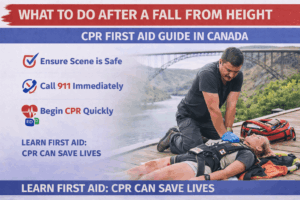
In Canada, first aid training emphasizes:
-
Ensure the scene is safe before approaching
-
Call 911 immediately
-
Avoid moving the person unless necessary
If the person is unresponsive and not breathing:
-
Begin CPR immediately
-
Continue until emergency responders arrive
These steps are based on standard first aid training practices in Canada and are commonly taught in certified CPR courses.
Prevention and Workplace Safety Considerations
Reducing risk involves preparation:
-
Perform equipment checks before use
-
Follow safety protocols for high-risk activities
-
Participate in emergency response training in Canada
-
Ensure access to trained individuals and safety equipment
In Winnipeg and across Manitoba, safety awareness helps reduce the risk of serious injuries.
Frequently Asked Questions
What should you do if someone falls from a height?
Call emergency services immediately, ensure the area is safe, and assess breathing. Avoid moving the person unless necessary.
When should CPR be used after a fall?
If the person is unresponsive and not breathing, CPR should be started right away until help arrives.
Can equipment failure cause serious accidents?
Yes, faulty or damaged equipment can increase the risk of accidents, especially in high-risk activities.
Who should take CPR training in Winnipeg?
Anyone can benefit, especially workers in construction or recreation. Many workplaces in Manitoba encourage certification.
How can fall-related accidents be prevented?
Following safety guidelines, checking equipment, and proper training can help reduce risks.
Educational Note
This content is for general awareness and reflects commonly taught CPR and first aid practices in Canada. Training helps individuals respond confidently and safely during emergencies.
About The Author

Mark Kascha
Certified First Aid Instructor Trainer with 30+ years of real-world experience, including lifeguarding, workplace emergency response, and first aid program development across Canada. Has worked with WorkSafeBC, WSIB, and Manitoba Health.
👉 [View full credentials]🔗 View LinkedIn Profile
Last reviewed: March 2026