Understanding Cardiac Arrest and Emergency Response
Cardiac arrest occurs when the heart suddenly stops beating, preventing blood from circulating through the body. Knowing what to do if someone collapses and stops breathing and how to respond when there is no pulse is critical. In Canada, CPR and AED training focuses on quick recognition and immediate action to improve survival.
First Aid & Workplace Relevance in Winnipeg, Manitoba
Cardiac emergencies can happen anywhere—including homes, workplaces, and public areas across Winnipeg, Manitoba, such as Downtown Winnipeg, St. Vital, and Transcona.
CPR training in Winnipeg and first aid certification are important for:
-
Families and caregivers
-
Teachers and school staff
-
Workplace employees and supervisors
-
Community members
These life-saving skills are widely taught in first aid certification programs in Manitoba and are essential for everyday emergencies.
Scenario: Two Young Boys Save Their Grandmother in Saskatoon
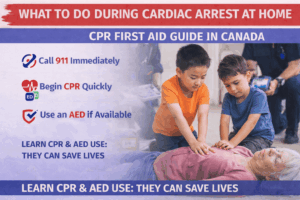 A remarkable example of quick thinking and courage comes from Saskatoon, where two young brothers helped save their grandmother’s life.
Kian Wu, age 10, and his younger brother Grayson, age 7, were at home with their grandmother, Patti Chatterson, when she suddenly went into cardiac arrest. She became unresponsive, was not breathing, and had no detectable pulse.
Recognizing that something was seriously wrong, the boys acted quickly. Kian called 911 and was connected with emergency dispatcher Allison Maffin, who calmly guided him through the steps needed to help.
Following instructions, Kian positioned his grandmother flat on the ground and began chest compressions. Despite feeling scared and overwhelmed, both boys stayed focused and continued assisting until paramedics arrived.
When emergency responders took over, they used a defibrillator and delivered multiple shocks. Thanks to the early CPR provided by her grandsons and the advanced care from paramedics, their grandmother was successfully resuscitated.
This incident highlights how immediate action—even by young individuals—can make a life-saving difference.
Symptoms and Warning Signs of Cardiac Arrest
Cardiac arrest can occur suddenly. Warning signs include:
-
Sudden collapse
-
No breathing or abnormal breathing
-
No pulse
-
Unresponsiveness
-
Possible chest discomfort beforehand
Immediate recognition is critical for survival.
Causes and Risk Factors
Cardiac arrest may be linked to:
-
Heart disease or previous cardiac conditions
-
Electrical disturbances in the heart
-
Age-related risks
-
Underlying health conditions
It can occur without warning, even in familiar settings like home.
First Aid Response: CPR and AED Use
In Canada, first aid training emphasizes:
-
Call 911 immediately
-
Place the person on a firm, flat surface
-
Check for breathing
If the person is not breathing:
-
Begin CPR immediately with chest compressions
-
Use an AED if available
-
Continue until emergency responders arrive
These steps are based on standard first aid training practices in Canada and are commonly taught in certified CPR and AED courses.
Prevention and Workplace Safety Considerations
Preparedness can improve outcomes:
-
Learn CPR and AED use through emergency response training in Canada
-
Ensure AEDs are accessible in workplaces and public spaces
-
Promote awareness of heart health
-
Encourage emergency planning at home and work
In Winnipeg and across Manitoba, training and awareness help build safer communities.
Frequently Asked Questions
What should you do if someone suddenly collapses at home?
Call 911 immediately and check if they are breathing. If not, begin CPR right away until help arrives.
Can children perform CPR effectively?
Yes, children can learn CPR and provide effective assistance with guidance, as demonstrated in this real-life case.
What is the role of an AED during cardiac arrest?
An AED helps restore a normal heart rhythm by delivering a controlled shock when needed.
Who should take CPR training in Winnipeg?
Everyone can benefit, including families, teachers, and workers. Many workplaces in Manitoba encourage certification.
Why is early CPR so important?
Early CPR helps maintain blood flow to vital organs, increasing the chances of survival until advanced care arrives.
Educational Note
This content is for general awareness and reflects commonly taught CPR and first aid practices in Canada. Training helps individuals respond confidently and safely during emergencies.
About The Author

Mark Kascha
Certified First Aid Instructor Trainer with 30+ years of real-world experience, including lifeguarding, workplace emergency response, and first aid program development across Canada. Has worked with WorkSafeBC, WSIB, and Manitoba Health.
👉 [View full credentials]🔗 View LinkedIn Profile
Last reviewed: March 2026