Understanding Cardiac Arrest and Immediate Response
Cardiac arrest occurs when the heart suddenly stops pumping blood effectively, leading to loss of consciousness and breathing. Knowing what to do if someone collapses suddenly or how to respond when cardiac arrest happens is critical in any setting—including classrooms, workplaces, and public spaces.
Across Winnipeg, Manitoba, and throughout Canada, quick action with CPR and the use of an AED (automated external defibrillator) can significantly improve survival outcomes.
First Aid & Workplace Relevance in Canada
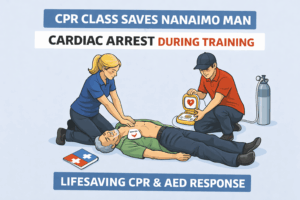 This real-life case highlights why CPR training in Winnipeg and first aid certification in Manitoba are essential—not just for workplaces, but also for community members.
Cardiac emergencies can happen anywhere, including:
-
Training classrooms
-
Offices and industrial worksites
-
Schools and community centres
-
Fitness facilities and public buildings
Workers, instructors, parents, and students all benefit from emergency response training in Canada, especially when AEDs are available on-site. Being prepared means someone nearby can act immediately.
Real-Life Scenario: Cardiac Arrest During a CPR Class in Nanaimo
In Nanaimo, a man named Earl Morris experienced a cardiac emergency during a situation where help was already close at hand.
Morris was attending a first aid and CPR training session. He had just completed practicing chest compressions and was taking a break. Sitting in his chair, he dropped his exercise book—and then lost consciousness.
He later recalled nothing between that moment and waking up in a healthcare facility.
What followed was a clear example of how training and preparedness can save lives.
Recognizing the emergency, trained responders in the room acted immediately. Morris had gone into cardiac arrest, and CPR was started right away. Because the training facility was properly equipped, an AED and oxygen were also available.
The AED was used promptly, delivering a shock that helped restore his heart rhythm. With continuous CPR and rapid intervention, Morris was successfully resuscitated before being transported for advanced care.
Today, he lives with a pacemaker to help manage his heart condition and has spoken about how fortunate he was to be in the right place at the right time. He continues to encourage others to take CPR and first aid training, knowing firsthand how vital it can be.
Symptoms and Warning Signs
Cardiac arrest often occurs without warning, but possible signs may include:
-
Sudden collapse
-
Loss of consciousness
-
No breathing or abnormal breathing
-
Dropping objects or becoming unresponsive
In some cases, individuals may appear fine moments before the event.
Causes and Risk Factors
Cardiac arrest can be linked to several factors, including:
-
Underlying heart conditions
-
Irregular heart rhythms (arrhythmias)
-
Previous heart disease
-
Age and medical history
-
Physical or emotional stress
Even individuals participating in routine activities—like a training class—can experience unexpected cardiac events.
First Aid Response: What to Do
Based on standard first aid training practices in Canada, the recommended response includes:
-
Call 911 immediately or direct someone nearby to do so
-
Start CPR right away:
-
Place hands in the center of the chest
-
Push hard and fast at a steady rhythm
-
-
Use an AED as soon as it is available:
-
Turn it on and follow voice instructions
-
-
Continue CPR until emergency services take over
These steps are commonly taught in certified CPR and AED training programs across Canada.
Prevention and Workplace Safety Considerations
This incident highlights the importance of preparedness in Winnipeg workplaces and Manitoba training environments:
-
Ensure staff are trained in CPR and AED use
-
Keep AEDs accessible and regularly maintained
-
Include emergency response plans in workplace safety programs
-
Encourage ongoing first aid certification
Prepared environments—like Morris’s training class—can dramatically improve outcomes during emergencies.
Frequently Asked Questions
What should you do if someone collapses during a class or meeting?
Call 911 immediately and check if the person is responsive and breathing. If not, begin CPR and ask someone to locate an AED. Acting quickly in the first few minutes can significantly improve survival chances.
Can cardiac arrest happen without warning?
Yes, cardiac arrest can occur suddenly, even in individuals who appear healthy. This is why CPR training and awareness are so important in workplaces and public settings across Canada.
How does an AED help during cardiac arrest?
An AED analyzes the heart’s rhythm and can deliver a shock if needed to help restore a normal heartbeat. These devices are designed for public use and provide step-by-step voice instructions.
Is CPR still necessary if an AED is available?
Yes, CPR should be started immediately and continued until the AED is ready to use. Both CPR and AED use work together to improve survival outcomes.
Why is CPR training important for everyday people?
CPR training builds confidence and prepares individuals to act during emergencies. In many cases, bystanders are the first to respond, making their actions critical before paramedics arrive.
Educational Note
This content is for general awareness and reflects techniques commonly taught in certified CPR and first aid training across Canada. Early recognition and response can make a meaningful difference in emergency situations.
About The Author

Mark Kascha
Certified First Aid Instructor Trainer with 30+ years of real-world experience, including lifeguarding, workplace emergency response, and first aid program development across Canada. Has worked with WorkSafeBC, WSIB, and Manitoba Health.
👉 [View full credentials]🔗 View LinkedIn Profile
Last reviewed: March 2026