Understanding Animal Attacks and Emergency Response
Animal attacks can cause severe injuries and quickly become life-threatening, especially for young children. Knowing what to do if a child is attacked by a dog or how to respond when a serious injury occurs is critical in the first moments of an emergency.
In Winnipeg, Manitoba, and across Canada, fast action—calling 911, providing first aid, and starting CPR if needed—can help improve outcomes while waiting for emergency services.
First Aid & Workplace Relevance in Canada
 Although this type of incident often occurs at home, the lessons apply broadly across Winnipeg workplaces, schools, and community settings.
First aid and CPR training in Manitoba is valuable for:
-
Parents, grandparents, and caregivers
-
Childcare workers and teachers
-
Outdoor workers and community staff
-
Anyone supervising children or working in public spaces
Emergency response training in Canada often includes how to manage trauma, control bleeding, and respond when someone becomes unresponsive.
Real-Life Scenario: Tragic Dog Attack Involving a Young Child
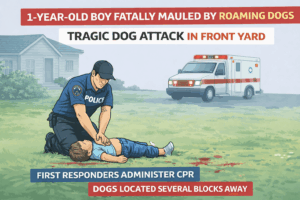
In a heartbreaking incident, a 1-year-old boy wandered out of his grandparents’ home and into the front yard, where two roaming dogs attacked him.
According to Mark Hudson, other children inside the house noticed what was happening and quickly alerted the boy’s grandmother.
She rushed outside and attempted to pull the dogs away, putting herself in danger and sustaining injuries in the process. The child’s grandfather also intervened, using a hose in an effort to drive the dogs away and stop the attack.
Emergency responders arrived shortly after and immediately began CPR on the child at the scene. He was then transported to a healthcare facility, where he was later pronounced deceased.
Authorities later located the dogs several blocks away. Investigators worked to determine whether the animals were strays or belonged to an owner. Information about the grandmother’s injuries was not immediately available.
This tragic event highlights how quickly emergencies can unfold and how important immediate response can be—even when outcomes are uncertain.
Signs of Life-Threatening Injury
Following a severe animal attack, warning signs that require immediate emergency response include:
-
Unresponsiveness or loss of consciousness
-
Difficulty breathing or no breathing
-
Severe bleeding
-
Weak or absent pulse
-
Signs of shock (pale skin, confusion, weakness)
Recognizing these signs early is essential for taking action.
Causes and Risk Factors
Serious animal attacks can occur due to several factors:
-
Unsupervised interaction between children and animals
-
Stray or roaming dogs
-
Dogs acting defensively or territorially
-
Lack of barriers such as fences or secured yards
Young children are especially vulnerable due to their size and inability to recognize danger.
First Aid Response: What to Do
Based on standard first aid training practices in Canada, the recommended response includes:
-
Call 911 immediately
-
Ensure scene safety before approaching
-
Remove the person from danger if it is safe to do so
-
Check responsiveness and breathing
-
Begin CPR if the person is unresponsive and not breathing normally
-
Apply pressure to control bleeding if present
-
Stay with the person until emergency services arrive
These steps are commonly taught in certified first aid and CPR courses across Canada.
Prevention and Workplace Safety Considerations
In Winnipeg and across Manitoba, prevention plays a key role in reducing the risk of animal-related injuries:
-
Supervise children closely around animals
-
Secure yards and entry points in residential areas
-
Report stray or aggressive animals to local authorities
-
Include emergency response training in childcare and workplace safety programs
-
Educate families and workers about animal safety awareness
Prepared communities are better equipped to respond quickly and safely.
Frequently Asked Questions
What should you do if a child is attacked by a dog?
Call 911 immediately and ensure the scene is safe before approaching. If the child is unresponsive or not breathing, begin CPR. If there is bleeding, apply firm pressure. Quick action is critical while waiting for emergency responders.
Can CPR help after a traumatic injury?
CPR can help maintain circulation if a person is not breathing or has no pulse. While outcomes vary depending on the severity of injuries, early CPR is still recommended and commonly taught in first aid training.
How can you protect children from dog attacks?
Supervision is key. Children should never be left alone with unfamiliar or roaming dogs. Secure outdoor spaces and teach children basic safety around animals to reduce risk.
What are signs that an injury is life-threatening?
Unresponsiveness, difficulty breathing, and heavy bleeding are all signs of a serious emergency. These require immediate action, including calling 911 and providing first aid.
Why is first aid training important for families?
First aid training helps caregivers respond quickly and confidently in emergencies. In many cases, immediate action by family members or bystanders can make a critical difference before help arrives.
Educational Note
This article is for general awareness and reflects information commonly taught in certified first aid and CPR training across Canada. Prompt recognition and response are important in emergency situations.
About The Author

Mark Kascha
Certified First Aid Instructor Trainer with 30+ years of real-world experience, including lifeguarding, workplace emergency response, and first aid program development across Canada. Has worked with WorkSafeBC, WSIB, and Manitoba Health.
👉 [View full credentials]🔗 View LinkedIn Profile
Last reviewed: March 2026