Understanding Cardiac Arrest During Physical Activity
Cardiac arrest can occur suddenly, even during physical activity like running events. Knowing what to do if someone collapses near a finish line or how to respond when a runner becomes unresponsive can make a life-saving difference.
In Winnipeg, Manitoba, and across Canada, quick bystander action—especially CPR and AED use—plays a critical role in survival during out-of-hospital cardiac emergencies.
First Aid & Workplace Relevance in Canada
 Public events such as races, marathons, and community runs are common across Winnipeg neighbourhoods like Downtown Winnipeg, St. Vital, and Transcona. These gatherings highlight the importance of:
-
First aid certification in Manitoba
Event staff, volunteers, coaches, and even participants benefit from emergency response training. Preparedness ensures someone nearby can act immediately before paramedics arrive.
Real-Life Scenario: Runner Collapses at the Finish Line in Ottawa
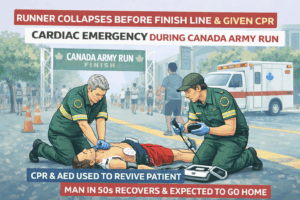
During the Canada Army Run in Ottawa, a man in his 50s collapsed just as he was about to cross the finish line.
What began as a routine race quickly turned into a medical emergency.
Bystanders and on-site responders recognized the seriousness of the situation and immediately stepped in. CPR was started without delay, and an automated external defibrillator (AED) was used to deliver a shock.
This rapid response helped restore the man’s heart rhythm.
Paramedics from Ottawa Paramedic Service arrived shortly after. According to spokesperson Marc-Antoine Deschamps, the man had regained a pulse and was breathing on his own but remained unconscious.
An electrocardiogram (ECG) confirmed that he had experienced a heart-related event. He was transported to a healthcare facility, where he regained consciousness and began recovery.
Thanks to the quick actions of bystanders and access to an AED, the man survived and was expected to return home to his family.
Symptoms and Warning Signs
During or after physical activity, warning signs of cardiac arrest or a serious heart event may include:
-
Sudden collapse
-
Unresponsiveness
-
No breathing or abnormal breathing
-
Chest discomfort or dizziness beforehand (in some cases)
Immediate recognition is essential for early intervention.
Causes and Risk Factors
Cardiac arrest during exercise can be linked to:
-
Undiagnosed heart conditions
-
Irregular heart rhythms (arrhythmias)
-
Physical exertion
-
Age and underlying health factors
Even experienced runners can be affected, which is why preparedness at events is important.
First Aid Response: What to Do
Based on standard first aid training practices in Canada, the recommended response includes:
-
Call 911 immediately
-
Check responsiveness and breathing
-
Begin CPR if the person is unresponsive and not breathing normally:
-
Hands in the center of the chest
-
Push hard and fast
-
-
Use an AED as soon as it is available:
-
Follow the device’s voice prompts
-
-
Continue CPR until help arrives
These steps are commonly taught in certified CPR and AED courses across Canada.
Prevention and Workplace Safety Considerations
In Winnipeg and across Manitoba, organizers of public events and workplaces can improve safety by:
-
Ensuring AEDs are available and visible
-
Training staff and volunteers in CPR and emergency response
-
Planning emergency access routes for paramedics
-
Encouraging participants to be aware of their health before intense activity
Prepared environments increase the chances of survival in cardiac emergencies.
Frequently Asked Questions
What should you do if a runner collapses during a race?
Call 911 immediately and check if the person is responsive and breathing. If not, begin CPR and ask someone to retrieve an AED. Quick action by bystanders can significantly improve survival outcomes.
Can an AED really restart the heart?
An AED can deliver a shock to help restore a normal heart rhythm during certain cardiac emergencies. It is designed for public use and provides step-by-step instructions to guide responders.
Is CPR still needed if the person has a pulse?
If the person is breathing and has a pulse, CPR may not be required. However, monitoring and staying with the person until help arrives is important. Training helps individuals recognize the correct response.
Why are AEDs important at public events?
AEDs allow for immediate treatment before paramedics arrive. Early defibrillation, combined with CPR, is commonly taught in CPR courses and is a key factor in improving survival rates.
Who should learn CPR in Canada?
Everyone can benefit from CPR training, including workers, parents, coaches, and community members. In many emergencies, bystanders are the first to respond.
Educational Note
This article is for general awareness and reflects techniques commonly taught in certified CPR and first aid training across Canada. Early action and preparedness can help improve outcomes in emergencies.
About The Author

Mark Kascha
Certified First Aid Instructor Trainer with 30+ years of real-world experience, including lifeguarding, workplace emergency response, and first aid program development across Canada. Has worked with WorkSafeBC, WSIB, and Manitoba Health.
👉 [View full credentials]🔗 View LinkedIn Profile
Last reviewed: March 2026