Understanding Cardiac Emergencies at Home
Cardiac emergencies often happen in everyday settings, including at home. Knowing what to do if someone collapses suddenly or how to respond when a loved one stops breathing can make a life-saving difference.
In Winnipeg, Manitoba, and across Canada, immediate action—calling 911, starting CPR, and following dispatcher guidance—can significantly improve survival outcomes before paramedics arrive.
First Aid & Workplace Relevance in Canada
While this incident occurred at home, the lessons apply across Winnipeg households, workplaces, and community settings.
CPR and first aid training in Manitoba is especially important for:
-
Families and caregivers
-
Teachers and school staff
-
Workplace employees and supervisors
-
Coaches and community volunteers
Many emergencies occur before professional help arrives, which is why CPR training in Winnipeg and AED training in Canada are widely recommended.
Real-Life Scenario: Bedford Teacher Saves Her Husband with CPR
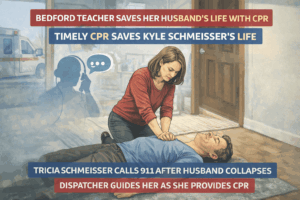 In Bedford, a teacher named Tricia Schmeisser was recognized for saving the life of her husband, Kyle Schmeisser.
After playing hockey, Kyle returned home complaining of chest discomfort. He described pain spreading across his chest and into his left arm—symptoms often associated with a heart-related emergency.
The couple stood near the front of their home discussing what to do. Tricia wanted to call 911, but Kyle preferred to go to the hospital by car.
Moments later, he collapsed near the front door.
Recognizing the seriousness of the situation, Tricia immediately called 911. The dispatcher stayed on the line and guided her step-by-step.
At first, she was unsure what she was seeing. Although she suspected a heart attack, his condition appeared confusing—possibly resembling a seizure—and she could not immediately tell if he was breathing.
Following instructions, she repositioned him and began CPR.
Paramedics, including Sylvain Jacquard, arrived shortly after. They later confirmed that her quick actions played a major role in the outcome.
Kyle survived the incident but had little memory of what happened. He credited his wife’s response—and her willingness to act quickly—with saving his life.
Symptoms and Warning Signs
Signs of a possible cardiac emergency may include:
-
Chest pain or pressure
-
Pain spreading to the arm, neck, or jaw
-
Sudden collapse
-
Unresponsiveness
-
Difficulty breathing or no breathing
Recognizing these early warning signs can help prompt faster action.
Causes and Risk Factors
Cardiac emergencies can occur due to:
-
Heart disease or blocked arteries
-
Irregular heart rhythms (arrhythmias)
-
Physical exertion (such as sports)
-
Age and underlying health conditions
Even individuals who appear healthy can experience sudden cardiac events.
First Aid Response: What to Do
Based on standard first aid training practices in Canada, the recommended response includes:
-
Call 911 immediately
-
Follow dispatcher instructions
-
Check responsiveness and breathing
-
Begin CPR if the person is unresponsive and not breathing normally:
-
Hands in the center of the chest
-
Push hard and fast
-
-
Use an AED if available
-
Continue until paramedics arrive
These steps are commonly taught in certified CPR courses across Canada.
Prevention and Workplace Safety Considerations
In Winnipeg and across Manitoba, safety awareness can help reduce risks and improve outcomes:
-
Learn CPR and first aid as a household or workplace
-
Be aware of early warning signs like chest pain
-
Encourage regular health check-ups
-
Ensure AEDs are accessible in workplaces and public spaces
Prepared individuals and environments can respond more effectively during emergencies.
Frequently Asked Questions
What should you do if someone has chest pain and collapses?
Call 911 immediately and check if the person is responsive and breathing. If they are not breathing normally, begin CPR and follow dispatcher instructions. Acting quickly is critical in cardiac emergencies.
Can CPR be done without formal training?
Yes, CPR can still be performed in an emergency. However, taking a CPR course in Winnipeg or elsewhere in Canada helps build confidence and ensures proper technique.
Why is calling 911 important before starting CPR?
Emergency dispatchers can guide you through the steps and ensure help is on the way. They can also assist in identifying whether CPR is needed.
What are early signs of a heart attack?
Chest pain, discomfort spreading to the arm, and shortness of breath are common warning signs. Recognizing these early can help prompt faster medical attention.
How can CPR training help families?
CPR training prepares family members to respond quickly during emergencies at home. In many cases, loved ones are the first to act before paramedics arrive.
Educational Note
This article is for general awareness and reflects information commonly taught in certified CPR and first aid training across Canada. Early recognition and response can help improve outcomes in emergencies.
About The Author

Mark Kascha
Certified First Aid Instructor Trainer with 30+ years of real-world experience, including lifeguarding, workplace emergency response, and first aid program development across Canada. Has worked with WorkSafeBC, WSIB, and Manitoba Health.
👉 [View full credentials]🔗 View LinkedIn Profile
Last reviewed: March 2026