Understanding Drowning and Emergency Response
Drowning can happen quickly and often silently, especially in lakes and rivers. Knowing what to do if someone is pulled from the water or how to respond when a person is not breathing after submersion is critical in those first moments.
In Winnipeg, Manitoba, and across Canada, quick action—calling 911, safely removing the person from the water, and starting CPR when needed—can help improve survival chances while waiting for emergency responders.
First Aid & Workplace Relevance in Canada
Water-related emergencies are not limited to coastal regions. In Winnipeg and across Manitoba, lakes, rivers, and cottage areas present similar risks.
CPR and first aid training is important for:
-
Families and recreational swimmers
-
Camp staff and outdoor workers
-
Teachers and school trip supervisors
-
Workplace teams involved in outdoor or water activities
Courses such as CPR training Winnipeg, first aid certification Manitoba, and emergency response training Canada prepare individuals to act quickly in water-related emergencies.
Real-Life Scenario: Two Drowning Incidents in British Columbia
In British Columbia, two separate drowning incidents highlighted how quickly emergencies can unfold—even when others are nearby to help.
At Thetis Lake, a 21-year-old man was reported missing in the water. According to witness Barbara Donahue, people began shouting for help after realizing they could not find him.
She entered the water, located the man beneath the surface, and brought him to shore. Bystanders immediately began CPR while emergency services were contacted. Despite these efforts, the man later died while being transported to a healthcare facility.
In a separate incident near the Similkameen River, a 19-year-old from Keremeos fell into the river while float rafting with friends. Witnesses reported he was swept under the surface by the current.
Rescue crews later recovered his body, and the BC Coroners Service investigated the incident.
According to Dan Moskaluk, accidental drownings have increased, and the public is urged not to underestimate the risks associated with waterways.
These incidents show that even when CPR is started quickly, outcomes are not always predictable—but immediate action remains essential.
Symptoms and Warning Signs of Drowning
Signs that someone may be in serious distress in the water include:
-
Struggling to stay above water
-
Silent distress (no shouting or waving)
-
Sudden disappearance under the surface
-
Unresponsiveness after being pulled from the water
-
No breathing or abnormal breathing
Recognizing these signs early can allow faster rescue and response.
Causes and Risk Factors
Common factors contributing to drowning incidents include:
-
Strong currents or cold water
-
Lack of supervision
-
Overestimating swimming ability
-
Fatigue or panic in the water
-
Alcohol or distraction during water activities
Even experienced swimmers can be at risk in natural waterways.
First Aid Response: What to Do
Based on standard first aid training practices in Canada, the recommended response includes:
-
Call 911 immediately
-
Ensure your own safety before entering the water
-
Remove the person from the water if safe to do so
-
Check responsiveness and breathing
-
Begin CPR if the person is unresponsive and not breathing normally
-
Continue until emergency services arrive
These steps are commonly taught in certified CPR and water safety training across Canada.
Prevention and Workplace Safety Considerations
In Winnipeg and across Manitoba, water safety can be improved by:
-
Wearing life jackets in open water
-
Supervising swimmers closely
-
Avoiding risky conditions such as strong currents
-
Educating workers and families about water hazards
-
Ensuring access to trained responders at recreational sites
Preparedness and awareness are key to preventing tragedies.
Legal Awareness: Good Samaritan Laws in Canada vs. the United States
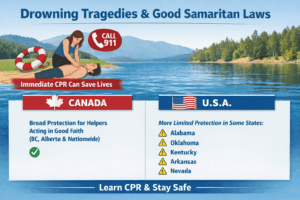 In British Columbia, the Good Samaritan Act generally protects individuals who provide emergency aid in good faith at the scene. This means bystanders who attempt CPR are typically protected from liability unless their actions are grossly negligent.
This approach is consistent across Canada, including in Alberta, where legislation also supports individuals who assist in emergencies without expecting compensation. These laws are designed to encourage people to act quickly without fear of legal consequences.
In the United States, most states also have Good Samaritan laws—but the level of protection can vary more widely.
Some states that have been considered more limited or conditional in their protections include:
-
Alabama
-
Oklahoma
-
Kentucky
-
Arkansas
-
Nevada
In these jurisdictions:
-
Protection may depend on whether the person has formal training
-
Laws may distinguish between types of aid provided
-
Legal interpretations may vary depending on the situation
By comparison, Canadian laws—including those in British Columbia—are generally viewed as clearer and more consistent in supporting bystanders who act in good faith.
Key Takeaway
-
Canada (B.C., Manitoba, Alberta): Broad and consistent protection for good-faith responders
-
Some U.S. states: Protections exist but may be narrower or more conditional
-
In all cases, helping during an emergency is encouraged and can make a critical difference
Frequently Asked Questions
What should you do if someone is pulled from the water and not breathing?
Call 911 immediately and begin CPR if the person is unresponsive and not breathing normally. Continue until emergency responders arrive. Quick action is critical in drowning emergencies.
Can CPR still help after a drowning incident?
CPR may help restore circulation and breathing if started quickly. While outcomes vary, early intervention is commonly taught in first aid training and can improve chances of survival.
Is it safe to jump into the water to rescue someone?
Only enter the water if it is safe to do so. Many rescues result in additional victims. Whenever possible, use reach or throw methods instead of direct entry.
Are bystanders protected when helping in Canada?
Yes, Good Samaritan laws in Canada generally protect individuals who provide emergency assistance in good faith, including CPR, unless actions are grossly negligent.
Why is CPR training important for water activities?
People near water are often the first to respond during emergencies. CPR training prepares individuals to act quickly and confidently before professional help arrives.
Educational Note
This article is for general awareness and reflects techniques commonly taught in certified first aid and CPR training across Canada. Legal information is provided for general understanding only.
About The Author

Mark Kascha
Certified First Aid Instructor Trainer with 30+ years of real-world experience, including lifeguarding, workplace emergency response, and first aid program development across Canada. Has worked with WorkSafeBC, WSIB, and Manitoba Health.
👉 [View full credentials]🔗 View LinkedIn Profile
Last reviewed: March 2026