
Understanding Hiking Emergencies and Getting Lost
Getting lost while hiking can quickly turn into an emergency, especially in unfamiliar terrain. Knowing what to do if you get lost in the wilderness or how to respond when you are stranded outdoors can help keep you safe until rescue arrives.
In Winnipeg, Manitoba, and across Canada, outdoor recreation is popular year-round. Being prepared with basic survival knowledge and first aid training can make a critical difference in these situations.
First Aid & Workplace Relevance in Canada
Hiking and outdoor work are common across Winnipeg and surrounding Manitoba areas, including parks, trails, and remote job sites.
Training is important for:
- Outdoor workers and guides
- Camp leaders and educators
- Hikers and recreational groups
- Search and rescue volunteers
Programs such as first aid certification Manitoba, CPR training Winnipeg, and emergency response training Canada help individuals respond effectively when emergencies occur in remote environments.
Real-Life Scenario: Stranded Hikers Rescued on North Shore
 Two hikers, Daniel Jeffrey and Wesley Jay, became stranded while hiking in the Hanes Valley between Grouse Mountain and Lynn Headwaters Regional Park.
While attempting to cross a creek in unfamiliar terrain, they were unable to continue safely. Recognizing the risk, they made the decision to stop moving and stay in place for the night.
Back home, friends and family became concerned when the pair failed to return as planned. Because the hikers had shared a trip itinerary, search efforts began quickly.
According to Tim Jones, search teams used an RCMP helicopter to scan the area. On the sixth pass, the hikers were spotted using a phone light and a blanket to signal for help.
Search and rescue volunteers reached them on foot and guided them safely out. They were cold but otherwise unharmed.
Rescuers noted that the hikers made a smart decision to stay put, rather than attempting to navigate dangerous terrain in poor conditions.
What to Do If You Get Lost
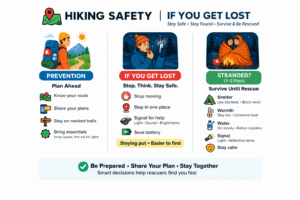
If you become lost while hiking, follow these general steps taught in outdoor safety training:
- Stop moving to avoid getting further off track
- Stay calm and assess your surroundings
- Try to retrace your steps only if it is safe
- Stay in one place if unsure of direction
- Signal for help using light, sound, or visible objects
Staying put often increases the chances of being found quickly.
How to Prevent Getting Lost
Prevention is one of the most important safety strategies:
- Plan your route in advance
- Stay on marked and open trails
- Check weather and daylight conditions
- Bring a map, compass, or GPS device
- Inform someone of your trip plan and return time
The hikers in this case were located faster because others knew where they were going.
What to Do If You Are Stranded for Several Days
If rescue is delayed, focus on basic survival priorities:
Shelter
- Use blankets, clothing, or natural cover to stay warm
- Protect yourself from wind and moisture
Warmth
- Conserve body heat by staying dry and minimizing movement
- Stay together if with others
Water
- Ration available water carefully
- Avoid unnecessary exertion
Signaling
- Use reflective items, lights, or bright materials
- Create visible signals for search teams
Energy
- Stay calm and conserve energy
- Avoid risky attempts to self-rescue in dangerous terrain
These principles are commonly taught in wilderness first aid and survival training in Canada.
Symptoms and Warning Signs of Exposure
When stranded outdoors, watch for:
- Shivering or extreme cold
- Confusion or disorientation
- Fatigue or weakness
- Dehydration
- Loss of coordination
These may indicate exposure-related conditions that require attention.
First Aid Response: What to Do
Based on standard first aid training practices in Canada:
- Stay in a safe location
- Call for help if possible (911 or emergency services)
- Use available supplies to maintain warmth and safety
- Signal rescuers clearly
- Provide basic first aid if injuries occur
Prevention and Workplace Safety Considerations
In Winnipeg and across Manitoba, outdoor safety can be improved by:
- Taking first aid and wilderness safety courses
- Following marked trails and posted warnings
- Carrying essential gear (blanket, first aid kit, communication device)
- Avoiding restricted or closed areas
- Preparing for changing weather conditions
Prepared hikers are far more likely to avoid emergencies or manage them effectively.
Frequently Asked Questions
What should you do first if you realize you are lost while hiking?
Stop moving and assess your surroundings. Staying calm and avoiding unnecessary movement can help prevent further disorientation and increase your chances of being found.
Is it better to stay put or try to find your way out?
In many cases, staying put is safer, especially in unfamiliar or dangerous terrain. Search teams often locate individuals faster when they remain in one place.
What should you carry on a hike to stay safe?
Essential items include a map, water, extra clothing, a first aid kit, and a communication device. Preparation is key to preventing emergencies.
How do you signal for help in the wilderness?
Use lights, reflective materials, bright clothing, or sound signals. Making yourself visible helps rescuers locate you more quickly.
Why is sharing a trip plan important?
A trip plan allows others to alert authorities if you do not return on time. This can significantly speed up search and rescue efforts.
Educational Note
This article is for general awareness and reflects techniques commonly taught in certified first aid and outdoor safety training across Canada. Preparation and decision-making play a key role in wilderness survival.
About The Author

Mark Kascha
Certified First Aid Instructor Trainer with 30+ years of real-world experience, including lifeguarding, workplace emergency response, and first aid program development across Canada. Has worked with WorkSafeBC, WSIB, and Manitoba Health.
👉 [View full credentials]🔗 View LinkedIn Profile
Last reviewed: March 2026