Understanding Infant Drowning and Emergency Response
Drowning incidents involving infants and toddlers can happen quickly and often silently. Knowing what to do if a child is found underwater or how to respond when an infant is not breathing is critical in those first moments.
In Winnipeg, Manitoba, and across Canada, fast action—removing the child from the water, calling 911, and starting CPR—can make a life-saving difference while waiting for emergency responders.
First Aid & Workplace Relevance in Canada
Incidents like this can occur in homes, daycare settings, and community pools across Winnipeg neighbourhoods such as St. Vital, Transcona, and Downtown Winnipeg.
CPR and first aid training is especially important for:
- Parents and caregivers
- Childcare workers and teachers
- Lifeguards and recreation staff
- Property managers and homeowners
Programs such as CPR training Winnipeg, first aid certification Manitoba, and infant CPR courses Canada prepare individuals to respond effectively in child-related emergencies.
Real-Life Scenario: Toddler Pulled from Pool in Deep Cove
 In Deep Cove, a toddler was reported missing from a home on Fairway Place.
When the first responding officer—part of the Integrated Police Dog Service—arrived, the child was found submerged in a pool.
The officer immediately entered the water, removed the child, and began CPR on scene. Paramedics arrived shortly after and continued care.
The child was transported to Lions Gate Hospital but could not be resuscitated.
According to Richard De Jong, despite rapid response and efforts by emergency personnel, the outcome was tragic. Support services were provided to the family following the incident.
This heartbreaking case highlights how quickly water-related emergencies can occur—especially involving young children.
Symptoms and Warning Signs of Drowning in Children
Drowning is often silent. Signs may include:
- Head low in water or face submerged
- No movement or weak attempts to stay afloat
- Gasping or struggling to breathe
- Unresponsiveness after being removed from water
Immediate recognition is critical.
Infant CPR vs. Child and Adult CPR
CPR techniques vary depending on age and size. Based on standard first aid training practices in Canada:
Infants (under 1 year)
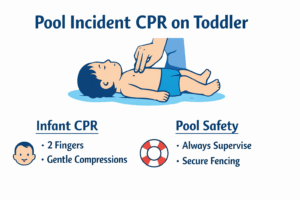
- Use two fingers for chest compressions
- Compressions are gentler and smaller
- Breaths may be included as part of training
Children
- Use one or two hands depending on size
- Adjust pressure based on the child’s body
Adults
- Use two hands with strong, deep compressions
- Hands-only CPR is commonly recommended for bystanders
Proper training helps ensure the correct technique is used for each age group.
First Aid Response: What to Do
If a child is found in water:
- Remove the child from the water immediately
- Call 911 right away
- Check responsiveness and breathing
- Begin CPR if unresponsive and not breathing normally
- Continue until emergency responders arrive
These steps are commonly taught in certified infant and child CPR courses across Canada.
Pool Safety for Infants and Toddlers
Prevention is critical when it comes to young children and water:
- Always supervise children closely near water
- Never leave infants unattended, even briefly
- Install secure fencing and locked gates around pools
- Use pool covers and alarms where appropriate
- Keep rescue equipment nearby
Even a short lapse in supervision can lead to an emergency.
Prevention and Workplace Safety Considerations
In Winnipeg and across Manitoba, safety can be improved by:
- Teaching water safety to families and caregivers
- Ensuring childcare staff are CPR certified
- Maintaining safe pool environments
- Encouraging early swimming and safety education
Prepared environments and trained caregivers reduce risk significantly.
Frequently Asked Questions
What should you do if a child is found underwater?
Remove the child from the water immediately, call 911, and begin CPR if they are not breathing normally. Acting quickly is critical in drowning emergencies.
How is infant CPR different from adult CPR?
Infant CPR uses gentler compressions with two fingers and adjusted techniques. Training helps ensure the correct method is used for each age group.
Can CPR help after a drowning incident?
CPR may help restore breathing and circulation if started quickly. It is a key part of emergency response training in Canada.
How can pool accidents involving children be prevented?
Constant supervision, secure barriers, and safety equipment are essential. Education for caregivers also plays a major role in prevention.
Who should learn infant CPR?
Parents, caregivers, teachers, and anyone responsible for young children should consider training. In many cases, they are the first to respond.
Educational Note
This article is for general awareness and reflects techniques commonly taught in certified first aid and CPR training across Canada. Prevention and early response are key in child safety.
About The Author

Mark Kascha
Certified First Aid Instructor Trainer with 30+ years of real-world experience, including lifeguarding, workplace emergency response, and first aid program development across Canada. Has worked with WorkSafeBC, WSIB, and Manitoba Health.
👉 [View full credentials]🔗 View LinkedIn Profile
Last reviewed: March 2026