Understanding Ski and Snowboard Emergencies
Falls while skiing or snowboarding can lead to serious injuries, especially when combined with terrain hazards like tree wells or deep snow. Knowing what to do if someone falls and becomes unresponsive or how to respond when a person is buried or trapped in snow is critical in winter environments.
In Winnipeg, Manitoba, and across Canada, many people travel to ski areas, making first aid knowledge and awareness essential for winter safety.
First Aid & Workplace Relevance in Canada
 Winter recreation and outdoor work are common across Winnipeg and Manitoba, and similar risks exist during travel to ski resorts or snowy environments.
Training is important for:
- Skiers and snowboarders
- Outdoor workers and guides
- Coaches and instructors
- Families and winter recreation participants
Programs such as CPR training Winnipeg, first aid certification Manitoba, and emergency response training Canada prepare individuals to respond to cold-weather emergencies.
Real-Life Scenario: Snowboarder Rescue Attempt on Blackcomb
At Blackcomb Mountain, a snowboarder was found unresponsive after an incident in the “7th Heaven” area of the hill.
A passing skier noticed the man hanging upside down in a hollow at the base of a tree—commonly referred to as a tree well.
The skier initially tried to pull him out but was unable to do so alone and went to get help.
A group of nearby skiers and snowboarders worked together to free the man and began CPR immediately. Ski patrol, along with a doctor and paramedic, arrived shortly after and continued care.
The man was airlifted to a healthcare facility but later died.
Authorities noted that he had been riding within an open run and reminded the public to stay alert to natural hazards and ride with others.
Tree Wells and Snow Burial: Why They Are Dangerous
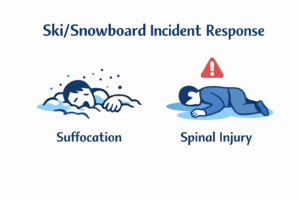
Tree wells form around the base of trees where snow is deep and loosely packed. Falling into one can lead to:
- Being trapped upside down
- Snow collapsing around the face
- Limited ability to move or call for help
Snow can block the airway, leading to suffocation within minutes if the person cannot free themselves.
This is why riding with a partner and staying visible is strongly recommended.
Falls and Spinal Injury Risk
Falls from height or speed—common in skiing and snowboarding—can lead to potential spinal injuries.
Warning signs may include:
- Neck or back pain
- Loss of movement or sensation
- Unresponsiveness after a fall
- Awkward body positioning
Spinal Safety Principles
Based on standard first aid training practices in Canada:
- Avoid unnecessary movement of the person
- Support the head and neck if possible
- Keep the person still until trained responders arrive
Moving someone improperly after a fall can increase the risk of further injury.
Symptoms and Warning Signs
After a snow-related incident, watch for:
- Unresponsiveness
- Difficulty breathing
- Signs of cold exposure (shivering, confusion)
- Injuries from impact
- Snow covering the face or airway
Immediate recognition is critical for response.
First Aid Response: What to Do
Based on standard first aid training practices in Canada:
- Ensure scene safety
- Call for help or alert ski patrol immediately
- Carefully free the person from snow if safe to do so
- Check responsiveness and breathing
- Begin CPR if unresponsive and not breathing normally
- Minimize movement if spinal injury is suspected
- Keep the person warm until help arrives
These steps are commonly taught in CPR and winter safety courses across Canada.
Prevention and Workplace Safety Considerations
In Winnipeg and across Manitoba, and when traveling to ski areas:
- Always ride or ski with a partner
- Avoid riding alone in tree areas
- Stay on marked runs
- Be aware of terrain hazards like tree wells
- Wear appropriate safety gear
- Inform others of your plans
Prepared individuals are better able to avoid and respond to emergencies.
Frequently Asked Questions
What should you do if someone is buried in snow?
Call for help immediately and try to clear the airway as quickly as possible. If the person is unresponsive and not breathing normally, begin CPR once they are safely accessible.
Why are tree wells dangerous for skiers and snowboarders?
Tree wells contain loose snow that can trap a person, often upside down. This can restrict breathing and make self-rescue very difficult.
Should you move someone after a fall on the slopes?
Only move them if necessary for safety. If a spinal injury is suspected, keep them still and support the head and neck until help arrives.
Can CPR help in snow-related incidents?
CPR may help if the person is not breathing normally. Early intervention is commonly taught in CPR training and can improve outcomes.
How can these types of incidents be prevented?
Ski with a partner, stay on marked trails, and remain aware of hazards. Preparation and awareness are key to safety.
Educational Note
This article is for general awareness and reflects techniques commonly taught in certified first aid and CPR training across Canada. Winter safety and preparedness are essential in outdoor environments.
About The Author

Mark Kascha
Certified First Aid Instructor Trainer with 30+ years of real-world experience, including lifeguarding, workplace emergency response, and first aid program development across Canada. Has worked with WorkSafeBC, WSIB, and Manitoba Health.
👉 [View full credentials]🔗 View LinkedIn Profile
Last reviewed: March 2026