Understanding Opioid Overdose and Emergency Response
An opioid overdose can slow or stop breathing, making it a life-threatening emergency. Knowing what to do if someone overdoses or how to respond when a person is not breathing normally due to drugs can help save a life.
In Winnipeg, Manitoba, and across Canada, opioid-related emergencies remain a public health concern. Quick action—calling 911, giving naloxone, and starting CPR if needed—can significantly improve survival.
First Aid & Workplace Relevance in Canada
Overdose emergencies can happen in public spaces, schools, workplaces, and homes across Winnipeg neighbourhoods like Downtown, North End, and St. Vital.
Training is important for:
- Students and educators
- Workplace staff and supervisors
- Security personnel
- Community members and families
Programs such as CPR training Winnipeg, first aid certification Manitoba, and naloxone training Canada are increasingly common and help people respond safely and confidently.
Real-Life Scenario: University Students Trained to Respond to Overdoses
 At University of the Fraser Valley, students are being introduced to life-saving training focused on overdose response.
The program, supported by coordinator Michele Giordano, aims to equip students with practical skills, including recognizing overdose signs, administering naloxone, and performing CPR.
Students learn how opioids such as morphine, heroin, and fentanyl affect breathing—and how naloxone can temporarily reverse these effects.
The initiative reflects a growing awareness that community members, not just healthcare providers, may be first on scene during an overdose.
Signs and Symptoms of an Opioid Overdose
Common warning signs include:
- Slow, irregular, or stopped breathing
- Unresponsiveness or inability to wake
- Blue or gray lips and fingernails
- Pinpoint pupils
- Gurgling or choking sounds
These signs require immediate emergency action.
What Is Naloxone and Why Is It Used?
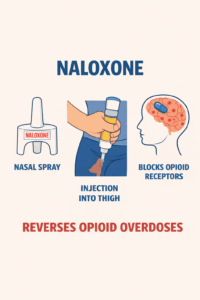
Naloxone is a medication designed to reverse the effects of opioids.
How It Works
- Naloxone blocks opioid receptors in the brain
- This can restore breathing in someone experiencing an overdose
Why It Is Used
- Opioids slow or stop breathing
- Naloxone helps counteract this effect temporarily
Effectiveness
- Naloxone is widely recognized as an effective emergency response tool
- It can work within minutes
- Multiple doses may sometimes be required
Naloxone is commonly included in first aid and emergency response training programs across Canada.
How Naloxone Is Given
Naloxone is designed for public use and is commonly available as:
- Nasal spray (sprayed into the nose)
- Pre-filled injection (administered into the thigh)
These formats are intended to be simple and accessible for bystanders with basic training.
First Aid Response: What to Do
Based on standard first aid training practices in Canada:
- Call 911 immediately
- Check responsiveness and breathing
- Administer naloxone if available
- Begin CPR if the person is not breathing normally
- Stay with the person until help arrives
These steps are commonly taught in overdose response and CPR training.
Causes and Risk Factors
Overdose risk may increase with:
- Use of opioids such as fentanyl, heroin, or prescription medications
- Mixing substances
- Unknown drug strength
- Reduced tolerance
Awareness can help reduce risk and improve response.
Prevention and Workplace Considerations
In Winnipeg and across Manitoba, communities are taking steps to improve safety:
- Expanding access to naloxone kits
- Providing training in schools and workplaces
- Promoting awareness of overdose signs
- Encouraging community response readiness
Prepared individuals can help bridge the gap until emergency services arrive.
Frequently Asked Questions
What should you do if someone overdoses?
Call 911 immediately, check breathing, administer naloxone if available, and begin CPR if needed. Stay with the person until help arrives.
How quickly does naloxone work?
Naloxone can begin working within minutes by reversing opioid effects. However, continued monitoring is important as effects may wear off.
Is naloxone safe to use?
Naloxone is designed for emergency use and is commonly included in public training programs. It works specifically on opioid-related overdoses.
Do you still need CPR after giving naloxone?
If the person is not breathing normally, CPR should be started. Naloxone and CPR are often used together in emergencies.
Who should carry naloxone?
Anyone can benefit from training, especially those in public-facing roles, workplaces, or communities where overdose risk exists.
Educational Note
This article is for general awareness and reflects techniques commonly taught in certified first aid, CPR, and naloxone training across Canada. Early recognition and response are key in overdose emergencies.
About The Author

Mark Kascha
Certified First Aid Instructor Trainer with 30+ years of real-world experience, including lifeguarding, workplace emergency response, and first aid program development across Canada. Has worked with WorkSafeBC, WSIB, and Manitoba Health.
👉 [View full credentials]🔗 View LinkedIn Profile
Last reviewed: March 2026