Understanding Choking and Emergency Response
Choking occurs when an object blocks the airway, preventing normal breathing. Knowing what to do if someone is choking or how to respond when a person cannot breathe or speak is a critical life-saving skill.
In Winnipeg, Manitoba, and across Canada, choking can happen in restaurants, homes, workplaces, and schools. Quick action using first aid techniques can help clear the airway and restore breathing.
First Aid & Workplace Relevance in Canada
Choking emergencies can happen anywhere, including restaurants, offices, and public spaces across Winnipeg neighbourhoods like Downtown, St. Vital, and Transcona.
First aid training is important for:
- Restaurant and hospitality workers
- Teachers and childcare providers
- Parents and caregivers
- Workplace staff and supervisors
Programs such as CPR training Winnipeg, first aid certification Manitoba, and emergency response training Canada teach choking response techniques commonly used across Canada.
Real-Life Scenario: Restaurant Server Saves Choking Woman
 At Ricky’s Country Restaurant, a woman named Rachel Brien began choking while eating during dinner with her son.
Halfway through her meal, she took a bite of toast and suddenly could not breathe. As the situation worsened, she stood up from her booth to signal for help.
A nearby server, Jorden Ketting-Olivier, quickly stepped in. He identified the emergency and asked if she could cough.
When initial attempts like back blows did not work, he positioned himself behind her and performed abdominal thrusts. This successfully cleared the airway.
He had just renewed his first aid certification the day before—highlighting how recent training can directly impact real-life emergencies.
Symptoms and Warning Signs of Choking
Signs that someone may be choking include:
- Inability to speak or breathe
- Silent attempts to cough
- Clutching the throat
- Panic or distress
- Loss of consciousness if blockage continues
Immediate action is required.
First Aid Response: What to Do
Based on standard first aid training practices in Canada:
- Ask if the person can cough
- Encourage coughing if possible
- Deliver back blows if airway is blocked
- Use abdominal thrusts if needed
- Call 911 if the obstruction does not clear
- Begin CPR if the person becomes unresponsive
These steps are commonly taught in certified first aid courses across Canada.
How Choking Rescue Techniques May Vary
Choking response may need to be adjusted depending on the individual:
Pregnant Individuals or Larger Body Types
- Use chest thrusts instead of abdominal thrusts
- Apply pressure to the center of the chest
Wheelchair Users
- Perform thrusts from behind if possible
- If not, adapt position and use chest thrusts
Infants (under 1 year)
- Use back blows and chest thrusts
- Do not use abdominal thrusts
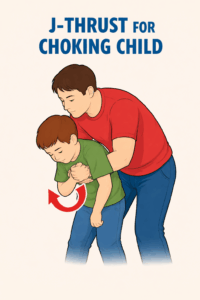
Children
- Use gentler force based on size
- Adjust technique to the child’s height
Height Differences (Too Tall or Too Short)
- Adjust your position (kneel or stand on support if safe)
- Ensure thrusts are applied at the correct location
Training helps individuals adapt techniques safely and effectively.
Causes and Risk Factors
Choking can be caused by:
- Eating too quickly
- Talking or laughing while eating
- Improperly chewed food
- Small objects in children
- Medical or swallowing conditions
Awareness can help reduce risk.
Prevention and Workplace Safety Considerations
In Winnipeg and across Manitoba, choking risks can be reduced by:
- Encouraging slow and mindful eating
- Supervising children during meals
- Training staff in first aid and choking response
- Posting emergency procedures in workplaces
- Ensuring quick access to emergency services
Prepared environments improve safety.
Frequently Asked Questions
What should you do if someone cannot breathe due to choking?
Act immediately by encouraging coughing, then using back blows and abdominal or chest thrusts if needed. Call 911 if the blockage does not clear.
Why are techniques different for infants and pregnant individuals?
Body structure and safety considerations require modified techniques. For example, infants need gentler methods, while chest thrusts are safer for pregnant individuals.
Can choking resolve on its own?
If the person can cough effectively, they may clear the obstruction themselves. If they cannot breathe or speak, immediate intervention is required.
What happens if choking is not treated quickly?
Lack of oxygen can lead to unconsciousness and serious complications. Rapid response is critical.
Who should learn choking first aid?
Anyone can benefit, especially caregivers, parents, and workers in public-facing roles. Training prepares individuals to respond confidently.
Educational Note
This article is for general awareness and reflects techniques commonly taught in certified first aid and CPR training across Canada. Quick recognition and response are key to choking emergencies.
About The Author

Mark Kascha
Certified First Aid Instructor Trainer with 30+ years of real-world experience, including lifeguarding, workplace emergency response, and first aid program development across Canada. Has worked with WorkSafeBC, WSIB, and Manitoba Health.
👉 [View full credentials]🔗 View LinkedIn Profile
Last reviewed: March 2026