Understanding Drowning Risks in Large Groups
Drowning incidents can happen quickly—especially in large groups where people have different swimming abilities. Knowing what to do if someone disappears under water or how to respond when CPR is needed after a drowning incident is critical.
In many cases, drowning occurs silently, without splashing or shouting, making active supervision and preparation essential.
First Aid & Workplace Relevance in Winnipeg, Manitoba
In Winnipeg, Manitoba, group outings to lakes, rivers, and camps are common—especially in areas like St. Vital Park, Birds Hill Park, and Transcona.
CPR training in Winnipeg and first aid certification in Manitoba are important for:
- University groups and student leaders
- Camp coordinators and outdoor educators
- Teachers and supervisors
- Event organizers and volunteers
These skills are widely taught in emergency response training across Canada, helping groups prepare for water-related emergencies.
Scenario: Student Drowning at Gull Lake
 A tragic incident occurred at Gull Lake, involving 18-year-old University of Toronto engineering student Anand Baiju.
According to fellow student Sina Lakbala, the group had just arrived at camp after a hot bus ride. With no air conditioning on the bus, many students decided to cool off in the lake shortly after arrival.
Lakbala and Baiju entered the water with others. About 20 minutes later, some students began to panic near a floating dock—Baiju had gone underwater.
Lakbala immediately swam down to search and located Baiju beneath the surface. He pulled him up and, with the help of others, brought him back to shore.
- Baiju was unconscious when removed from the water
- Students immediately began CPR
- A professor called emergency services
Paramedics arrived and continued care before transporting Baiju to hospital. Tragically, he later died.
It was later shared by his family that Baiju did not know how to swim, highlighting a critical risk factor in group water activities.
This type of situation can also occur in Manitoba’s lakes and recreational areas, especially during group outings.
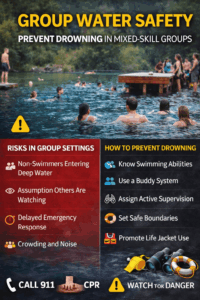
Why Large Groups Increase Drowning Risk
In mixed-ability groups:
- Non-swimmers may enter deeper water unexpectedly
- Strong swimmers may move away from supervision areas
- Individuals may assume “someone else is watching”
- Crowds can delay recognition of a missing person
These factors make active planning and supervision essential.
Preventing Drowning in Groups with Mixed Skills
1. Identify Swimming Ability Before Entering Water
- Ask participants about their swimming experience
- Keep non-swimmers in shallow, supervised areas
2. Use a Buddy System
- Pair individuals and require regular check-ins
- Buddies watch each other continuously
3. Assign Active Supervision
- Designate specific individuals as “water watchers”
- Avoid relying on general group awareness
4. Set Clear Boundaries
- Define safe swimming zones
- Avoid deep water, docks, or drop-offs for inexperienced swimmers
5. Encourage Life Jacket Use
- Especially for non-swimmers or open water
- Common safety recommendation across Canada
Symptoms and Warning Signs of Drowning
Watch for:
- Quiet struggling or vertical body position
- Head low in water, mouth at water level
- No forward movement
- Sudden disappearance from view
- Unresponsiveness after rescue
Drowning is often silent—constant observation is key.
First Aid Response: What to Do
Based on standard first aid training practices in Canada:
- Ensure your own safety first
- Remove the person from the water safely
- Call emergency services immediately
- Check breathing and responsiveness
- If not breathing, begin CPR with compressions and rescue breaths
- Continue until help arrives
Ventilations (rescue breaths) are especially important in drowning.
Prevention and Safety Planning
To reduce risk in Winnipeg and across Manitoba:
- Plan water activities with safety briefings
- Ensure access to CPR training in Winnipeg
- Avoid swimming in unfamiliar or unsupervised areas
- Promote swimming lessons and water confidence
- Have emergency plans in place
Prepared groups can prevent tragedies.
Frequently Asked Questions
Why are non-swimmers at higher risk in group settings?
Non-swimmers may enter deeper water unintentionally or feel pressured to follow others. Without supervision, this increases the risk of drowning.
What is the buddy system in swimming?
The buddy system pairs individuals to watch each other. It helps ensure that someone notices quickly if a person is in trouble.
Why is supervision important in large groups?
In large groups, responsibility can become unclear. Assigned supervision ensures someone is always actively watching.
What should you do if someone disappears underwater?
Call for help immediately and begin a safe search. Once found, remove them from the water and start CPR if needed.
Who should take CPR training in Winnipeg?
Students, teachers, and group leaders can all benefit. Training prepares individuals to respond effectively in emergencies.
Educational Note
This article is for general awareness and reflects commonly taught first aid and water safety practices in Canada. Planning, supervision, and early CPR are key to preventing drowning incidents.
About The Author

Mark Kascha
Certified First Aid Instructor Trainer with 30+ years of real-world experience, including lifeguarding, workplace emergency response, and first aid program development across Canada. Has worked with WorkSafeBC, WSIB, and Manitoba Health.
👉 [View full credentials]🔗 View LinkedIn Profile
Last reviewed: March 2026