Understanding Motorcycle Crash Injuries
Motorcycle crashes can result in high-impact, multi-system injuries, even at moderate speeds. Knowing what to do if a rider is found unresponsive after a crash or how to respond safely without causing further harm is critical.
Unlike typical vehicle collisions, riders are more exposed, making head, spinal, and internal injuries more likely.
First Aid & Workplace Relevance in Winnipeg, Manitoba
 In Winnipeg, Manitoba, motorcycle use increases during warmer months, especially in areas like Downtown Winnipeg, St. Vital, and along major commuter routes.
CPR training in Winnipeg and first aid certification in Manitoba are important for:
- Drivers and commuters
- Road and construction workers
- Delivery personnel
- General public and bystanders
These skills are commonly taught in emergency response training across Canada, including trauma response and scene safety.
Scenario: Fatal Motorcycle Crash in Toronto
A serious collision occurred near Scarlett Road and Lawrence Avenue West in Toronto’s west end involving a motorcycle and a car.
Emergency crews responded to reports of a rider lying on the roadway:
- The motorcyclist had severe injuries
- He showed no vital signs
- CPR was initiated at the scene
Despite these efforts, the rider was declared deceased shortly after.
Police closed the area to investigate and reconstruct the crash.
This incident highlights the severity of motorcycle injuries and reinforces the importance of quick, informed first aid response, which is equally relevant in Manitoba roadways.
Unique First Aid Consideration: Helmet & Spine Protection
One of the most important and unique aspects of motorcycle first aid is helmet and spinal management.
Why This Matters
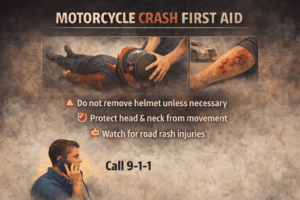
- Helmets protect the head—but removing them improperly can worsen injuries
- Spinal injuries are common in crashes
- Movement can increase the risk of permanent damage
Key Principle
Do not remove a helmet unless necessary for airway or breathing
This is a critical concept taught in Canadian first aid and CPR training programs.
Common Motorcycle Crash Injuries
1. Head Injuries
- Concussion or unconsciousness
- Brain injury risk
2. Spinal Injuries
- Neck or back trauma
- Possible paralysis
3. Internal Injuries
- Damage to organs
- Not always visible
4. Road Rash (Skin Abrasions)
- Friction burns from contact with pavement
5. Fractures
- Broken arms, legs, ribs
Symptoms and Warning Signs
Watch for:
- Unresponsiveness
- Difficulty breathing
- Visible injuries or bleeding
- Confusion or disorientation
- Severe pain
Immediate assessment is essential.
First Aid Response: What to Do
Based on standard first aid training practices in Canada:
Step 1: Ensure Scene Safety
- Watch for traffic and hazards
Step 2: Call Emergency Services Immediately
Step 3: Check Airway and Breathing
- If not breathing → begin CPR
Step 4: Stabilize the Head and Neck
- Keep the person still
- Avoid unnecessary movement
Step 5: Leave Helmet in Place (If Possible)
- Only remove if airway is compromised
Step 6: Control Bleeding
- Apply gentle pressure if needed
Step 7: Monitor the Person
- Watch for changes until help arrives
Another Unique Factor: Road Rash as a Burn Injury
Motorcycle crashes often cause road rash, which is:
- A type of friction burn
- Can damage multiple layers of skin
- At risk of infection
Even though it may look superficial, it requires careful attention—something emphasized in first aid courses in Winnipeg.
Prevention and Road Safety Considerations
To reduce risks in Winnipeg and across Manitoba:
- Always wear a certified helmet
- Use protective gear (jackets, gloves, boots)
- Follow speed limits
- Stay visible to other drivers
- Take first aid and CPR training in Winnipeg
Prepared riders and bystanders improve outcomes.
Frequently Asked Questions
Should you remove a motorcycle helmet after a crash?
Only if necessary for breathing. Improper removal can worsen spinal injuries.
Why are spinal injuries a concern?
Motorcycle crashes often involve high impact, increasing the risk of neck and back injuries.
What is road rash?
It is a friction burn caused by sliding on pavement, damaging the skin.
When should CPR be used in a crash?
If the person is unresponsive and not breathing normally.
Who should take first aid training in Winnipeg?
Drivers, workers, and the general public can all benefit from being prepared.
Educational Note
This article is for general awareness and reflects commonly taught first aid practices in Canada. Protecting the airway and spine is essential in motorcycle crash response.
About The Author

Mark Kascha
Certified First Aid Instructor Trainer with 30+ years of real-world experience, including lifeguarding, workplace emergency response, and first aid program development across Canada. Has worked with WorkSafeBC, WSIB, and Manitoba Health.
👉 [View full credentials]🔗 View LinkedIn Profile
Last reviewed: March 2026