
Understanding Drowning and CPR Timing
Drowning emergencies happen quickly and often without warning. Knowing what to do if someone is pulled from the water and not breathing or how to perform CPR effectively in water-related emergencies is critical.
A unique and important concept is that the quality and timing of CPR cycles—especially early ventilations—can significantly influence outcomes in drowning cases.
First Aid & Workplace Relevance in Winnipeg, Manitoba
In Winnipeg, Manitoba, water-related incidents can occur at lakes, pools, and rivers, including areas around St. Vital Park, Transcona, and public recreation facilities.
CPR training in Winnipeg and first aid certification in Manitoba are essential for:
- Families and caregivers
- Lifeguards and recreation staff
- Teachers and camp supervisors
- Workplace safety teams
These skills are widely taught in emergency response training across Canada, including drowning response and CPR techniques.
Scenario: Drowning at Buffalo Pound Provincial Park
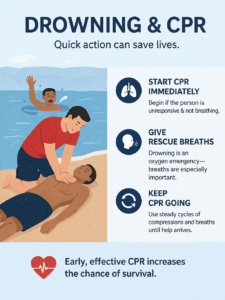 A tragic drowning occurred at Buffalo Pound Provincial Park involving a 35-year-old man from Regina during a family gathering.
- The man entered the water and began to struggle
- A bystander rescued him and brought him to shore
- Emergency services arrived and initiated CPR
Despite these efforts, including response from STARS air ambulance, the man was declared deceased.
The Moose Jaw RCMP acknowledged the efforts of those who attempted to help.
This incident highlights the importance of immediate rescue, early CPR, and proper technique, which are key skills taught across Manitoba first aid programs.
A Unique CPR Insight: The Importance of Effective CPR Cycles
In drowning emergencies, CPR is not just about starting compressions—it’s about delivering effective cycles.
What Makes CPR “Effective”?
- Consistent compressions
- Proper timing between compressions and breaths
- Minimal interruptions
- Early inclusion of rescue breaths
Why It Matters in Drowning
- The primary issue is lack of oxygen, not just cardiac arrest
- Rescue breaths help reintroduce oxygen
- Continuous, well-coordinated cycles improve effectiveness
This concept is commonly emphasized in certified CPR courses in Canada.
Why Ventilations Are Critical in Drowning
Unlike some cardiac emergencies:
- Drowning victims often suffer from oxygen deprivation first
- Rescue breaths are especially important
- Combining breaths with compressions supports recovery
Signs of Drowning Distress
Watch for:
- Struggling to stay above water
- Silent or weak attempts to call for help
- Unresponsiveness after rescue
- Pale or bluish skin
- Irregular or absent breathing
Immediate action is required.
First Aid Response: What to Do
Based on standard first aid training practices in Canada:
Step 1: Ensure Your Own Safety
- Do not enter unsafe water conditions
Step 2: Remove the Person from the Water
- Use safe rescue methods if possible
Step 3: Check Airway and Breathing
- If not breathing → begin CPR immediately
Step 4: Provide CPR with Breaths
- Include rescue breaths along with compressions
Step 5: Call Emergency Services
Step 6: Continue Until Help Arrives
- Maintain consistent CPR cycles
Another Unique Factor: CPR Fatigue
Performing CPR can be physically demanding.
- Fatigue can reduce effectiveness
- Rotating responders helps maintain quality
- Teamwork improves outcomes
This was demonstrated in many real-life cases where multiple bystanders assisted, a concept emphasized in CPR training in Winnipeg.
Prevention and Water Safety Considerations
To reduce drowning risks in Winnipeg and across Manitoba:
- Supervise swimmers closely
- Be aware of water conditions
- Avoid swimming alone
- Use lifejackets when appropriate
- Ensure access to CPR training in Winnipeg
Prepared individuals can make a critical difference.
Frequently Asked Questions
Why are rescue breaths important in drowning CPR?
Because the main issue is lack of oxygen, rescue breaths help restore oxygen to the body.
What are effective CPR cycles?
They involve consistent compressions, proper timing, and minimal interruptions.
Can CPR be tiring?
Yes, fatigue can affect performance, which is why rotating helpers can help maintain quality.
When should CPR be started?
Immediately if the person is unresponsive and not breathing normally.
Who should take CPR training in Winnipeg?
Anyone can benefit. Training prepares individuals to respond effectively in emergencies.
Educational Note
This article is for general awareness and reflects commonly taught first aid and CPR practices in Canada. Early and effective CPR, especially with ventilations, is essential in drowning emergencies.
About The Author

Mark Kascha
Certified First Aid Instructor Trainer with 30+ years of real-world experience, including lifeguarding, workplace emergency response, and first aid program development across Canada. Has worked with WorkSafeBC, WSIB, and Manitoba Health.
👉 [View full credentials]🔗 View LinkedIn Profile
Last reviewed: March 2026