Understanding the Emergency: What to Do if Someone Overdoses
An opioid overdose is a life-threatening emergency where breathing can slow or stop. Knowing what to do if someone is experiencing an opioid overdose can help save a life in the critical minutes before emergency services arrive.
First aid training in Canada teaches how to recognize overdose signs, respond safely, and support breathing using techniques such as CPR and the use of naloxone.
First Aid & Workplace Relevance in Winnipeg, Manitoba
Although this story is based in Montreal, opioid-related emergencies are a growing concern across Canada—including in Winnipeg and throughout Manitoba.
First aid and overdose response training is important for:
- Community workers and social services
- Teachers and school staff
- Workplace supervisors and employees
- Families and caregivers
Across Winnipeg, many public health programs encourage first aid certification and naloxone awareness to help reduce overdose-related harm in communities.
Real-Life Scenario: Student Advocates for Life-Saving Awareness
 In Montreal, social work student Richard Davy has taken action to raise awareness about opioid overdoses and how to respond effectively.
While studying at McGill University, Davy frequently encountered individuals in distress on the streets—some appearing to be experiencing overdoses. These experiences motivated him to educate others on how to respond.
He strongly advocates for the accessibility of naloxone, a medication that can temporarily reverse the effects of opioids. In Canada, naloxone is widely available at pharmacies, often without a prescription, and commonly comes in a nasal spray form.
Davy’s message is simple: more people trained and equipped means more lives can be saved.
His work highlights the importance of combining awareness, training, and accessible tools to respond effectively during overdose emergencies.
Symptoms and Warning Signs of an Opioid Overdose
Recognizing the signs quickly is critical:
- Slow, weak, or no breathing
- Difficulty staying awake or unresponsiveness
- Bluish lips or fingernails
- Pinpoint (very small) pupils
- Cold, clammy skin
- Gurgling or choking sounds
- Confusion or inability to respond
These signs indicate a medical emergency requiring immediate action.
Causes and Risk Factors
Opioid overdoses may occur due to:
- High doses of opioid medications or substances
- Mixing opioids with other substances
- Reduced tolerance
- Unknown drug potency
- Accidental or intentional misuse
Awareness of these risks supports prevention and early response.
First Aid Response: What Trained Individuals Learn to Do
In Canadian first aid and CPR training, responders are taught to:
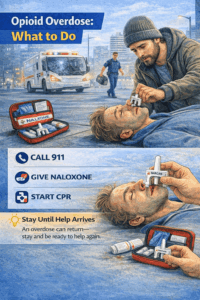
- Call emergency services immediately
- Check responsiveness and breathing
- Provide rescue breathing or CPR if needed
- Administer naloxone if available and trained to do so
- Stay with the person and monitor their condition
- Place the person in a recovery position if breathing returns
These are standard first aid practices taught in emergency response training across Canada.
Unique First Aid Insight: The “Naloxone Time Window” 💡
A key concept in overdose response is understanding timing:
- Naloxone works within minutes but may wear off before the opioid does
- This means symptoms can return after initial improvement
What responders are taught:
- Continue monitoring the person even after they wake up
- Be prepared to assist again if symptoms return
- Always involve emergency services
This highlights why staying with the person is just as important as the initial response.
Prevention and Workplace / Community Safety Considerations
Across Winnipeg and Manitoba, safety efforts include:
- Expanding access to naloxone kits
- Training staff in overdose recognition and response
- Promoting awareness in workplaces and public spaces
- Supporting community education programs
- Encouraging participation in first aid training in Winnipeg
Prepared communities can respond more effectively and reduce harm.
Frequently Asked Questions (FAQ)
What should you do if you suspect an opioid overdose?
Call emergency services immediately and check for breathing. First aid training teaches how to support breathing and respond safely while waiting for help.
What does naloxone do during an overdose?
Naloxone temporarily reverses the effects of opioids, helping restore breathing. It is commonly included in overdose response training in Canada.
Can someone stop breathing during an overdose?
Yes. Opioids can slow or stop breathing, which is why rapid response is critical in these situations.
Should you stay with the person after giving naloxone?
Yes. Monitoring is important because the effects of naloxone may wear off. First aid training emphasizes staying until help arrives.
Who should learn overdose response skills?
Anyone can benefit—especially those working in public spaces, community services, or caregiving roles.
Educational Note
This content is for general awareness and reflects commonly taught first aid practices in Canada. It is not a substitute for certified, hands-on first aid and CPR training.
About The Author

Mark Kascha
Certified First Aid Instructor Trainer with 30+ years of real-world experience, including lifeguarding, workplace emergency response, and first aid program development across Canada. Has worked with WorkSafeBC, WSIB, and Manitoba Health.
👉 [View full credentials]🔗 View LinkedIn Profile
Last reviewed: March 2026