Understanding the Emergency: What to Do in a Water Rescue Situation
Water-related emergencies—such as drowning or being trapped in a submerged vehicle—can escalate within seconds. Knowing what to do if someone is struggling in water or at risk of drowning is critical to keeping them alive until help arrives.
First aid training teaches how to safely assist, protect the airway, and prevent rescuers from becoming victims themselves.
First Aid & Workplace Relevance in Winnipeg, Manitoba
Although this incident occurred in Abbotsford, similar emergencies can happen across Winnipeg and throughout Manitoba, especially near rivers, drainage ditches, and outdoor trails.
First aid and CPR training is important for:
- Outdoor workers and construction crews
- Drivers and agricultural workers
- Parents, teachers, and community members
- Anyone near water environments
Across Winnipeg, having first aid certification and CPR training prepares individuals to respond quickly in unpredictable water-related emergencies.
Real-Life Scenario: Two Life-Saving Water Rescues
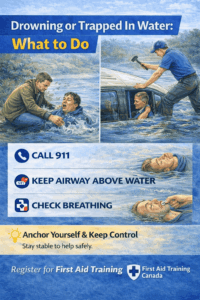 Two individuals were recognized by the Abbotsford Police for their heroic actions in separate water rescue incidents.
In the first incident, Jesse Boyes was walking along Discovery Trail near Wells Gray Avenue and McKinley Drive when he noticed a teenager who had fallen down a steep embankment into a pond.
The teenager, experiencing a medical issue, was in immediate danger.
Boyes quickly called emergency services and entered the situation to help. Despite the victim resisting assistance, Boyes managed to bring him toward the shoreline. He continued to struggle to keep the teen’s head above water—an essential action in preventing drowning—until police arrived.
In a separate incident, Michael Ercanbrack responded after being alerted by a school bus driver to an overturned truck in a water-filled ditch near Tolmie Road and No. 3 Road.
Seeing the urgency, Ercanbrack acted immediately. With the help of a passerby who provided a hammer, he climbed onto the submerged vehicle, broke a window, and pulled the trapped driver out.
The driver received first aid at the scene and survived without serious injury.
Both incidents demonstrate how quick thinking, basic tools, and first aid awareness can make the difference between life and death.
Symptoms and Warning Signs in Water Emergencies
Watch for the following signs:
- Struggling to stay above water
- Uncontrolled movements or panic
- Weak or no breathing
- Unresponsiveness
- Coughing or choking sounds
- Pale or bluish skin
These signs require immediate action.
Causes and Risk Factors
Water-related emergencies may result from:
- Slips or falls near water
- Medical conditions while near water
- Vehicle accidents into ditches or ponds
- Lack of barriers or supervision
- Panic or inability to swim
Understanding these risks supports prevention.
First Aid Response: What Trained Individuals Learn to Do
In Canadian first aid training, responders are taught to:
- Call emergency services immediately
- Assess the scene for safety before entering
- Assist from a safe position when possible
- Keep the person’s airway above water
- Help remove the person from danger if safe
- Check breathing and provide CPR if needed
- Monitor and support until help arrives
These are standard first aid practices taught in certification programs across Canada.
Unique First Aid Insight: The “Two-Point Stability Rule” 💡
A practical and lesser-known technique in water rescues is maintaining two points of stability:
- Keep yourself anchored (e.g., solid ground, vehicle, or support)
- Maintain control of the victim’s position (especially their head and airway)
Why this matters:
It reduces the risk of both the rescuer and victim losing balance or being pulled into deeper danger—especially in muddy banks, ditches, or unstable terrain.
This principle is often used instinctively in real rescues like those in this story.
Prevention and Workplace / Community Safety Considerations
Across Winnipeg and Manitoba, safety measures include:
- Installing barriers near water hazards
- Practicing safe driving near ditches and rural roads
- Supervising high-risk areas and activities
- Encouraging CPR and first aid training
- Promoting awareness of water safety risks
Prepared communities respond faster and safer.
Frequently Asked Questions (FAQ)
What should you do if someone is drowning?
Call emergency services immediately and assist from a safe position if possible. First aid training teaches how to help without putting yourself at risk.
Why is keeping the airway above water so important?
Breathing is the top priority. Keeping the head above water helps prevent drowning and allows the person to continue breathing.
Can bystanders safely rescue someone from water?
Yes, but only if it is safe. Training emphasizes assessing risks and avoiding dangerous entry into water without proper support.
What should you do after someone is pulled from water?
Check breathing and responsiveness. If needed, CPR may be required. Monitoring the person is important until help arrives.
How can people prepare for water-related emergencies?
Preparation includes learning CPR, understanding water safety, and being aware of environmental risks.
Educational Note
This content is for general awareness and reflects commonly taught first aid practices in Canada. It is not a substitute for certified, hands-on first aid and CPR training.
About The Author

Mark Kascha
Certified First Aid Instructor Trainer with 30+ years of real-world experience, including lifeguarding, workplace emergency response, and first aid program development across Canada. Has worked with WorkSafeBC, WSIB, and Manitoba Health.
👉 [View full credentials]🔗 View LinkedIn Profile
Last reviewed: March 2026