Understanding the Emergency: What to Do After a House Fire
House fires can be especially dangerous due to smoke inhalation, reduced oxygen levels, and hidden fire sources. Knowing what to do if someone is found in a smoke-filled environment and becomes unresponsive is critical.
In many cases, it’s not the flames—but the smoke—that causes the most harm. First aid training teaches how to respond quickly, support breathing, and assist safely until emergency services arrive.
First Aid & Workplace Relevance in Winnipeg, Manitoba
 Although this incident occurred in Nova Scotia, similar emergencies can happen in homes, apartments, and workplaces across Winnipeg and Manitoba—especially during colder months when heating systems are in use.
First aid and CPR training is important for:
- Homeowners and tenants
- Property managers and maintenance workers
- Construction and safety personnel
- Families and caregivers
Across Winnipeg, having first aid certification and CPR training helps individuals respond effectively to fire and smoke-related emergencies.
Real-Life Scenario: Early Morning Fire Turns Fatal (Expanded)
A tragic fire occurred in Glace Bay involving a duplex on Concord Street, resulting in the death of a 54-year-old man, Gerry Somerton.
The incident began early in the morning when a neighbour alerted nearby residents. Leo O’Connell was awakened by someone knocking urgently on his door. Realizing something was wrong, he quickly got dressed and rushed to assist.
He entered the home through the back door as emergency crews were being notified.
According to John Chant, fire crews responded immediately to reports of smoke in a duplex. Upon arrival, the first crew entered the structure within seconds and located Somerton inside.
He was quickly removed from the building, and CPR was started right away by responders.
Despite rapid intervention and transport by Emergency Health Services to a nearby hospital, Somerton did not survive.
Investigators later determined that the fire was caused by smouldering insulation in the attic, which created heavy smoke but minimal visible flames—making the danger less obvious but highly hazardous.
This incident highlights how hidden fires and smoke inhalation can become life-threatening very quickly, even when flames appear small.
Symptoms and Warning Signs of Smoke Inhalation
After a fire, individuals may show:
- Difficulty breathing or coughing
- Soot around the mouth or nose
- Confusion or unusual behaviour
- Headache or dizziness
- Unresponsiveness
- Weakness or fatigue
These signs indicate a serious emergency requiring immediate attention.
Causes and Risk Factors
Fire-related emergencies can result from:
- Electrical or structural issues
- Hidden ignition sources (e.g., insulation, wiring)
- Poor ventilation or confined spaces
- Delayed detection of smoke
- Lack of working smoke alarms
Understanding these risks is key to prevention.
First Aid Response: What Trained Individuals Learn to Do
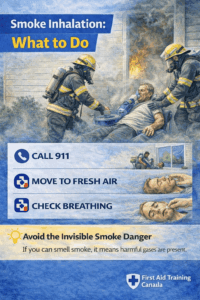
In Canadian first aid training, responders are taught to:
- Ensure scene safety before entering (avoid smoke-filled areas if unsafe)
- Call emergency services immediately
- Remove the person from danger if it is safe to do so
- Check responsiveness and breathing
- Begin CPR if the person is not breathing normally
- Monitor the person closely until help arrives
These are standard first aid practices taught in certified programs across Canada.
Unique First Aid Insight: The “Invisible Smoke Danger” Rule 💡
A critical but often overlooked concept in fire emergencies is:
“If you can smell smoke, the danger is already present.”
- Smoke contains harmful gases that reduce oxygen in the body
- Even small or hidden fires can produce dangerous conditions
- Lack of visible flames does not mean the situation is safe
What responders learn:
- Never underestimate smoke exposure
- Prioritize getting to fresh air quickly
- Act early—even if the fire seems minor
This explains why incidents with minimal flames can still have severe outcomes.
Prevention and Workplace / Home Safety Considerations
Across Winnipeg and Manitoba, fire safety includes:
- Installing and maintaining smoke alarms
- Regularly checking heating systems and wiring
- Ensuring clear escape routes
- Training staff and families in emergency response
- Encouraging CPR and first aid training
Prepared homes and workplaces reduce risk and improve response.
Frequently Asked Questions (FAQ)
What should you do if someone is found in a smoke-filled area?
Move them to fresh air if it is safe to do so and call emergency services. First aid training teaches how to assess breathing and provide support until help arrives.
Why is smoke inhalation so dangerous?
Smoke can reduce oxygen levels and affect breathing quickly. Even without visible flames, it can lead to serious health effects.
When is CPR needed after a fire?
CPR may be required if the person is not breathing normally. Early action helps support circulation until emergency services arrive.
Can small fires still be life-threatening?
Yes. Even small or hidden fires can produce significant smoke and dangerous conditions.
How can people prepare for fire emergencies?
Preparation includes having working smoke alarms, clear escape plans, and first aid training.
Educational Note
This content is for general awareness and reflects commonly taught first aid practices in Canada. It is not a substitute for certified, hands-on first aid and CPR training.
About The Author

Mark Kascha
Certified First Aid Instructor Trainer with 30+ years of real-world experience, including lifeguarding, workplace emergency response, and first aid program development across Canada. Has worked with WorkSafeBC, WSIB, and Manitoba Health.
👉 [View full credentials]🔗 View LinkedIn Profile
Last reviewed: March 2026